Transfer Case Review: What to Know Before You Buy
Buy this type of transfer case only when the mode set, spline count, and control style match your truck exactly. A correct unit fixes the drivetrain problem. A wrong one can cause binding, noise, or a second removal because the case bolts in but fails to match the vehicle’s electronics or shaft setup.
Verdict

For a 2001-2007 Chevy or GMC HD truck with Allison-transmission fitment, the GM NP261XHD NP263XHD rebuild package is the strongest match among the listed options because it targets the correct heavy-duty platform and includes the hard parts buyers usually need after an internal failure. Based on the published details, you still need to confirm the exact application, especially the shaft count, output positions, and whether your truck needs programming or matched components.
Specs at a glance
| Buyer check | What to confirm | Why it matters |
|---|---|---|
| Mode coverage | 2HI, 4HI, 4LO, Auto 4WD | Must match the truck’s dash switch or shift system |
| Drive type | Part-time or full-time | Determines whether the truck can run in 4WD on dry pavement |
| Internal drive style | Gear-driven or chain-driven | Changes strength, weight, and service behavior |
| Fitment details | Spline count, electronic shift control, programming needs, core deposit | Wrong details can make a new unit unusable |
| Example listing | Chevy NP246 transfer case | Listed with Auto 4WD, 2HI, 4HI, and 4LO |
| Price example | $1,699.00 | Sets the sticker price before core or labor |
| Fitment option example | 27-spline and 32-spline options | Spline mismatch is a common buy mistake |
| Core deposit example | $400.00 refundable core deposit | Raises the out-of-pocket total until the old unit is returned |
What does a transfer case do?
A transfer case mounts behind the transmission and sends torque to the front and rear axles. In four-wheel-drive and all-wheel-drive systems, it splits engine power between both ends of the vehicle. Many units also add low-range gearing for slower, higher-torque operation when the terrain or load calls for it.
That makes it a fitment part, not just a driveline part. If the truck needs selectable 4WD, full-time AWD behavior, or a specific low-range ratio, the case has to match the vehicle’s transmission, output shaft setup, and control method.
The buying mistake is treating every 4WD case as interchangeable. A chain-driven case from a light-duty truck may mount differently from a gear-driven heavy-duty unit, and a unit with the wrong spline count can leave you with a shaft that will not engage correctly.
Who it
This is for truck and SUV owners replacing a failed OE transfer case, or for buyers who need to match a case to towing, snow, mud, trail work, or daily driving. It is also for anyone sorting out whether the truck needs a part-time system, a full-time AWD unit, or an electronically shifted case with multiple modes.
It is not for a buyer who only knows the year and model. You still need the transmission family, the exact transfer case model, the spline count, and the control type. If a truck has 4WD lights on the dash but binds on tight turns in 4HI, that points to a mode or control issue, not a reason to guess at a random replacement.
Pros and cons
Pros
- The right transfer case restores 4WD or AWD function without changing the rest of the drivetrain.
- Low range helps with slow towing, steep grades, and controlled trail driving.
- Part-time and full-time systems let you match traction behavior to actual use.
Cons
- Part-time cases can create driveline windup on dry pavement.
- Electronic shift systems add control modules, wiring, and diagnosis steps.
- Wrong spline count or output setup can turn a replacement into a dead-end purchase.
What works
Low-range gearing works when the job is slow and loaded. It multiplies torque at the axles while reducing vehicle speed, which helps with off-road crawling and controlled towing on steep or loose ground.
Part-time transfer cases work when you need selectable 2WD and 4WD. They are common, simple in concept, and often shifted by a lever or electronic switch, but they are not meant for constant use on dry pavement because there is no center differential to absorb front-to-rear speed differences.
Full-time transfer cases work better for mixed road use. They stay in AWD mode and use a center differential or synchronization so the front and rear axles can turn at different speeds during normal driving.
Chain-driven cases work well for broad passenger-truck fitment. They are common, often lighter than gear-driven designs, and widely used where packaging and cost matter. Gear-driven cases fit heavier-duty jobs better in many large trucks because they are generally strong and heavy, but that does not make them the right answer for every buyer.
What does not?
Do not run a part-time 4WD transfer case on dry pavement. Without a center differential, the front and rear axles fight each other during turns, which creates driveline windup, binding, and extra wear.
Do not ignore fluid condition or internal wear. Grinding, difficulty shifting modes, delayed engagement, or a case that will not stay in gear can point to worn bearings, chain stretch, damaged gears, or electronic control issues. A dirty or burnt fluid sample is a warning sign, not a detail to skip.
Do not buy without matching spline count, shift control, and programming needs. If the replacement uses electronic engagement, it may need the correct actuator or control setup. If the case is rebuilt, the seller may also require a core return before the final cost makes sense.
A common first-timer mistake is seeing a 4WD case with the right bolt pattern and stopping there. Picture a truck that needs 32 splines, but the replacement arrives with 27; the case can look right and still be wrong at the shaft interface.
Transfer case buyer worksheet
| Vehicle use case | Required modes | Likely transfer case design | Red-flag fitment details |
|---|---|---|---|
| Daily-driven truck with winter roads | Auto 4WD, 2HI, 4HI | Full-time or electronically controlled chain-driven case | Electronic control, programming needs, correct output position |
| Work truck that tows trailers on grades | 2HI, 4HI, 4LO | Part-time, chain-driven or gear-driven case with low range | Spline count, shift motor compatibility, core deposit |
| Heavy-duty off-road or farm use | 4HI, 4LO | Gear-driven part-time case | Input/output length, manual or electronic shift style |
| Mixed-road SUV or pickup | Auto 4WD, 2HI, 4HI, 4LO | Electronically controlled full-time or active part-time case | Module compatibility, connector style, calibration or programming |
| Replacement after internal failure | Match original modes exactly | Same model family as OE | Core return rules, included sensors, shift actuator, fluid fill status |
Which transfer case should you buy?
Buy a rebuilt unit when the truck is worth fixing, the case family is common, and you can verify the exact model number and spline count. Buy new when the vehicle depends on uptime, the electronics are integrated, or the old case failed hard enough that hidden wear is a concern. Buy used only when the application is simple and the buyer accepts higher risk.
For a heavy-duty GM truck, the published NP261XHD NP263XHD rebuild package is a sensible example because it targets the right platform and avoids the guesswork of trying to adapt a random donor unit. The drawback is that a rebuild package still depends on correct vehicle matching, and that can include output length, connector style, and control setup.
The Chevy NP246 listing gives a useful comparison point for electronically controlled light-duty fitment. Monster lists it at $1,699.00, with Auto 4WD, 2HI, 4HI, and 4LO modes, 27-spline and 32-spline options, and a $400.00 refundable core deposit. Those details matter more than the badge on the case.
NP205, NP208, NP246, NP261, and NP263 are not interchangeable just because they all live behind a GM drivetrain. The NP261 and NP263 families show up in heavy-duty GM applications, but even within that group, the spline count and control system still have to line up.
What should arrive with a replacement transfer case?
At minimum, the unit should arrive with the correct case family, the right input and output configuration, and whatever electronic or mechanical shift hardware the seller includes in the listing. If the unit is rebuilt, ask whether sensors, seals, actuators, and internal wear parts are already installed or only partially covered.
Also confirm whether the seller expects a core return. A refundable core deposit changes the real purchase price, and it usually comes back only after the old unit is returned in eligible condition. If the listing includes programming or calibration notes, handle those before the truck is driven far.
Alternatives
The GM NP261XHD NP263XHD rebuild package is the most relevant option in the list for buyers replacing a heavy-duty Chevy or GMC transfer case. Based on the published details, its strength is platform match; the drawback is the same one most rebuild packages carry: you still need to verify the exact OE configuration before ordering.

Case 4894 Tractor Service Manual is not a transfer case replacement, but it is useful if you need drivetrain reference material for a tractor or service workflow. The drawback is obvious for this article’s buyer: a manual helps with diagnosis and procedure, not with a direct-fit 4WD swap.
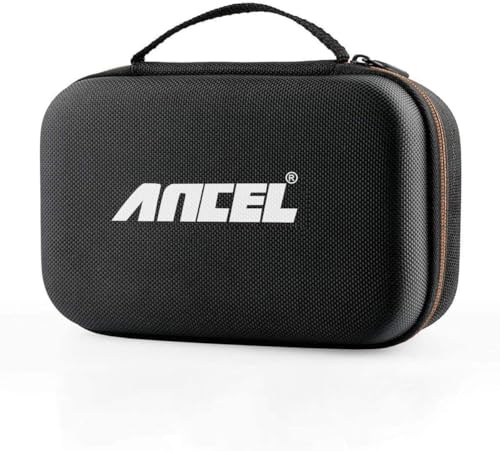
ANCEL Large Protective Case for OBD2 Scanner and Code Reader is also not a transfer case part, but it can be a practical add-on if you already own a scan tool for transfer-case fault diagnosis. The drawback is that it stores equipment; it does not solve mode control, spline fitment, or mechanical wear.
Should you buy it?
Buy when the transfer case matches the truck’s job and hardware. That means the right mode set, the right control type, the right spline count, and the right build style for the vehicle’s use case. If any of those are off, the cheapest listing can become the most expensive mistake.
The cleanest rule is simple: match the original model number first, then match modes, then match splines and control. If the truck lives on pavement and only sees occasional traction events, favor full-time or active AWD. If it hauls, tows, or crawls, a part-time case with low range may be the right call.
Frequently asked questions
What is the difference between 2HI, 4HI, and 4LO?
2HI drives only the rear axle in normal road use. 4HI sends power to both axles for higher-speed traction on slippery ground. 4LO uses low-range gearing for slow work, giving more torque at the wheels and better control when towing, climbing, or crawling off-road.
Can I drive a part-time 4WD transfer case on dry pavement?
No, not in 4WD. A part-time transfer case has no center differential, so the front and rear axles cannot turn at different speeds the way road use demands. On dry pavement that leads to driveline windup, tight-turn binding, and extra stress on the drivetrain.
How do I know if my transfer case is bad?
Common signs include grinding, binding, refusal to shift modes, dash indicators that do not match actual drive mode, fluid leaks, or a burnt-smelling fluid condition. A failing actuator, stretched chain, worn bearings, or internal gear damage can all produce similar symptoms, so the exact fault needs confirmation before ordering parts.
What is a refundable core deposit on a rebuilt transfer case?
A refundable core deposit is money held until the seller receives the old unit back in eligible condition. The same source lists a $400.00 core deposit on the NP246 example. That deposit changes the effective purchase price until the core is returned and accepted.
How much does a replacement transfer case cost?
Prices vary widely by model, control style, and whether the unit is rebuilt, new, or used. That is before labor, fluid, and any programming or calibration work.
Which transfer case fits my Chevy or GMC?
The fit depends on the exact truck, transmission, spline count, and shift system, not just the badge on the tailgate. For example, the NP246 listing includes 27-spline and 32-spline options, and that kind of detail can decide whether the part fits at all. Match the original model number before you buy.
Products related to this article
Sponsored / affiliate links. As an Amazon Associate I earn from qualifying purchases. I may earn additional commission from eligible campaigns.