Best Car Maintenance Plan for High-Mileage Cars by Mileage
The best car maintenance plan for a 100,000-mile car starts with failure-first checks: inspect oil leaks, cooling, brakes, tires, belts, hoses, battery, and suspension at regular intervals of roughly 5,000 to 7,500 miles, then service fluids by condition and leave cosmetic work for later. Skip that, and small wear turns into tow bills, overheating, and an early death for the car. This guide splits maintenance into mileage tiers so you know what to fix now, what to watch, and what to skip.
This guide is part of our Car care and upkeep guide series.
What changes after 100,000 miles?
At 100,000 miles, age matters as much as mileage. Rubber hardens. Seals seep. Fluids lose margin, and heat cycles stack up. The owner’s manual still gives the first target, but a high-mileage plan shifts attention to parts that fail first, not only the routine intervals.
When to switch from factory intervals to a high-mileage plan
Use factory maintenance as the baseline until wear shows up on inspection. That often means around 100,000 miles, or earlier if leaks, oil use, reduced battery reserve, brake wear, or suspension noise start to show up. After that, service by condition, age, and risk.
Older cars still need fluids, brakes, tires, belts, and battery checks. The difference is priority. A high-mileage car needs money aimed at failures that strand the driver or trigger extra damage, not at work that only keeps the logbook neat.
What should you check first on a high-mileage car?
Check the car from the ground up: fluids, tires, brakes, belts, battery, then suspension and steering. That order catches the problems most likely to leave the car unsafe or stuck. A quick road test can expose noises and vibrations a parked inspection misses.
Baseline inspection order
- Check engine oil level, condition, and visible leaks.
- Inspect coolant level, color, and residue around the radiator, hoses, and pump.
- Measure brake pad thickness and look at rotor condition.
- Inspect tire tread, sidewalls, and uneven wear.
- Look at belts, hoses, and plastic fittings for cracks, swelling, and age hardening.
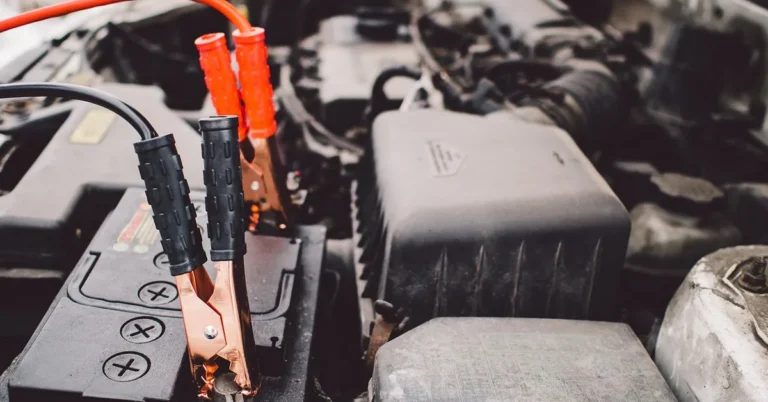
- Test battery age, charging output, and cranking strength.
- Check shocks, struts, bushings, and ball joints for looseness or leakage.
Road-test clues that point to hidden wear
Listen for clunks over bumps, steering wander, pull under braking, delayed shifts, flares on acceleration, and a soft brake pedal. Oil smell after a drive, sweet coolant odor, or a dashboard warning light can be the first clue that a seal, hose, or sensor is failing.
High-mileage maintenance priorities by mileage tier
The plan changes in stages. A car with roughly 100,000 miles and one with around 200,000 miles will usually need different attention. The first is often about catching wear early. The second is about preventing repeat failures and deciding what still deserves another round of service.
100,000 to 149,999 miles
This tier is about disciplined inspection and catching the first big wear items. The engine may still be healthy, but cooling, brakes, battery reserve, and suspension fatigue start to show. If the car has no major symptoms, focus on the highest-risk fluids and rubber parts first.
150,000 to 199,999 miles
At this stage, age-based service matters more. Hoses, belt drive parts, battery health, brake fluid age, and suspension wear deserve closer attention. If there is oil consumption, seepage, or transmission behavior that has changed, treat that as a planning item, not background noise.
200,000 miles and beyond
At 200,000 miles, the plan turns into triage. Repair items that affect safety, drivability, or overheating first. Defer anything that does not change how the car stops, steers, cools, or starts. Cosmetic work usually waits unless it ties to corrosion or water intrusion.
High-mileage priority table: what to do now, soon, or monitor
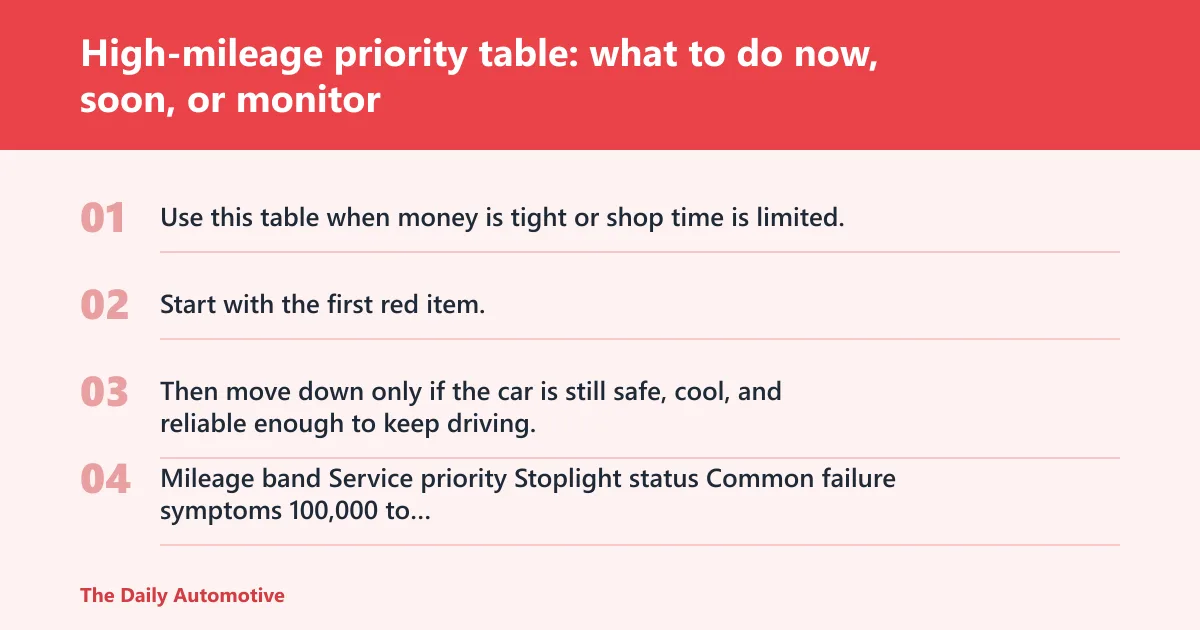
Use this table when money is tight or shop time is limited. Start with the first red item. Then move down only if the car is still safe, cool, and reliable enough to keep driving.
| Mileage band | Service priority | Stoplight status | Common failure symptoms |
|---|---|---|---|
| 100,000 to 149,999 miles | Inspect fluids, brakes, tires, battery, cooling system, belts, and hoses; fix leaks and weak brake or battery issues first | Must-do now | Oil spots, low coolant, brake squeal, battery slow crank, uneven tire wear |
| 100,000 to 149,999 miles | Transmission service, brake fluid age check, alignment, suspension wear check | Soon | Shift delay, steering pull, uneven tire wear, clunks over bumps |
| 100,000 to 149,999 miles | Cosmetic items, minor trim faults, nonessential accessories | Monitor | None if only cosmetic |
| 150,000 to 199,999 miles | Cooling system condition, battery and alternator test, belt/hose replacement planning, suspension refresh | Must-do now | Overheating, charging warning light, cracked hoses, bounce after bumps |
| 150,000 to 199,999 miles | Transmission fluid review, brake rotor and pad assessment, timing belt or timing chain inspection | Soon | Harsh shifts, pulsing brake pedal, ticking on startup, belt noise |
| 200,000 miles and beyond | Only safety, cooling, charging, and drivability repairs that prevent a tow or engine damage | Must-do now | Misfire, overheating, no-start, brake fade, steering looseness |
| 200,000 miles and beyond | Comfort repairs and appearance work | Monitor | Cracked trim, faded plastics, worn upholstery |
Which fluids matter most on an older car?
Fluids are cheap until they fail. Then they are not. Oil, coolant, transmission fluid, and brake fluid all lose effectiveness with age and heat. On a high-mileage car, fluid condition matters as much as the calendar or odometer because heat and contamination build over time.
Engine oil and filter
Use the viscosity listed in the owner manual first. Change it at the manual interval unless the engine uses oil, idles in heavy traffic, tows, or sees short trips that never fully warm the crankcase. Replace the filter every time. Watch for blue smoke, low dipstick level, seepage, and oily odor after parking.
Transmission fluid and coolant
Transmission service depends on fluid type compatibility and whether the unit is sealed or serviceable. A sealed transmission is not maintenance-free, it just has fewer easy service points. If the fluid is dark, smells burnt, or shift quality changes, the fluid needs attention. Do not mix wrong-spec fluid into a healthy transmission.
Coolant should be tested for condition, not just level. Aging antifreeze loses corrosion protection, which matters in mixed-metal cooling systems where aluminum, steel, and plastic share the loop. Follow the replacement interval in the manual, and treat repeated top-offs as a leak diagnosis, not routine maintenance.
Brake fluid and power steering fluid, where equipped
Brake fluid absorbs moisture with age, which hurts pedal feel and corrosion protection. If the fluid is old or dark, replace it even if the pads still have life. ABS warning lights, a sinking pedal, or pulsation under light braking need immediate diagnosis. Power steering fluid, where used, should stay clean and at the correct level; leaks or foaming point to air intrusion.
Which wear items fail first on high-mileage cars?
Rubber, heat, and repeated movement do the damage. Belts, hoses, cooling-system plastics, brakes, suspension parts, and steering joints usually age out before the core engine does. Many of these failures begin as noise, seepage, or slight looseness long before they become breakdowns.
Belts and hoses
Inspect accessory belts for cracks, glazing, fraying, and noise. Hoses should be checked for swelling, soft spots, cracks, and age hardening. These are priority items because a failed belt can stop charging or cooling, and a failed hose can overheat the engine fast.
Brakes, suspension parts, and steering joints
Brake pads with little thickness left, rotors with heavy rust ridges or pulsation, and brake fluid that is old all belong on the near-term list. Shocks and struts lose control gradually, so bounce, nose dive, and cupped tires matter. Worn bushings and ball joints show up as clunks, wandering, and poor alignment retention.
How do you decide what to fix, what to delay, and what to ignore?
Fix what can strand the car, damage the engine, or hurt braking and steering. Delay work that affects comfort, noise, or long-term wear but does not create immediate risk. Ignore cosmetic issues for now if the budget is tight. The right call depends on age, symptoms, and the car’s remaining value.
Repair vs. maintenance vs. retirement
Maintenance makes sense when the repair cost is lower than the value of another year or two of useful service. A battery, brake service, or coolant repair is usually worth it. A long list of failing suspension parts, transmission issues, and repeated overheating can push the car toward retirement.
Dealers, independent shops, and DIY all have a place. Dealer service can help with model-specific fluids or diagnostics. Independent shops usually fit older cars better on cost. DIY works when the owner can verify parts and procedures without guessing.
Is a prepaid maintenance plan worth it for a high-mileage vehicle?
Usually not, unless the plan clearly matches the car’s actual service needs and the owner will keep the vehicle long enough to use it. High-mileage cars need targeted work, not bundled services that may repeat low-value items and skip wear items that matter more.
That said, ToyotaCare covers normal factory scheduled maintenance with every new Toyota. ToyotaCare is listed at 1 Year or 10K Miles on one page variant. ToyotaCare is listed at 2 Years or 25K Miles on another page variant. ToyotaCare Plus can run up to 6 years or 13 services, starts once ToyotaCare expires, and includes first service available at 15,000 miles. Toyota Service Care is offered for 2 years and unlimited miles, and includes roadside assistance. ToyotaCare Plus Service Drive is offered up to 4 years or 45,000 miles. ToyotaCare Plus for some vehicles is listed up to 5 years or 75,000 miles. ToyotaCare for bZ includes 2 years or 25,000 miles, with roadside assistance for 3 years and unlimited miles.
Those products cover set time windows and convenience. A high-mileage owner still needs to ask whether the plan pays for the services the car actually needs now. If the car already needs suspension, cooling, or leak repair, a prepaid plan can miss the real spend.
How often should high-mileage cars get oil changes and fluid checks?
Oil level and major fluid checks should happen often enough to catch leaks early, especially on cars above 100,000 miles. The owner’s manual still sets the oil change interval. High-mileage cars with consumption, short-trip use, or seepage often need closer monitoring between services.
Practical check rhythm
Check engine oil, coolant, brake fluid, and visible leaks at every fuel fill or at least every few weeks. Inspect transmission fluid only as the vehicle design allows. Older cars that have a known seep or consume oil need tighter watching than a clean, low-stress commuter.
What problems are most likely to show up after 100,000 miles?
After 100,000 miles, the most common problems are leaks, oil consumption, weak batteries, worn brakes, tired suspension parts, aging hoses, and cooling-system faults. Some cars also show timing-component wear, delayed shifts, and sensor issues. The symptoms usually appear before the car stops running cleanly.
Warning signs to treat early
- Oil level drops between services.
- Coolant needs topping off.
- Brake pedal feels soft or noisy.
- Battery cranks slowly in cool weather.
- Steering wanders or clunks.
- Shift quality changes or slips.
Frequently asked questions
What is the best maintenance plan for a high-mileage car?
The best plan is a failure-first inspection cycle built around the car’s condition, not just the odometer. Check oil, coolant, brakes, tires, belts, battery, and suspension on a regular schedule, then spend money on the parts most likely to strand the car or trigger expensive secondary damage.
What should be checked first on a car with over 100,000 miles?
Start with fluids, tires, brakes, belts, battery, and visible leaks. That order catches the problems most likely to affect safety and reliability first. A short road test should follow, because clunks, pull, vibration, and delayed shifting often reveal wear that a driveway inspection misses.
How often should high-mileage cars get oil changes and fluid checks?
Follow the owner’s manual for oil viscosity and change interval, then check levels and leaks more often than you would on a newer car. High-mileage engines that consume oil, see short trips, or run hot deserve tighter monitoring between services, especially before long drives.
Which maintenance items matter most on an older car?
Fluids, brakes, tires, battery health, belts, hoses, cooling-system condition, and suspension parts matter most because they affect whether the car starts, stops, cools, and steers safely. Cosmetic work and comfort fixes can wait if the budget is limited and the vehicle is otherwise sound.
Is a prepaid maintenance plan worth it for a high-mileage vehicle?
Usually only if the plan matches the car’s actual service needs and costs less than paying for the same work individually. Older vehicles often need targeted repairs, not bundled maintenance. If the car already needs cooling, brake, or suspension work, the plan may miss the biggest expenses.
How do I prioritize maintenance if I can’t do everything at once?
Fix anything that can cause a tow, overheating, or loss of braking first. Next, handle items that shorten engine or transmission life, such as leaks and neglected fluids. Delay comfort and cosmetic work until the car is safe, cooled, charged, and stopping properly.
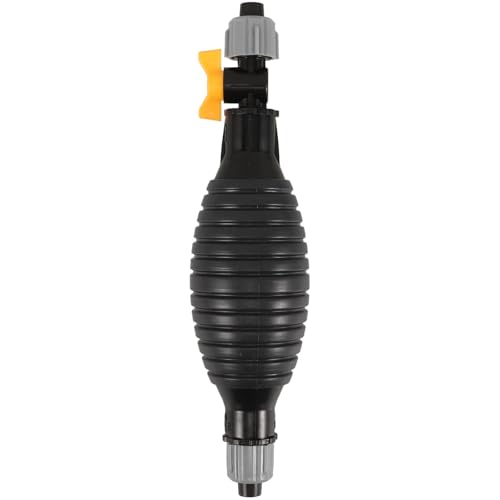
Products related to this article
Sponsored / affiliate links. As an Amazon Associate I earn from qualifying purchases. I may earn additional commission from eligible campaigns.