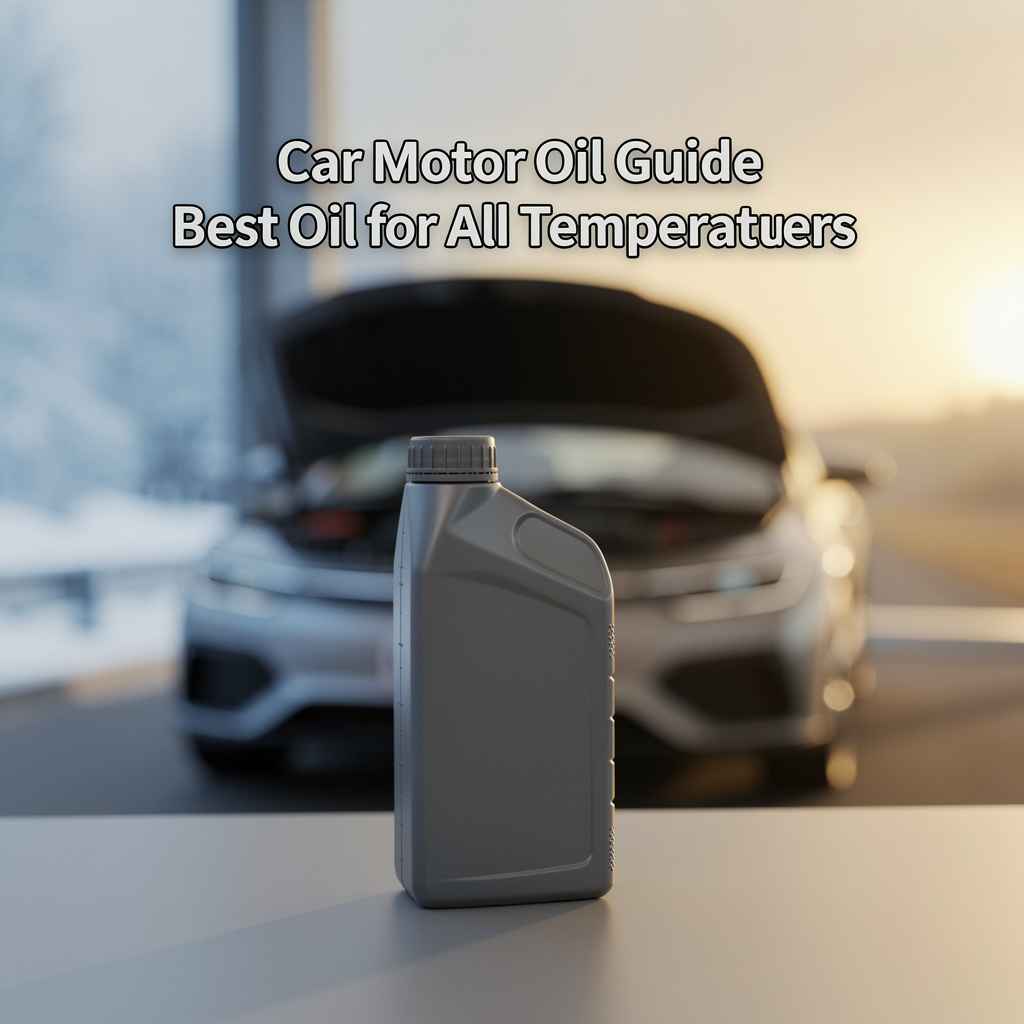
Car Motor Oil Guide Best Oil for All Temperatures
Figuring out the right motor oil for your car can feel a bit tricky, especially when you think about all the different temperatures your engine goes through. That’s why having a clear Car Motor Oil Guide: Best Oil for Every Temperature Near You is super helpful. It seems complicated at first, but we’re here to make it simple.
We’ll walk you through it step-by-step so you can easily pick the best oil for your car, no matter the weather. Let’s get started by looking at why oil matters so much.
Why Motor Oil Is Your Car’s Lifeline
Motor oil is the lifeblood of your car’s engine. It’s not just a lubricant; it performs several vital functions that keep your engine running smoothly and prevent damage. Without the right oil, friction can cause parts to wear down quickly, leading to costly repairs.
This section explains the essential roles oil plays and why choosing the correct type is so important for your vehicle’s longevity.
Lubrication
The primary job of motor oil is to reduce friction between moving engine parts. Think of pistons, crankshafts, and valves all rubbing against each other at high speeds. Oil creates a thin film between these metal surfaces.
This film prevents direct contact, stopping them from grinding against each other.
This constant lubrication is key to preventing wear and tear. Without it, the metal parts would quickly become damaged, leading to reduced engine performance and eventually, engine failure. The oil’s ability to maintain this protective film under various pressures and temperatures is a testament to its complex formulation.
Cooling
Engines generate a lot of heat during operation. While the cooling system handles most of this, motor oil also plays a significant role in cooling. As the oil circulates through the engine, it picks up excess heat from critical components like the pistons and cylinder walls.
It then carries this heat away to the oil pan, where it can dissipate. This continuous circulation helps to prevent the engine from overheating. Different oil types are designed to handle various temperature ranges, ensuring effective cooling even in extreme conditions.
Cleaning
As oil circulates, it also acts as a cleaner for your engine. Tiny particles of dirt, carbon deposits, and other debris can accumulate inside the engine over time. The oil suspends these contaminants, preventing them from sticking to engine parts.
These suspended particles are then carried to the oil filter, where they are trapped. Regularly changing your oil and filter ensures that this cleaning process remains effective. A clean engine runs more efficiently and is less prone to internal damage.
Protection Against Wear
Beyond basic lubrication, modern motor oils contain additives that provide additional protection. These additives help to prevent corrosion and rust on metal surfaces, especially when the engine is not running. They also help to reduce wear on engine parts during startup, which is a critical time for many engines.
The viscosity of the oil also plays a role in wear protection. A thicker oil might provide better protection at high temperatures, while a thinner oil might flow better in cold weather, ensuring lubrication reaches all parts quickly. Choosing the right oil means selecting one that balances these needs.
Understanding Motor Oil Grades And Viscosity
Choosing the right motor oil involves understanding its grade and viscosity. These terms are often seen on oil bottles but can be confusing. This section breaks down what they mean and how they relate to your car’s needs, especially concerning different temperatures.
We will clarify terms like “SAE viscosity grade” and explain why 5W-30 is different from 10W-40.
What Is Viscosity?
Viscosity refers to a fluid’s resistance to flow. Think of honey versus water. Honey is more viscous because it flows slower.
Motor oil’s viscosity is crucial for its performance. It needs to be thin enough to flow easily to all parts of the engine, especially when cold, but thick enough to create a protective film at high temperatures.
This balance is what makes selecting the right oil important. If the oil is too thin, it won’t protect the engine at high temperatures. If it’s too thick, it might not flow properly when the engine is cold, leading to startup damage.
SAE Viscosity Grades
The Society of Automotive Engineers (SAE) has established viscosity grades for motor oils. These grades tell you how well an oil flows at different temperatures. You’ll see numbers like 0W, 5W, 10W, 20, 30, 40, and 50.
The “W” stands for “Winter.”
Oils with a “W” in their grade are designed for cold weather performance. A lower number before the “W” means the oil flows better at lower temperatures. For example, 0W-20 oil flows much more easily in freezing conditions than 10W-30 oil.
Understanding Multi-Grade Oils
Most modern motor oils are multi-grade, meaning they have two viscosity numbers. For instance, 5W-30 is a multi-grade oil. The first number (5W) indicates its viscosity in cold temperatures, and the second number (30) indicates its viscosity at operating temperature (usually 100°C or 212°F).
This dual rating means the oil performs well in both cold starts and hot running conditions. It can adapt to changing temperatures, providing essential protection throughout the year. The ability to maintain a stable viscosity across a wide temperature range is a key feature of good motor oil.
How Temperature Affects Oil Viscosity
Temperature has a direct impact on oil viscosity. When it’s cold, oil thickens, making it harder to pump. This can lead to insufficient lubrication during engine startup.
When it’s hot, oil thins out, potentially reducing its ability to protect engine parts from friction.
This is why choosing an oil with the correct viscosity grade for your climate is vital. For hot climates, you might need an oil with a higher second number (e.g., 10W-40 instead of 10W-30) to maintain protection. For very cold climates, a lower first number (e.g., 0W-20 instead of 5W-20) is crucial for easy starting.
Common Viscosity Grades
Some common viscosity grades include:
- 0W-20: Excellent for very cold climates, good fuel economy.
- 5W-20: Suitable for most cold climates and many general applications.
- 5W-30: Very common and suitable for a wide range of temperatures and vehicles.
- 10W-30: Good for moderate climates, often recommended for older engines.
- 10W-40: Better protection in warmer climates and for engines that consume oil.
- 20W-50: Designed for very hot climates or high-performance engines that run very hot.
The recommended viscosity grade for your specific vehicle is always listed in your car’s owner’s manual. Following these recommendations is the most reliable way to ensure optimal engine protection.
Car Motor Oil Guide Best Oil for Every Temperature Near You
This section is your central guide to selecting the right motor oil based on the temperatures you experience. We’ll cover how to interpret oil recommendations for hot and cold weather, and how to find the best oil for your specific location. This part of the Car Motor Oil Guide: Best Oil for Every Temperature Near You will help you make informed decisions.
Choosing Oil for Cold Climates
In cold weather, engine oil needs to be thin enough to flow quickly to all engine parts when you start your car. If the oil is too thick, it can starve critical components of lubrication during those first few crucial moments. This can lead to accelerated wear.
Look for oils with a lower “W” number. For example, in very cold regions, a 0W-20 or 5W-20 oil is often recommended. These oils are formulated to remain fluid at very low temperatures.
This ensures that your engine gets protected lubrication right from the start, even when it’s freezing outside.
Choosing Oil for Hot Climates
Hot weather presents a different challenge: oil can become too thin and lose its protective qualities. When oil thins out, the protective film between moving parts can break down, leading to increased friction and wear.
In warmer climates, you’ll generally want an oil with a higher second viscosity number. Oils like 10W-40 or even 20W-50 are designed to maintain their thickness and protective film at higher operating temperatures. Always check your owner’s manual, but a slightly thicker oil can offer better protection when ambient temperatures are consistently high.
Mild and Moderate Climates
If you live in an area with moderate temperatures, you have more flexibility. A common recommendation like 5W-30 is often suitable for year-round use. This type of multi-grade oil offers a good balance of cold-weather flow and high-temperature protection.
However, even in mild climates, extreme heat waves or unseasonably cold snaps can occur. It’s always wise to consider your car’s specific needs and the oil recommendations in your manual. Many modern vehicles are designed to work well with 5W-30 or 5W-20 across a wide range of typical conditions.
Locating Oil Recommendations for Your Area
The most accurate place to find oil recommendations for your specific vehicle and local conditions is your car’s owner’s manual. It will list the recommended SAE viscosity grade(s) and often specific oil types like synthetic or conventional.
Beyond the manual, consider the climate data for your region. Are winter temperatures consistently below freezing? Do summers regularly exceed 90°F (32°C)?
These factors will help you decide if you should lean towards oils designed for extreme cold or extreme heat, or if a standard multi-grade will suffice.
Example Scenario: Cold Climate Driver
Imagine you live in Minnesota, where winter temperatures regularly drop to -20°F (-29°C) or lower. Starting your car on a frigid morning requires oil that flows like water.
- Check your owner’s manual. It likely recommends a 0W or 5W oil.
- Opt for a 0W-20 or 0W-30 synthetic oil. Synthetic oils perform better at extreme low temperatures than conventional oils.
- This choice ensures your engine is protected from the moment you turn the key, preventing wear during those critical cold starts.
Using a 10W-30 in this scenario would be a mistake. The oil would be too thick, leading to difficult starts and potential engine damage over time.
Example Scenario: Hot Climate Driver
Consider someone living in Arizona, where summer temperatures frequently reach 110°F (43°C) and car interiors can be even hotter. Engine oil works hard to keep things cool.
- Consult your owner’s manual for hot weather recommendations. It might suggest a 10W-40 or 20W-50.
- For a standard vehicle, a high-quality 10W-40 synthetic oil is often a good choice. It maintains a stronger protective film under intense heat.
- If you drive a performance vehicle or tow frequently, a 20W-50 might be specified for added protection against extreme heat.
Using a 5W-20 in Phoenix during August would likely lead to the oil thinning too much, compromising engine protection.
Types of Motor Oil: Conventional, Synthetic, and Blends
Motor oil isn’t just about viscosity; it also comes in different base formulations. Understanding the differences between conventional, synthetic, and synthetic blend oils will help you make the best choice for your car’s engine and your driving conditions. This knowledge is a key part of our comprehensive Car Motor Oil Guide: Best Oil for Every Temperature Near You.
Conventional Motor Oil
Conventional motor oil is the traditional type, refined directly from crude oil. It’s the most basic and usually the least expensive option. It provides adequate lubrication for many standard engines under normal driving conditions.
However, conventional oil breaks down more quickly at high temperatures and can thicken more in cold weather compared to synthetic oils. It may also contain fewer additives and may not offer the same level of protection against wear and deposits over time.
Synthetic Motor Oil
Synthetic motor oil is chemically engineered in a lab to provide superior performance. It is manufactured to have a more uniform molecular structure, which offers several advantages. Synthetic oils resist breaking down at high temperatures and maintain their fluidity at very low temperatures.
This results in better protection for your engine, especially under extreme conditions like very hot or very cold weather, stop-and-go driving, or heavy towing. Synthetic oils also tend to be cleaner and can help extend the life of your engine and reduce oil consumption.
Synthetic Blend Motor Oil
Synthetic blend oil, also known as semi-synthetic, is a mixture of conventional and synthetic base oils. It offers a middle ground, providing improved performance over conventional oil without the higher cost of full synthetic.
These blends offer better protection against heat and cold than conventional oils. They also provide enhanced cleaning and wear protection. For many drivers, a synthetic blend offers a good balance of performance and value.
Benefits of Synthetic Oil in Different Temperatures
Synthetic oils truly shine when temperatures fluctuate. In extreme cold, their lower pour points mean they remain fluid, allowing for quick lubrication upon startup. This drastically reduces wear during those critical first moments.
In extreme heat, synthetic oils have a higher viscosity index, meaning they resist thinning out. This ensures a more robust protective film between engine parts, even under demanding conditions. This consistent performance makes them ideal for those living in areas with extreme temperature swings.
Choosing Between Types
Your car’s owner’s manual is the best source for determining which type of oil is recommended. For most modern cars, synthetic oil or a synthetic blend is often the preferred choice due to its superior performance characteristics.
If your car is older or you drive under severe conditions (like frequent short trips, towing, or racing), synthetic oil can provide significant benefits in terms of engine protection and longevity. For budget-conscious drivers with standard vehicles and typical driving habits, a good conventional oil might suffice, but consider the long-term benefits of synthetics.
When to Change Your Motor Oil
Knowing when to change your motor oil is just as important as choosing the right type. Oil degrades over time and with use, losing its protective and cleaning properties. This section covers the factors that determine oil change intervals and how to monitor your oil’s condition.
Mileage vs. Time
Historically, oil changes were recommended based on mileage, like every 3,000 miles. However, modern engines and synthetic oils can often go much longer. Many manufacturers now recommend oil changes based on a combination of mileage and time, such as every 7,500 miles or 12 months, whichever comes first.
Even if you don’t drive many miles, oil can still degrade due to heat, oxidation, and contaminants. Therefore, adhering to the time interval is crucial, especially for engines that are driven infrequently.
Driving Habits and Conditions
Your driving habits can significantly impact how often you need an oil change. Frequent short trips, where the engine doesn’t have a chance to reach optimal operating temperature, can cause moisture and unburned fuel to accumulate in the oil, leading to sludge formation.
Severe driving conditions, such as towing heavy loads, driving in very hot or very cold weather, stop-and-go traffic, or dusty environments, put more stress on the oil. These conditions can accelerate oil breakdown, requiring more frequent changes than the standard recommendations.
Oil Life Monitoring Systems
Many modern vehicles are equipped with an oil life monitoring system. This system uses sensors and algorithms to calculate the remaining oil life based on driving conditions, engine temperature, engine load, and other factors.
These systems are usually more accurate than fixed mileage recommendations because they take your actual driving habits into account. When the system indicates it’s time for an oil change, it’s important to follow its guidance.
Checking Your Oil Level and Condition
Regularly checking your oil level is a simple but vital maintenance task. Park your car on a level surface and wait a few minutes after the engine has cooled. Pull out the dipstick, wipe it clean, reinsert it fully, and pull it out again.
The oil level should be between the “min” and “max” marks.
While checking the level, also look at the oil’s color and consistency. New oil is typically amber and translucent. As it gets older and dirtier, it will become darker and more opaque.
If you see particles, sludge, or an extremely dark color, it’s a strong sign that an oil change is due soon, even if the oil life monitor hasn’t indicated it yet.
What happens if you don’t change your oil
Skipping oil changes can lead to serious engine problems. Over time, oil loses its ability to lubricate and cool effectively. Contaminants build up, leading to increased friction, wear, and the formation of sludge.
This can result in decreased engine performance, poor fuel economy, and eventually, major engine damage. For example, sludge can block oil passages, starving parts of the engine of lubrication. This can cause parts to seize up, leading to catastrophic engine failure and very expensive repairs, often requiring a complete engine replacement.

Frequently Asked Questions
Question: How do I know which oil weight to use if my owner’s manual is lost?
Answer: If your owner’s manual is lost, you can often find the recommended oil viscosity grade by looking for a sticker under the hood, checking the manufacturer’s website, or consulting a trusted auto parts store that can look up your vehicle’s specifications.
Question: Is synthetic oil really worth the extra cost?
Answer: For most modern vehicles, especially those driven in extreme temperatures or under severe conditions, synthetic oil is often worth the extra cost. It provides superior protection, can improve fuel economy, and may allow for longer intervals between oil changes, potentially offsetting the initial price difference.
Question: Can I mix conventional and synthetic oil?
Answer: Yes, in most cases, you can mix conventional and synthetic oils. However, doing so will reduce the overall performance benefits of the synthetic oil. It is generally recommended to stick to one type if possible, or at least consult your owner’s manual.
Question: What does “viscosity index improver” mean on an oil bottle?
Answer: A viscosity index improver is an additive in multi-grade oils. It helps the oil maintain a more stable viscosity across a wider range of temperatures. It prevents the oil from thinning out too much when hot and thickening too much when cold.
Question: How often should I change the oil filter?
Answer: It is generally recommended to change your oil filter every time you change your engine oil. The oil filter traps contaminants, and a clogged filter can restrict oil flow, reducing the effectiveness of your oil change.
Summary
This comprehensive Car Motor Oil Guide: Best Oil for Every Temperature Near You has explained why motor oil is vital for your engine’s health. We covered viscosity grades, the differences between oil types, and how temperature affects performance. Always check your owner’s manual for specific recommendations for your car and climate.
Products related to this article
Sponsored / affiliate links. As an Amazon Associate I earn from qualifying purchases. I may earn additional commission from eligible campaigns.