Does My Car Have an Anti-Theft Device? 6 Ways to Check
Most modern cars carry some form of anti-theft protection, but what yours has depends on the make, model and year. You can usually find out in a few minutes by checking the dashboard for a security indicator light, the owner’s manual, the key or fob, and the car for signs of an added aftermarket device. This guide shows what each clue means, which systems federal rules require and which are optional, and what to do if you cannot tell.
Understanding Car Anti-Theft Devices
Anti-theft devices fall into a few families, and most cars combine several. NICB’s layered protection guide describes four layers: common-sense habits, warning devices, immobilizing devices and tracking devices. It says the more layers on a vehicle, the harder it is to steal, and that the right number depends on the vehicle and where you live.
| Layer | What it is | Examples named by NICB |
|---|---|---|
| 1. Common sense | Habits that cost nothing | Remove keys, lock doors, close windows, park in a well-lit area |
| 2. Warning device | Visible or audible deterrent | Audible alarms, steering wheel and brake locks, wheel locks, theft deterrent decals, window etching, micro dot marking |
| 3. Immobilizing device | Stops thieves bypassing the ignition | Smart keys, chips in ignition keys, fuse cut-offs, kill switches, starter and fuel disablers |
| 4. Tracking device | Signals police or a monitoring station | Telematics systems that combine GPS and wireless technology |
Best Visible Deterrent Pick | |
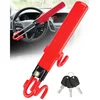 |
Tevlaphee Steering Wheel Lock Anti-Theft Device (Red, 3 Keys) A manual steering wheel lock whose listing describes four locking hooks, twin bars and a bright color meant to be seen from outside the car.
|
As an Amazon Associate we earn from qualifying purchases. Spec-based pick from the listing, not a hands-on test.
How to Tell if Your Car Has a Factory Anti-Theft Device
Start with what every car has. Federal Motor Vehicle Safety Standard 114 says each passenger car, and each truck or multipurpose vehicle up to 10,000 pounds GVWR, needs a starting system that, whenever the key is removed, prevents normal activation of the engine or motor and prevents either steering or forward self-mobility, or both. The standard also requires an audible warning when the key is in the starting system and the driver’s door is opened. In the standard, a key can be a physical device or an electronic code.
That is the floor, not the ceiling. A factory alarm or electronic immobilizer is a separate feature, and these checks help you find out whether you have one.
Factory System Checkpoints
| Where to look | What you may see | What it suggests |
|---|---|---|
| Dashboard | A small security or key-shaped indicator that lights or blinks at ignition or when the car is switched off | A factory immobilizer or security system is present (confirm the symbol in your manual) |
| Owner’s manual | A section on keys, immobilizer or security system | The most direct confirmation for your exact model and year |
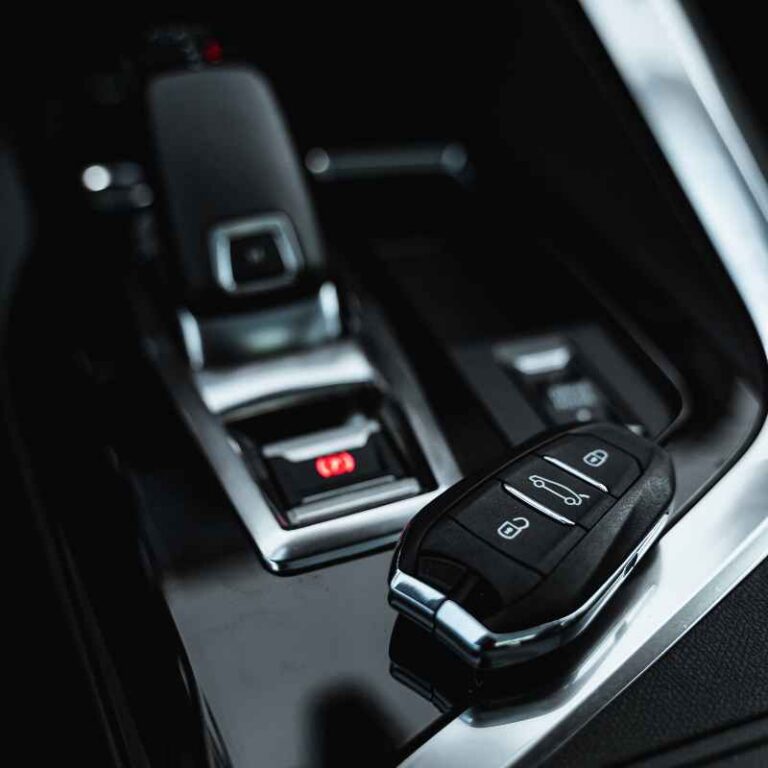
| Key or fob | Lock, unlock and panic buttons, or a push-button start with a smart key | A remote security system is linked to the vehicle |
| Parts labels | A VIN label on the hood, fenders, doors or bumpers | The car is covered by federal parts marking (see below) |
Honda’s owner’s manual describes how this plays out on one vehicle. The keys contain electronic circuits that are activated by the immobilizer system and will not start the engine if the circuits are damaged. When you turn the ignition to ON, the immobilizer indicator should come on for a few seconds, then go out. It also blinks several times when you turn the switch from ON to accessory or lock. That blinking is normal. Other makes behave differently, so read the section for your car.
What Parts Labels Tell You
Under 49 CFR 541, covered passenger cars, light-duty trucks and multipurpose vehicles up to 6,000 pounds GVWR must carry the VIN on major parts: engine, transmission, fenders, hood, doors, bumpers, quarter panels, pickup box and the rear door, decklid, tailgate or hatchback. Where practicable, the label goes on an interior surface of the part, and removing it must leave visible residue.
Do not read too much into a missing label. Under 49 CFR 543, a manufacturer can petition to exempt a vehicle line from parts marking when the entire line has an immobilizer as standard equipment that meets listed performance criteria. A car with no labels may therefore still have an immobilizer.
Identifying Aftermarket Anti-Theft Devices
Aftermarket protection is anything fitted after the car left the factory. NICB’s second layer includes steering wheel and brake pedal locks, wheel locks, tire locks, decals and window etching, while the third and fourth layers include kill switches, fuel disablers and tracking systems. Some owners also add passive protection such as security window film, which slows a break-in rather than stopping it. If you have just bought a used car, read our guide to anti-theft devices and then look for these signs.
Aftermarket Clues to Look For
- Window stickers or decals advertising an alarm or tracking service.
- A blinking LED on the dash or door panel that is not described in your owner’s manual.
- A second remote or fob that does not match the car’s original key.
- Non-factory modules or wiring under the dash, visible without removing any panels.
- A visible lock such as a steering wheel lock, brake lock or wheel clamp in the cabin or trunk.
Hidden devices are hidden on purpose. If you suspect one, ask the seller for installation paperwork or have a qualified alarm installer inspect the car. To find out whether a tracker is fitted, see whether your car has a GPS tracker.
Understanding Dashboard Warning Lights
The security indicator is usually a small car, lock or key symbol. It is not the same as the check engine light, and its meaning depends on the maker. Behavior differs by maker, so the manual for your car is the authority. The Honda manual described below is one worked example.
The Honda manual says that if the indicator starts to blink at startup, the system does not recognize the coding of the key. Its steps: turn the ignition to LOCK, remove the key, reinsert it and turn to ON again. It adds that another immobilizer key or a metal object near the ignition can interfere, so keep other immobilizer keys off the same ring. If the system repeatedly fails to recognize the key, contact the dealer.
| Indicator behavior | Typical meaning | What to do |
|---|---|---|
| Lights a few seconds at ignition ON, then goes out | Key recognized (Honda manual) | Normal; no action |
| Blinks several times as you switch the ignition off | Normal on the Honda in the manual | No action; check your own manual |
| Blinks when you try to start | Key not recognized (Honda manual) | Retry once as your manual directs, then call your dealer or a locksmith |
| Any other pattern | Not covered by the manual we read | Look it up in your owner’s manual; ask a dealer if unclear |
If it will not start with the light blinking, read what to check when the anti-theft light blinks and the car will not start. For a replacement or lost key, a dealer or a locksmith must program the new key to the car;
How to Check Your VIN
Your vehicle identification number (VIN) is what ties a car to its factory build, and it is also the number printed on the parts labels described above.
The most reliable way to confirm factory security equipment is to give a dealer your VIN and ask whether your model came with an alarm, an immobilizer or both. Equipment changes by model year, so a VIN lookup beats a guess. For general VIN checks, see our guide to checking your VIN.
Checking Your Key Fob Features
The key is a clue in itself. NICB lists smart keys among immobilizing devices, so a car with a smart key and push-button start usually has an electronic key check built in.
A panic button is a useful hint too. On the Honda in the manual, pressing LOCK a second time within five seconds gives a beep to confirm the security system has set, and holding PANIC for about one second sounds the horn and flashes the lights for about 30 seconds. A remote with these functions suggests an alarm, though the exact behavior differs by vehicle.
If a keyless car is your concern, see how to prevent keyless entry car theft.
What the Research Says About Immobilizers
The strongest real-world evidence on immobilizers comes from insurance data. A Highway Loss Data Institute (HLDI) study looked at Hyundai and Kia models sold without electronic immobilizers. It found that vehicles with a software upgrade installed by December 2023 had theft claim frequencies 53 percent lower than vehicles without it, and whole-vehicle theft frequency fell 64 percent.
| Model year | Hyundai and Kia with standard immobilizer | Other brands |
|---|---|---|
| 2011 | 17 percent | 92 percent |
| 2022 | 84 percent | 96 percent |
| 2023 | All models | Not stated |
Two cautions from the same study. The software-based immobilizer only activates if the driver locks the vehicle with the fob rather than the door-handle switch, and theft claim frequency for these brands stayed elevated even after the upgrade. If you own a 2011 to 2022 Hyundai or Kia, the HLDI advice is to call your dealer about the upgrade.
What if You Can’t Find Clear Signs?
Some systems are subtle, and not every car shows a light. If you still cannot tell, work through these steps in order.
- Read the manual’s index for immobilizer, security system and theft deterrent.
- Call a dealer with your VIN and ask what security equipment your model and year came with.
- Ask the previous owner or seller for alarm or tracker paperwork if you bought used.
- Book an inspection with an automotive alarm installer if you suspect an aftermarket system.
When is it Normal, and When to Worry?
Normal: an indicator that behaves as your manual describes, a beep or flash when you lock the car with the remote, and an alarm that sounds only when something triggers it. Worry about: a car that will not start with the indicator blinking, an alarm that goes off with no cause, or signs of tampering such as broken windows, damaged door locks or cut wires near the ignition.
If you see signs of attempted theft, do not drive the car until a professional has checked the ignition and wiring, and report the attempt to your insurer and local police. An alarm that triggers randomly needs a professional diagnosis.
Insurance Discounts and Theft Deterrence
Insurers often reward protection. State Farm’s discounts page says you are eligible for its anti-theft discount if your vehicle has an alarm or some other approved anti-theft device, and that savings, names and eligibility vary by state. It lists no percentage for this discount, so ask your own insurer which devices qualify and what proof it wants. To learn how theft claims are handled, see whether theft is covered by car insurance.
This guide does not cover how to remove, reset or bypass a vehicle security system, and it does not replace your owner’s manual or a qualified technician. Dealers and licensed locksmiths handle key programming.
Frequently Asked Questions
What is a car immobilizer?
An immobilizer keeps the engine from running unless the car recognizes the key’s electronic code. One Honda owner’s manual says a properly coded key must be used for the engine to start. NICB lists computer chips in ignition keys among immobilizing devices.
Does every car have an anti-theft system?
Every passenger car sold in the US must meet FMVSS 114, which requires a starting system that stops normal engine activation and steering or forward movement once the key is removed. Alarms and electronic immobilizers vary by make, model and year: HLDI found they were standard on only 17 percent of 2011 Hyundai and Kia models, against 92 percent of 2011 models from other brands.
What does a blinking security light mean?
On the Honda manual we read, the immobilizer indicator lights for a few seconds when you turn the ignition on, then goes out, and blinks several times when you switch back to accessory or lock, which is normal. A blinking light when you try to start means the key was not recognized. Other makes use different behavior, so confirm in your own owner’s manual.
Can I add an anti-theft device to my car?
Yes. NICB groups add-ons into warning devices, immobilizing devices and tracking devices, and says the number of layers you need depends on your vehicle and where you live. Wiring-based devices should be fitted by a qualified installer, because the same Honda manual warns that adding devices to its immobilizer system can cause electrical problems.
Does an anti-theft device lower my insurance cost?
It can. State Farm’s discounts page says you are eligible for its anti-theft discount if your vehicle has an alarm or some other approved anti-theft device, and that discounts vary by state. Ask your own insurer which devices qualify and what proof it needs.
Is a GPS tracker an anti-theft device?
NICB treats tracking as the final layer: it emits a signal when the vehicle is stolen and helps recovery, rather than stopping the theft. For how to find out whether your car already has one, see our guide on whether your car has a GPS tracker.
Final Thoughts on Car Security
Every car has the key-removal protection that FMVSS 114 requires, but alarms, electronic immobilizers and trackers vary. Check the dashboard light, the manual and the key, ask a dealer with your VIN if you are unsure, and add visible layers if your car lacks them.
Products related to this article
Sponsored / affiliate links. As an Amazon Associate I earn from qualifying purchases. I may earn additional commission from eligible campaigns.
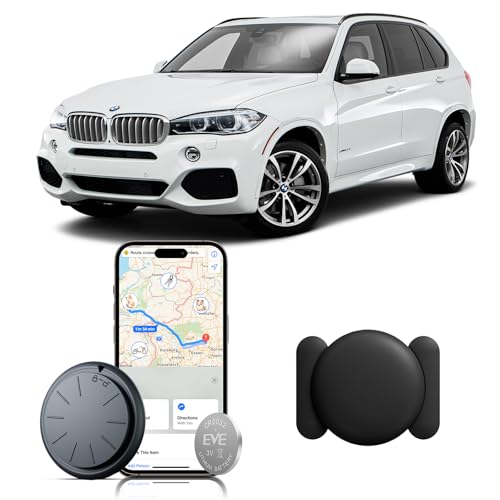 ZFSJTAG Car GPS Tracking Device for Vehicles, 1PCS Real Time GPS Tracker for Car, Work with Find My (iOS Only),Hidden Mini GPS Tracker,No Monthly Fee (Black Tracker, Black Magnetic Case)
 4G GPS Tracker Car Anti-Theft Long Battery Life 20000mAh Real Time GPS Tracking Device Magnet No Geographic Restriction Car Tracker with Alerts, Geo Fence, History Playback TK905C