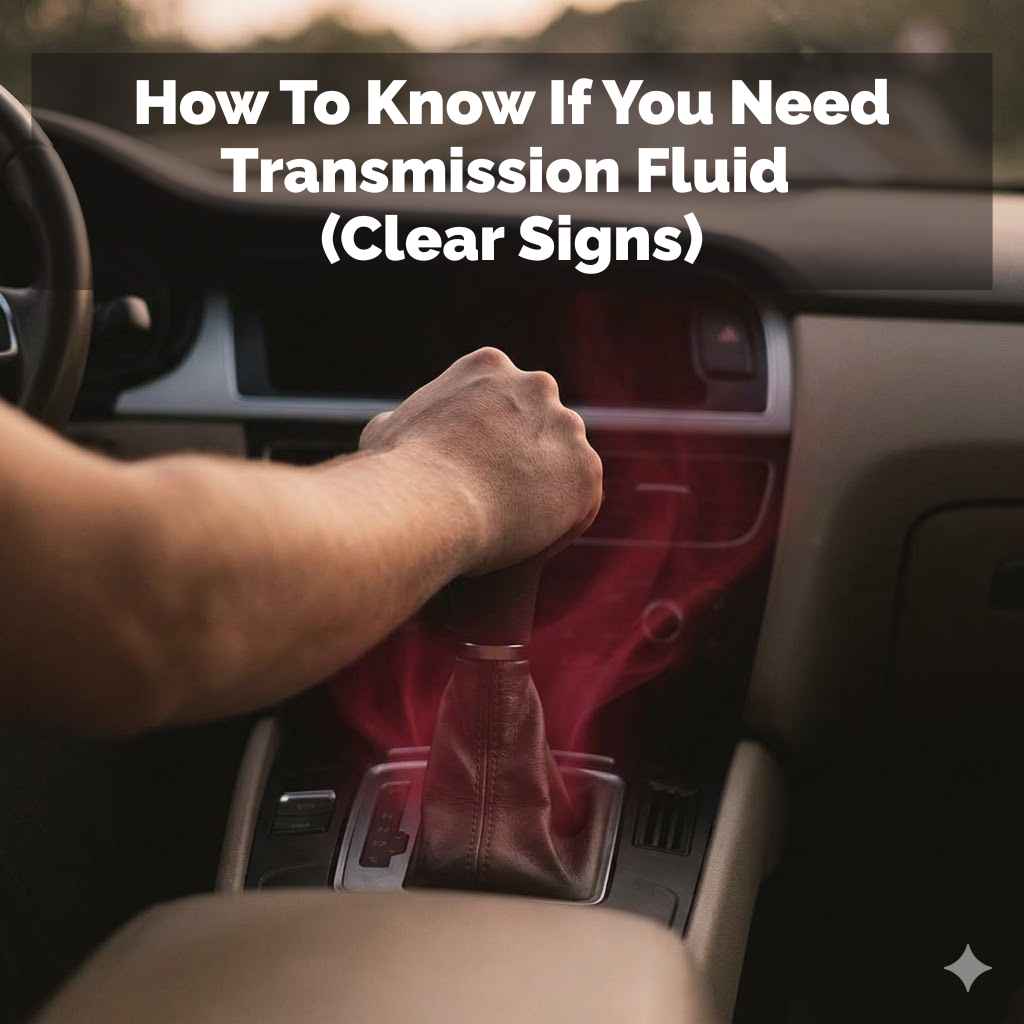
How To Know If You Need Transmission Fluid (Clear Signs)
But how do you know for sure? Many people wait until there’s a big problem. That’s when it gets expensive.
This guide will help you spot the signs. You’ll learn what to look for. You’ll also find out why it matters so much.
We’ll break it down into easy steps. You’ll feel more confident about your car. Let’s figure out if your transmission needs some love.
Your transmission connects your engine to your wheels. It changes gears. Transmission fluid lubricates parts. It cools the system. It also cleans out grit. Low fluid causes damage. Checking it is important. Signs of low fluid include slipping gears, odd noises, and rough shifts.
What Is Transmission Fluid and Why Is It So Important?
Think of transmission fluid as the lifeblood of your car’s transmission. It’s a special oil. It has many jobs to do.
First, it keeps everything moving smoothly. Gears need to slide past each other. The fluid acts like a lubricant.
This stops them from grinding. It makes shifting gears feel easy.
Second, it cools things down. Your transmission works hard. It creates a lot of heat.
The fluid absorbs this heat. Then it carries it away. This keeps your transmission from getting too hot.
Overheating can really hurt your car.
Third, it helps with pressure. In automatic transmissions, fluid pressure is key. It helps engage gears.
It makes the transmission shift correctly. If the fluid is low, this pressure drops. This causes problems.
Lastly, it keeps parts clean. As parts move, they shed tiny bits of metal. The fluid picks these up.
It carries them to a filter. This stops them from causing damage. It’s like a cleaning crew for your gears.
So, you can see why this fluid is vital. Without enough of it, or if it’s old, it can’t do its job well. This leads to wear and tear.
It can even cause a total breakdown.
My Own Transmission Fluid Scare: A Night I Won’t Forget
I remember one sweltering August evening. I was driving home from a friend’s house. It was late.
The air was thick and still. Suddenly, my old sedan started acting weird.
As I slowed for a red light, the car gave a big lurch. It felt like it was about to stall. Then, when I tried to accelerate again, the engine just whined.
The car barely moved. My heart sank. I pictured a massive repair bill.
Panic started to set in. I pulled over to the side of the road. The engine was still running, but something was very wrong.
I thought, “Is this the transmission?” I had never dealt with transmission issues before. It sounded so serious.
I popped the hood, even though I knew little about engines. I saw nothing obviously broken or smoking. I was stuck.
I called a tow truck, expecting the worst. The driver took a look. He asked if I had checked my transmission fluid lately.
I hadn’t.
He showed me how. The dipstick was bone dry. He added a special fluid.
He told me to drive gently. The car shifted perfectly all the way home. It was a simple fix that saved me a fortune.
That night taught me how crucial transmission fluid is. I never let it get low again.
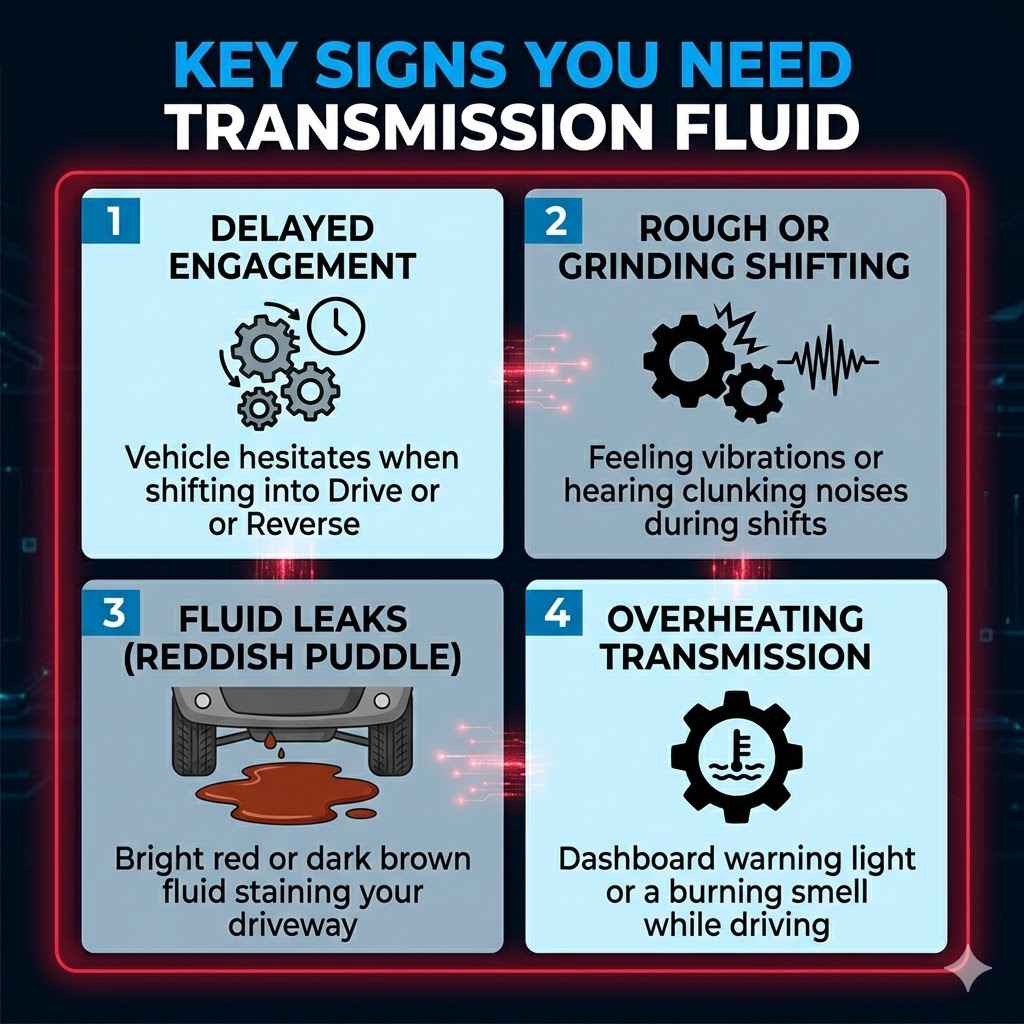
Common Signs Your Transmission Needs Fluid
Slipping Gears: The car feels like it’s not grabbing a gear. It might rev higher than usual without moving faster.
Strange Noises: Whining, clunking, or humming sounds from the transmission area are red flags.
Rough Shifting: Gears change with a jolt or delay. It doesn’t feel smooth anymore.
Burning Smell: An acrid, burning smell can mean the fluid is overheated or low.
Leaking Fluid: Red or brown puddles under your car are a clear sign.
Check Engine Light: This light can come on for many reasons. Transmission issues are one of them.
The Tangible Signs: What to Look and Listen For
Your car often tells you when it needs something. You just need to know what to listen and look for. Transmission issues are usually not sudden.
They build up over time.
One of the most common signs is slipping gears. This happens when the engine RPMs go up, but the car doesn’t speed up as it should. It’s like the engine is revving in neutral.
This feels very unsettling. It means the transmission isn’t gripping the gear properly.
You might also hear strange noises. Listen for whining, humming, or clunking sounds. These sounds often come from the front of the car or under it.
They are more noticeable when you shift gears. Or when you accelerate.
How does your car shift? If it feels rough or jerky, that’s a warning. A healthy transmission shifts smoothly.
You should barely feel it. If you feel a noticeable jolt or delay, it’s a problem.
Sometimes, you might smell something odd. A burning smell is a serious sign. It usually means the transmission fluid is very low or burnt.
This heat can damage parts quickly.
Look under your car. Do you see any puddles of fluid? Transmission fluid is often bright red or reddish-brown.
It can also be dark brown or black if it’s old. Any leak is bad.
Your dashboard might also give a clue. The check engine light can illuminate for many reasons. But it can also come on if your transmission is having trouble.
These are all signs that you need to check your transmission fluid level. And its condition.
Quick Scan: Is Your Transmission Fluid Low?
| Symptom | What It Means | Action Needed |
|---|---|---|
| Car jolts when shifting | Low fluid pressure or worn parts. | Check fluid level immediately. |
| Engine revs, car doesn’t move much | Transmission is slipping. | Check fluid level and condition. |
| Whining or humming noise | Low fluid or internal wear. | Check fluid level. |
| Bad burning smell | Overheating or very low fluid. | Stop driving and check fluid NOW. |
How to Check Your Transmission Fluid: A Step-by-Step Guide
Checking your transmission fluid is like checking your engine oil. It’s a basic maintenance task. But it’s often overlooked.
You can do this yourself. It’s not too hard.
First, you need to know if your car has a dipstick for transmission fluid. Many newer cars don’t. They have a sealed system.
You’ll need a mechanic for those. But if you have one, great!
Your car needs to be running. And it needs to be warm. Drive it for about 10-15 minutes.
This gets the fluid to its operating temperature. Then, park on a level surface. This is very important.
An unlevel surface will give a false reading.
Turn off the engine. For some cars, you check it while running. Always check your owner’s manual.
It’s the best guide for your specific car. But most common is checking it when warm and off.
Locate the transmission fluid dipstick. It’s usually red or yellow. It might have a transmission symbol on it.
It’s often near the back of the engine. Or it might be on the driver’s side. Again, the manual is your friend here.
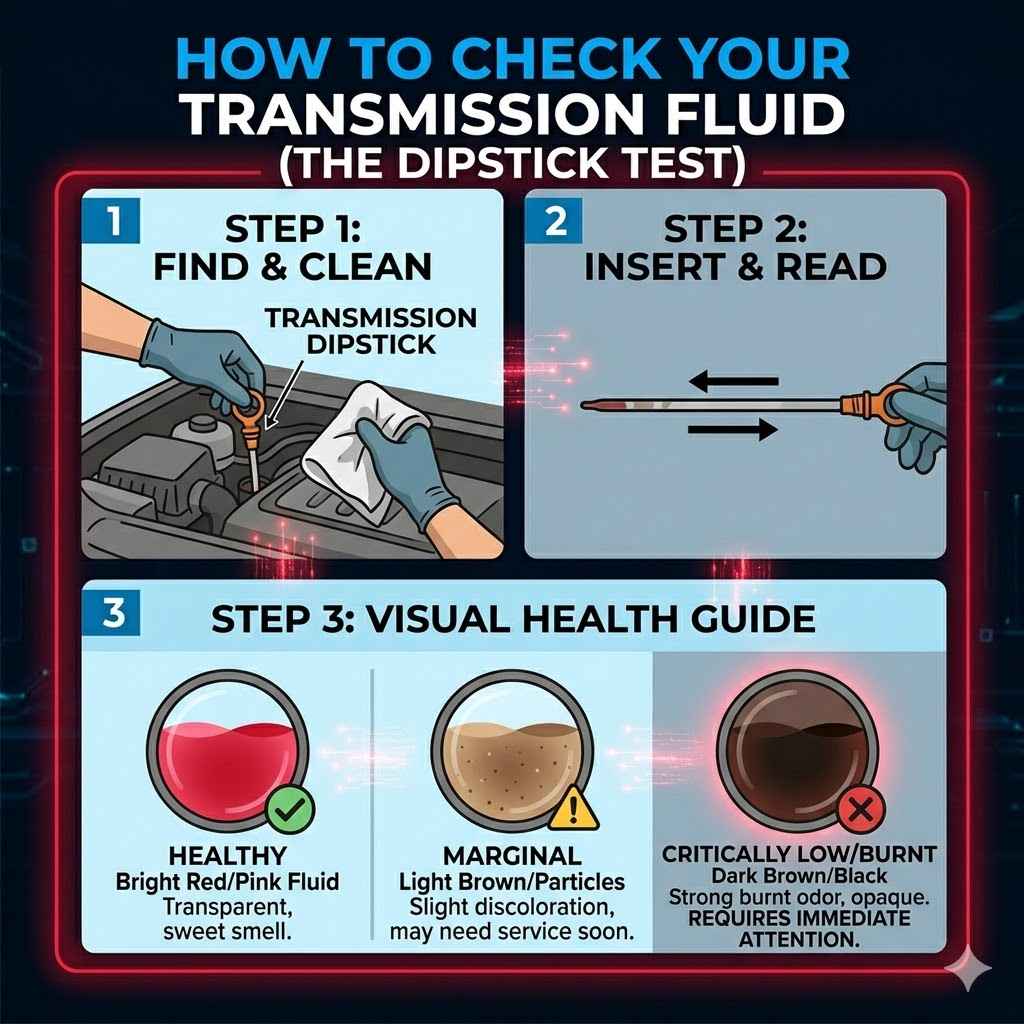
Pull out the dipstick. Wipe it clean with a lint-free cloth. Or a paper towel.
Then, push it all the way back in. Pull it out again. Look at the end of the dipstick.
You’ll see markings. Usually, there are ‘hot’ and ‘cold’ marks. Or ‘add’ and ‘full’ lines.
The fluid level should be between these marks. Ideally, it should be near the ‘full’ or ‘hot’ mark if the engine is warm.
Now, look at the fluid itself. What color is it? Fresh transmission fluid is bright red.
It should be clear. If it’s dark brown, or almost black, it’s old. It needs to be changed.
Does it smell burnt? If it smells like burnt toast, that’s bad. It means the fluid is overheated.
It has lost its lubricating properties.
If the fluid level is low, you’ll need to add more. Make sure you use the correct type of transmission fluid. Your owner’s manual will specify this.
Using the wrong type can cause serious damage.
Add fluid slowly. A little at a time. Check the dipstick after each addition.
Don’t overfill. Overfilling can be just as bad as being underfilled.
If the fluid is dark or burnt, it’s time for a transmission fluid change. This involves draining the old fluid and refilling with new fluid. Sometimes a filter change is recommended too.
Fluid Condition Checklist
Normal: Bright red, clear, no strong odor.
Slightly Old: Pinkish or light brown, still clear, mild odor.
Needs Changing: Dark brown or black, may be cloudy, noticeable odor.
Serious Problem: Very dark black, thick, gritty, strong burnt smell.
Why Does Transmission Fluid Get Low or Go Bad?
It’s not magic. Transmission fluid doesn’t just disappear. There are usually reasons why the level drops or the fluid degrades.
The most common reason for low fluid is a leak. Seals wear out over time. Gaskets can crack.
Or fluid lines can get damaged. When this happens, fluid escapes.
If you see red or brown puddles under your car, that’s a leak. Even a small leak can eventually lead to low fluid levels. You need to find and fix these leaks.
Sometimes, fluid can be consumed internally. This is less common. But it can happen in some transmissions.
What about fluid going bad? Over time, transmission fluid breaks down. Heat and friction cause it to degrade.
This is normal wear and tear. The additives in the fluid get used up.
As the fluid breaks down, it becomes less effective. It doesn’t lubricate as well. It doesn’t cool as well.
It also doesn’t clean as well. This is why regular fluid changes are important.
Old fluid can also become contaminated. Small metal particles from gears and clutches can get into the fluid. Dirt and debris can also enter if there’s a leak.
This contamination makes the fluid abrasive. It can damage internal parts.
Extreme heat is a major enemy of transmission fluid. If your transmission overheats often, the fluid will break down much faster. This can happen if you tow heavy loads.
Or if you drive in very hot weather for long periods. Or if the cooling system isn’t working properly.
So, low fluid usually means a leak. Bad fluid usually means it’s old or has been overheated. Both need attention.
Understanding Fluid Degradation
Heat: High temperatures break down the fluid’s chemical structure. This reduces its ability to lubricate and cool.
Friction: Constant movement of parts creates heat and wear. This can introduce particles into the fluid.
Oxidation: Over time, the fluid reacts with air. This can cause it to thicken and form sludge.
Contamination: Debris and metal particles act like sandpaper. They wear down internal transmission components.
Manual vs. Automatic Transmissions: What’s Different?
It’s important to note that transmission fluid and its checks can differ between manual and automatic transmissions. Both need fluid, but the type and how you check them can vary.
Automatic Transmissions: These are the ones we’ve mostly talked about. They use hydraulic pressure created by the fluid to shift gears. The fluid needs to be a specific type.
It’s often called ATF (Automatic Transmission Fluid). The color is usually red. You typically check it with a dipstick while the engine is warm and running (or off, depending on the car).
Manual Transmissions: These use a clutch and gears that you shift yourself. They don’t rely on hydraulic pressure in the same way. The fluid in a manual transmission is usually gear oil.
It’s thicker than ATF. Its color can be amber or brown.
Checking manual transmission fluid is different. Many manual transmissions don’t have a dipstick. Instead, they have a fill plug.
You usually need to get under the car to check it. The fluid level is typically checked by removing this plug. The fluid should be up to the bottom of the plug hole.
The type of fluid is also different. Always use the type specified in your owner’s manual. For manuals, it’s usually a GL-4 or GL-5 gear oil.
Using the wrong type of fluid can damage the synchronizers. Or other internal parts.
So, while both transmissions need fluid, the specifics matter. Always refer to your car’s manual. It will tell you exactly what to do.
Manual vs. Automatic: Key Differences
Type of Fluid: Automatic Transmission Fluid (ATF) vs. Gear Oil.
Color: Usually Red (ATF) vs. Amber/Brown (Gear Oil).
Checking Method: Dipstick (common for AT) vs. Fill Plug (common for MT).
Operating Principle: Hydraulic pressure (AT) vs. Mechanical engagement (MT).
When Is It Just a Minor Issue, and When Is It Serious?
It’s normal to worry when your car acts up. But not all transmission problems are catastrophic. Sometimes, it’s a simple fix.
Other times, it’s a sign of bigger trouble.
Minor Issues:
If you check your transmission fluid and it’s just a bit low, adding the correct fluid might solve the problem. This is especially true if you caught it early. If the fluid itself looks okay (not burnt or black), a simple top-up could be all you need.
A slight hesitation when shifting, or a very minor clunk that only happens once in a while, might be an early warning. It could just mean the fluid level is getting a little low.
Serious Issues:
A strong burning smell is always a serious sign. It means overheating. And likely damage is occurring.
You should stop driving immediately.
If the transmission fluid is black and gritty, or if it smells strongly of burnt toast, the fluid is too degraded. It’s likely caused significant wear. A fluid change might not be enough.
Persistent slipping gears are a major concern. If the engine revs high but the car doesn’t move, and adding fluid doesn’t help, it suggests internal damage. This could mean worn clutches or bands inside the transmission.
Loud grinding or clunking noises that happen consistently are also bad signs. These noises often point to mechanical failure within the transmission.
Visible leaks are also serious. While adding fluid can temporarily fix the slipping, you must fix the leak. Otherwise, it will just get low again.
And the damage will continue.
If your “Check Engine” light is on and a scan reveals transmission codes, it’s time for professional diagnosis.
The best approach is to check your fluid regularly. This way, you can catch minor issues before they become major.
Spotting Trouble Early: Quick Checks
Check Fluid Level: Do this every few months.
Check Fluid Color & Smell: Do this when you check the level.
Listen to Your Car: Pay attention to new noises or rough shifts.
Watch for Leaks: Look under your car after it has been parked.
When to Call a Professional Mechanic
While checking your transmission fluid is a DIY task for many, some situations require expert help. Don’t hesitate to call a mechanic if you’re unsure. Or if the problem seems beyond your comfort level.
Complex Fluid Checks: If your car has a sealed transmission system, you can’t check the fluid yourself. You’ll need a mechanic to do it. They have special tools for this.
Fluid Leaks: Finding the source of a transmission fluid leak can be tricky. Mechanics have the experience and equipment to pinpoint leaks. Especially if they are internal or in hard-to-reach places.
Burning Smell or Black Fluid: If you discover your fluid is burnt or black, it’s a clear sign of internal damage. A mechanic can assess the extent of the damage. And advise on whether a fluid change is enough, or if a repair or rebuild is needed.
Persistent Slipping or Noises: If adding fluid doesn’t solve slipping gears, or if you hear loud, unusual noises, it’s time for a pro. These indicate internal transmission problems that need skilled diagnosis and repair.
Check Engine Light is On: While you can get the codes read yourself, a mechanic can interpret them in the context of your car’s specific transmission. They can perform further tests to confirm the problem.
Complete Transmission Failure: If your car won’t move at all, or the transmission is making extreme grinding noises, do not try to drive it. Call for a tow truck. The mechanic will likely need to rebuild or replace the transmission.
Don’t risk causing more damage by trying to fix something you’re not comfortable with. A professional mechanic has the knowledge and tools to get your transmission running smoothly again.
When to Seek Professional Help
Sealed Transmission Systems: No user-accessible dipstick.
Persistent Leaks: Can’t find the source of the leak.
Severe Fluid Degradation: Black, burnt fluid indicating internal damage.
Major Shifting Issues: Slipping, severe clunks, or grinding noises.
Diagnostic Trouble Codes: Especially for transmission-related codes.
Preventive Maintenance: The Best Way to Avoid Trouble
The best way to avoid costly transmission repairs is through regular maintenance. It sounds simple, but it makes a huge difference.
Regular Fluid Checks: Make it a habit to check your transmission fluid. Do it every few months. Or at least twice a year.
This lets you catch low levels or degrading fluid early.
Scheduled Fluid Changes: Your car’s manual will recommend how often to change the transmission fluid. Follow this schedule. Think of it like changing your engine oil.
It keeps things running smoothly.
Driving Habits: Avoid aggressive driving. Sudden acceleration and hard braking put extra strain on your transmission. Drive smoothly.
This reduces heat and wear.
Towing and Heavy Loads: If you tow trailers or carry heavy loads, your transmission works harder. You might need to change the fluid more often. Check your owner’s manual for recommendations related to towing.
Address Leaks Promptly: If you notice any fluid leaks, get them fixed right away. Even small leaks can lead to big problems if left unchecked.
Cooling System Maintenance: Make sure your car’s cooling system is in good shape. An overheating engine can lead to an overheating transmission.
By taking these simple steps, you can significantly extend the life of your transmission. You can also avoid those stressful, expensive emergency repairs. It’s an investment in your car’s longevity.
Frequently Asked Questions About Transmission Fluid
How often should I check my transmission fluid?
It’s a good idea to check your transmission fluid every few months, or at least twice a year. Also, check it if you notice any unusual shifting or sounds from your car.
What kind of transmission fluid do I need?
Always use the specific type of transmission fluid recommended in your car’s owner’s manual. Using the wrong type can cause serious damage to your transmission.
Can I add the wrong type of transmission fluid?
No, you should never add the wrong type of fluid. Different transmissions require different fluids. Using the wrong one can lead to poor shifting, overheating, and internal damage.
My transmission fluid is red. Is that normal?
Yes, fresh automatic transmission fluid is typically bright red. If it looks dark brown, black, or has a burnt smell, it needs to be changed.
What happens if I don’t change my transmission fluid?
Over time, transmission fluid breaks down. It loses its ability to lubricate and cool. This can lead to increased wear, overheating, and eventually, expensive transmission damage or failure.
Is it okay if my transmission fluid is a little low?
A slightly low fluid level might be corrected by adding fluid. However, even a small amount of low fluid can cause slipping and premature wear. It’s best to check why it’s low, as it might indicate a leak.
Final Thoughts on Transmission Fluid Care
Taking care of your transmission fluid is vital. It’s more than just a simple check. It’s about protecting a major component of your car.
Knowing the signs is your first step. Then, learn how to check it yourself. Regular maintenance will save you money.
And stress. Your car will thank you for it with miles of smooth driving.
Products related to this article
Sponsored / affiliate links. As an Amazon Associate I earn from qualifying purchases. I may earn additional commission from eligible campaigns.