Is Car Battery Corrosion Dangerous? What To Know
It’s a common sight for many car owners: fuzzy, white, or bluish-green stuff clinging to the terminals of your car’s battery. This is car battery corrosion. You might see it and wonder, “Is this a big deal?” Or perhaps you’ve heard stories about batteries going bad.
It can feel worrying, especially when your car is your lifeline for getting around. Let’s break down what car battery corrosion really means for you and your car.
Car battery corrosion is a buildup of material on the battery terminals. It happens when battery acid reacts with metal. While not usually a sudden danger to people, it can seriously harm your car’s electrical system and performance if ignored. This guide explains why it occurs, what problems it causes, and how to deal with it.
Understanding Car Battery Corrosion
Car battery corrosion is essentially a chemical reaction. Your car’s battery uses a mix of sulfuric acid and water. This is called the electrolyte.
It helps electricity flow. The terminals and cable connectors are usually made of lead. When the acid inside the battery comes into contact with the air and the lead terminals, a reaction starts.
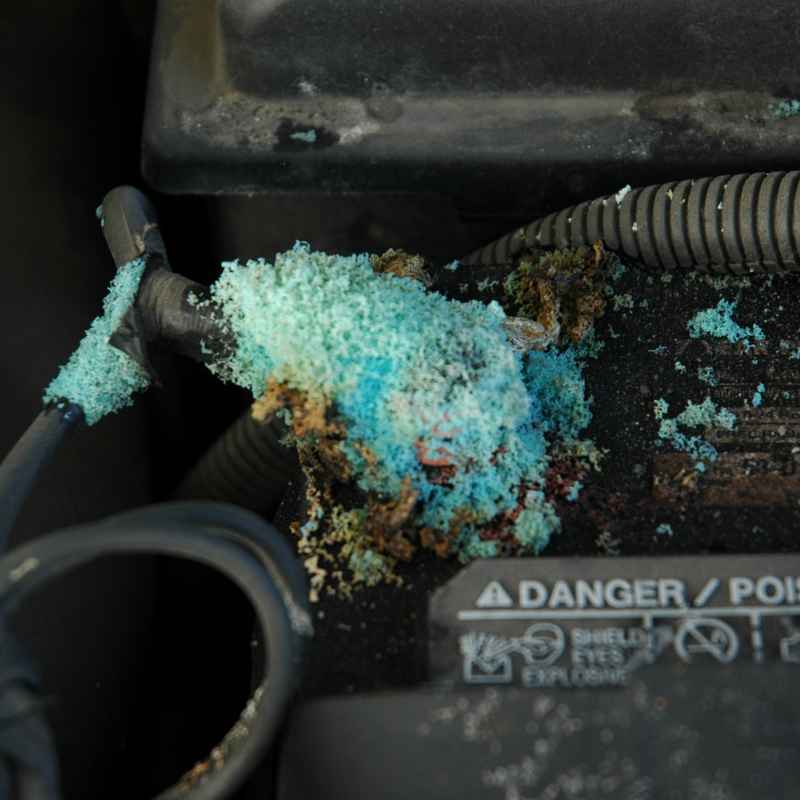
This reaction forms a powdery or crystalline substance. This is the corrosion you see. It’s often white, but it can also look blue or green.
It’s brittle and looks a bit like salt or ash. This buildup acts like an insulator. It prevents good electrical contact between the battery and the cables connected to it.
Think of it like a layer of dirt on a wire. If the wire is dirty, electricity can’t pass through as easily. The same thing happens with your battery terminals.
The corrosion creates a barrier. This makes it harder for the battery to send power to your car’s starter, lights, and other electronics.
Why does it happen? Several things can contribute. Over time, small amounts of battery acid can escape.
This might happen from tiny vents in the battery. It can also happen if the battery is overcharged. The heat from charging can cause the acid to bubble and escape.
Exposure to air and moisture speeds up the process. So, a battery sitting in a humid environment might corrode faster.
The metal of the terminals themselves plays a role. Lead is reactive. It’s what makes the battery work.
But it’s also what corrodes. The connectors are usually made of a lead alloy too. These parts are designed to handle the battery’s environment.
But they aren’t immune to the chemical reactions over years of use.
My Own Battery Scare
I remember one cold winter morning. I was rushing to get to an early appointment. I turned the key in my old car, and all I got was a weak clicking sound.
No engine crank. Nothing. My dashboard lights flickered weakly.
I thought, “Great, the battery is dead.” But when I popped the hood, I saw it.
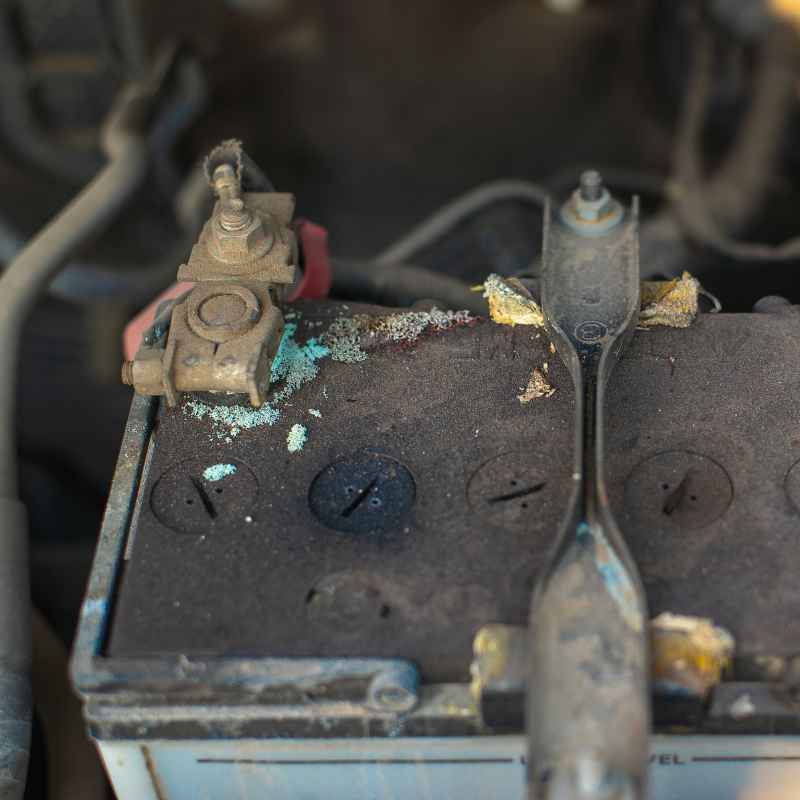
My battery terminals were covered in a thick, chalky white substance. It looked like a mini snowdrift on each post. I’d seen a little bit of it before, but I always put off cleaning it.
I figured it wasn’t that bad. My car still started fine yesterday. That day, the corrosion had clearly won the battle.
Panic started to set in. I was going to be late. I felt a knot of frustration in my stomach.
I looked at the mess and felt helpless for a moment. This fuzzy stuff was stopping my car from starting. It was a stark reminder that even small issues can stop your whole day.
That experience taught me not to ignore those little white bits anymore.
Corrosion: What It Looks Like
Appearance: Powdery, crystalline buildup.
Color: Most often white. Can also be bluish or greenish.
Location: Primarily on the battery posts (terminals) and cable clamps.
Texture: Brittle and dry.
Why Car Battery Corrosion is a Problem
So, is this buildup dangerous? For you directly, usually not. It’s not toxic if you accidentally touch it, though it’s wise to wash your hands afterward.
The real danger is to your car. Corrosion is bad for its electrical health.
The biggest issue is reduced electrical conductivity. The corrosion acts like a blanket. It covers the metal terminals.
This blanket stops the flow of electricity. Your battery needs to send a strong current to the starter motor to crank the engine. It also needs to power your lights, radio, computer systems, and more.
When corrosion is present, these electrical connections are weakened. This can lead to a number of problems. You might notice your car struggling to start.
The engine might turn over slowly. Sometimes, it might not start at all. This is often the first sign people notice.
Beyond starting issues, corrosion can affect other parts of your car. Your headlights might seem dim. Your radio could cut out.
The power windows might move slower than usual. Some modern cars have sensitive electronics. These can act strangely or even fail if they aren’t getting a stable power supply from the battery.
Another serious problem is that corrosion can spread. If left unchecked, it can eat away at the metal of the terminals and cable clamps. This can weaken the connection over time.
In severe cases, a cable clamp might break. This would completely sever the electrical link to your battery. That means your car won’t run at all.
Corrosion also means a less efficient battery. Even if your car starts, a corroded battery might not be able to hold a full charge. This means you might need to replace the battery sooner than you would otherwise.
It’s like trying to drink through a straw that’s half blocked. You don’t get all the liquid.
Impact of Corrosion on Your Car
- Slow Engine Crank: The starter gets less power.
- No Start: Electrical connection is too weak.
- Dim Lights: Headlights and interior lights may be dimmer.
- Electronics Malfunction: Radio, power windows, sensors can act up.
- Weakened Connections: Clamps can degrade.
- Reduced Battery Life: Battery may not charge or hold charge well.
What Causes This Grimy Buildup?
We touched on this, but let’s look closer at the root causes. Understanding these helps you prevent it. The main culprit is the battery’s own electrolyte, the sulfuric acid.
When a battery charges or discharges, or even just sits, it can release small amounts of hydrogen gas. This gas can carry tiny droplets of acid with it.
These acid droplets escape through small vents or seals in the battery. Once outside, they mix with air and the metal of the battery posts and cable clamps. This creates that white, powdery substance.
It’s a direct result of the battery’s normal operation.
Overcharging is a big contributor. When a battery charges too much, it can get hot. This heat causes the electrolyte to bubble more aggressively.
More acid can escape. A faulty voltage regulator in your car’s charging system can cause overcharging. This is something to watch for if you notice excessive corrosion.
Heat itself can also play a role. Batteries that live in hot climates or are constantly run hard will generate more heat. This heat can accelerate the chemical reactions.
It also makes those small acid leaks more likely. A hot engine bay is a harsh environment for a battery.
Age is another factor. Batteries don’t last forever. As they age, their internal components degrade.
This can make them more prone to leaking small amounts of acid. Older batteries might also struggle to hold a charge as well. This can sometimes lead to charging system imbalances that promote corrosion.
Loose battery terminals are also a problem. If the cables aren’t snug on the posts, they can move. This creates tiny gaps.
Air and moisture can get in there. This allows the acid to escape and react more easily. A loose connection also increases resistance, which can generate heat.
Heat, as we know, is not good for batteries.
The materials used in battery terminals and cable connectors matter too. Most are lead or lead alloys. While good conductors, they are reactive metals.
This reactivity is what allows the battery to work, but it’s also why they corrode. Some aftermarket terminals are made of brass or other alloys. These might corrode differently or less aggressively.
Common Causes of Corrosion
Battery Gas Release: Acidic vapor escapes vents.
Overcharging: Faulty charging system causes excess heat and acid loss.
Heat Exposure: High temperatures accelerate reactions.
Battery Age: Older batteries can degrade.
Loose Connections: Air and moisture enter gaps.
Environmental Factors: Humidity can worsen it.
The Role of Your Car’s Charging System
Your car’s charging system is vital. It keeps the battery topped up. It also powers the car when the engine is running.
This system includes the alternator and the voltage regulator. The alternator generates electricity. The voltage regulator controls how much power goes to the battery.
If the voltage regulator fails, it can send too much voltage to the battery. This is overcharging. It’s like trying to fill a glass by pouring from a fire hose.
The battery can’t handle it. It gets overheated. This can lead to acid leaking and severe corrosion.
A weak alternator might not charge the battery enough. This isn’t a direct cause of corrosion. But it can lead to a battery that’s constantly low on charge.
This can put extra strain on the battery. In some cases, a battery that’s always struggling can have its components degrade faster. This could indirectly contribute to issues over time.
It’s important to have your charging system checked if you suspect problems. A mechanic can test the alternator output. They can also check the voltage regulator.
If these are faulty, fixing them can prevent further battery damage. It can also save you from future headaches.
When a battery is overcharged, you might notice a sulfur smell. It can smell like rotten eggs. This is a sign that the battery is getting too hot.
It’s a warning that damage is occurring. If you smell this, get your charging system checked right away.
Sometimes, even a healthy charging system can cause minor corrosion. Batteries are designed to vent. This is normal.
The key is managing the corrosion that results. Regular cleaning and protection are part of good car maintenance.
When is Corrosion Dangerous to Your Car?
The danger isn’t usually an immediate explosion or fire. It’s more of a slow, steady degradation. The real danger comes when corrosion significantly impairs the car’s electrical function.
This can happen in several ways.
First, and most common, is the inability to start the car. Imagine being stranded because your battery can’t send enough power to the starter. This is a direct result of severe corrosion.
It could happen on a cold morning, during an emergency, or just when you’re trying to get to work.
Second, critical electronic systems can be affected. Modern cars have complex computers. These control everything from engine performance to safety features.
If the power supply to these systems is unstable due to corrosion, they can malfunction. This could mean your anti-lock brakes don’t work right, or your airbags might not deploy.
Third, the corrosion itself can damage components. The acidic buildup is corrosive. It can eat away at metal.
If it eats through a cable clamp, that connection is lost. If it eats into the battery casing or terminals, it can cause them to weaken or break.
Another danger is unexpected failure. You might not have much warning. One day, your car starts fine.
The next day, it won’t. This is because the corrosion has reached a critical point. It has finally blocked enough of the electrical path.
Finally, severe corrosion can lead to heat buildup. A bad electrical connection creates resistance. Resistance generates heat.
This heat can damage the battery itself. It can also potentially damage the surrounding areas, though this is rare for typical corrosion.
So, while not a chemical hazard in the way some people imagine, the impact on your car’s reliability and safety is very real. It’s a slow-motion problem that can lead to significant inconvenience and costly repairs if ignored.
When Corrosion Becomes a Real Problem
Ignition Failure: Car won’t start.
Electronic Glitches: Dashboard lights, radio, sensors acting up.
Component Damage: Acid eats away at metal parts.
Sudden Breakdown: Connection fails without warning.
Heat Generation: Bad connections can overheat.
What About Those Red or Blue Corrosions?
Most of the time, you’ll see white, powdery corrosion. This is the most common type. It’s usually a result of sulfuric acid reacting with lead.
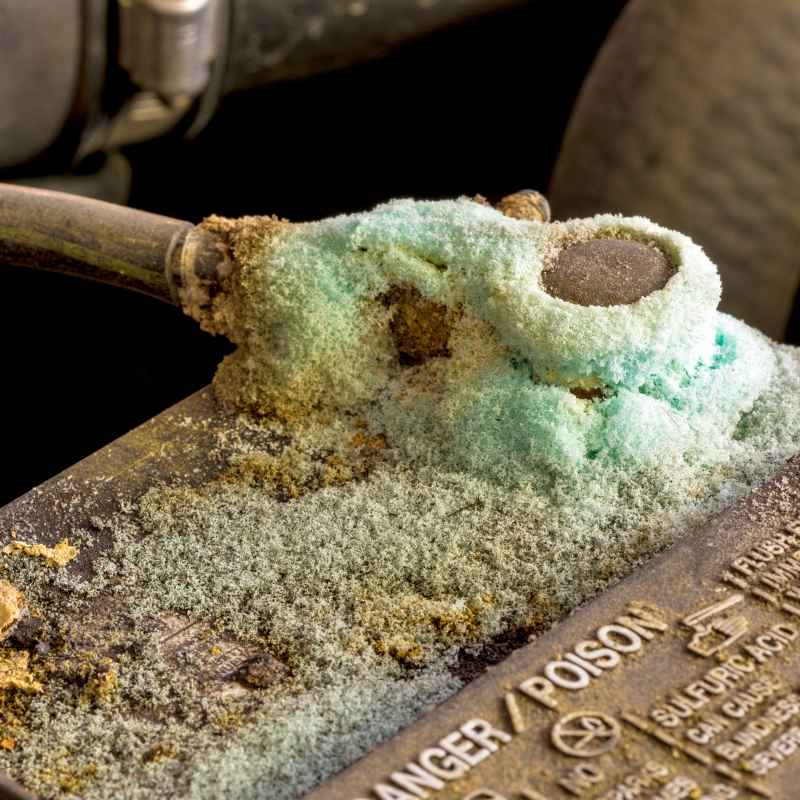
However, sometimes you might see bluish or greenish deposits. This can indicate a different chemical process is at play.
Blue or green corrosion often happens when copper alloys are involved. Many modern battery cable connectors are made of brass or other copper-based metals. When acid reacts with copper, it can form copper sulfate.
Copper sulfate is often blue or green in color. It can also have a more crystalline appearance than the powdery lead sulfate.
This type of corrosion can be just as problematic as the white kind. It still creates an electrical barrier. It can also be quite aggressive.
It can pit and damage the metal it forms on.
In some cases, greenish corrosion might also be a sign that other metals are present or reacting. It’s not always as straightforward as just lead sulfate. The exact color can depend on the purity of the metals and the specific chemical reactions happening.
Regardless of the color, the underlying problem is the same. It’s a chemical buildup on electrical contacts. It impedes the flow of electricity.
So, whether you see white, blue, or green fuzz, it needs attention. The goal is always a clean, solid metal-to-metal connection for optimal electrical performance.
Real-World Scenarios and What They Mean
Let’s look at some common situations where you might encounter car battery corrosion and what it suggests.
Scenario 1: The Weekend Warrior’s Battery
Imagine a car that’s only driven on weekends. It sits in the garage for most of the week. Batteries can develop minor corrosion even when not in use.
If the battery is older, or if there’s some residual charge escaping, a thin layer of white powder might form.
What this means: For a car that’s driven regularly, even just on weekends, this level of corrosion is often manageable. It might require a quick cleaning every few months. If the car starts up fine and all electronics work, it’s likely not a critical issue.
However, it’s a good sign to keep an eye on it. Regular checks are important.
Scenario 2: The Daily Commuter in a Hot Climate
Consider a car driven every day in a very hot state like Arizona or Texas. Batteries in hot climates work harder. They generate more heat.
This heat can accelerate the chemical processes that lead to acid escaping the battery. You might see more significant corrosion build up on the terminals and clamps.
What this means: This level of corrosion is more concerning. The constant heat and potential for increased acid release means the problem can get worse faster. It’s crucial to clean and protect the terminals more often.
Checking the charging system for proper voltage regulation is also a good idea. You might need to replace the battery sooner in these conditions.
Scenario 3: The Car That Sits for Months
Think about a vehicle that’s been stored for an extended period. Maybe it’s a classic car or a seasonal vehicle. Batteries left unmaintained for months can die.
When they die, they can sometimes vent gases or have internal issues. When you try to start it after storage, you might find heavy corrosion.
What this means: This is a sign of neglect. The battery might be deeply discharged or even damaged. Heavy corrosion here could mean the battery itself is failing.
It’s not just about cleaning; you’ll likely need to test the battery’s health. It might need to be replaced. A battery tender or trickle charger is highly recommended for stored vehicles.
Scenario 4: A Newly Purchased Used Car
You buy a used car, and the battery terminals look surprisingly clean. This might seem good. But sometimes, a previous owner might have cleaned them recently.
Or, they might have applied a protective coating. If the car has other electrical issues, or if it’s older, there could be underlying problems.
What this means: Don’t assume clean terminals mean a healthy battery. It’s always wise to inspect the battery itself. Look for cracks or swelling.
Check the date code on the battery. Consider having the battery tested at an auto parts store. Clean terminals are a good sign, but they aren’t the whole story.
Common Scenarios and Their Implications
Occasional Use: Minor corrosion likely okay, monitor regularly.
Hot Climate: Increased corrosion risk, frequent cleaning and checks needed.
Long Storage: Heavy corrosion may mean battery failure, test battery.
Used Car: Clean terminals are good, but inspect battery fully.
What This Means For You: Normal vs. Concerning
Not all corrosion is an immediate crisis. It’s a spectrum. Understanding what’s normal helps you decide when to act.
When Corrosion Is Normal
Light dusting: A very thin, almost transparent layer of white powder on the very tips of the battery posts. You can barely see it.
Occasional appearance: You see a tiny bit of white fuzz, but it doesn’t grow quickly. It might appear after a long period of inactivity.
No performance issues: Your car starts perfectly. All lights and electronics work as they should. You don’t notice any dimming or slow operation.
After long drives in heat: Sometimes, extreme conditions can cause temporary, minor buildup that easily wipes away.
When Corrosion Is Concerning
Thick buildup: If the corrosion is thick, chalky, or covers a significant portion of the terminals and clamps.
Rapid growth: You clean it, and within a week or two, it’s back and worse.
Performance issues: Your car struggles to start. Lights dim when you use power accessories. Other electrical systems act up.
Loose connections: The cable clamps feel loose or wiggle on the posts, even after tightening. The corrosion may have eaten away at the metal.
Blue or green color: While not always more dangerous, it indicates a different chemical reaction and warrants attention.
Battery swelling or cracking: If you see physical damage to the battery case, this is serious and the battery needs immediate replacement.
The key is to be observant. Regularly pop your hood and take a quick look. It only takes a few seconds.
Early detection is your best friend.
Quick Fixes & Tips: Managing Battery Corrosion
The good news is that dealing with battery corrosion is usually straightforward. You can often handle it yourself with a few basic tools and supplies.
Cleaning the Corrosion
1. Safety First: Always wear safety glasses and gloves. Batteries contain acid.
Make sure the engine is off and the car is cool.
2. Disconnect the Cables: Start with the negative (-) terminal first. Then disconnect the positive (+) terminal.
This prevents accidental shorts.
3. Use a Wire Brush: A stiff wire brush is your best tool. Scrub both the battery posts and the inside of the cable clamps.
You want to remove all the powdery buildup until you see shiny metal.
4. DIY Cleaning Solution: You can make a paste from baking soda and water. Apply it to the terminals and let it fizz for a few minutes.
This neutralizes the acid. Then scrub it off with the wire brush.
5. Rinse and Dry: Rinse the terminals gently with clean water. Then dry them thoroughly with a clean cloth.
Make sure no moisture is left behind.
Protecting Against Future Corrosion
After cleaning, you want to protect the connections. This helps prevent corrosion from coming back quickly.
1. Apply Anti-Corrosion Spray or Grease: You can buy special battery terminal protector sprays or greases at auto parts stores. Apply a light coating to the battery posts and the inside of the cable clamps after cleaning.
2. Terminal Protection Washers: These are small felt washers impregnated with a protective chemical. You place them on the battery posts before reconnecting the cables.
They help absorb any escaping acid vapors.
3. Ensure Tight Connections: Once reconnected (positive first, then negative), make sure the clamps are tight. They should not move or wiggle.
4. Check Battery Vents: If your battery has removable caps, ensure they are properly sealed. If you see excessive gassing or leaking from the battery itself, the battery may need replacement.
5. Monitor Charging System: If corrosion is a constant problem, have your car’s charging system tested. A faulty voltage regulator can cause overcharging and lead to repeated corrosion.
It’s a simple maintenance task that can save you a lot of trouble down the road. Doing this every six months or so, or whenever you notice signs of corrosion, is a good habit.
Steps to Prevent and Clean Corrosion
- Wear safety gear (gloves, glasses).
- Disconnect battery cables (negative first).
- Use a wire brush to clean posts and clamps.
- Baking soda paste can neutralize acid.
- Rinse and thoroughly dry all parts.
- Apply anti-corrosion spray or grease.
- Use terminal protection washers.
- Ensure cable clamps are tight.
- Have charging system checked if corrosion persists.
Frequent Questions About Car Battery Corrosion
Is car battery corrosion dangerous to touch?
Car battery corrosion itself is generally not dangerous to touch for brief contact. It’s a powdery buildup of lead sulfate. However, it is acidic and can irritate skin.
It’s always best to wear gloves and wash your hands after handling battery components to be safe.
How often should I check my car battery for corrosion?
It’s a good idea to check your car battery for corrosion at least twice a year. This is usually when you check your oil or tires. If you live in a very hot climate or notice any signs of trouble, check it more often, perhaps every few months.
Can corrosion cause a battery to explode?
Car battery corrosion itself does not typically cause a battery to explode. Explosions are usually caused by a buildup of hydrogen gas inside the battery, combined with a spark. This can happen if the battery is damaged or severely overcharged, leading to excessive gas production.
Corrosion primarily affects electrical connections.
What if my car battery is leaking acid?
If your car battery is leaking acid, this is a serious issue. The battery is likely damaged. You should not drive the car if there’s a visible leak.
Wear protective gear, carefully disconnect the battery, and have it inspected by a professional immediately. Leaking acid can damage your car’s components and is corrosive.
Can I use WD-40 to clean battery corrosion?
While WD-40 can help loosen things, it’s not the best product for cleaning battery corrosion. It can leave a residue that might interfere with electrical conductivity over time. A wire brush and a baking soda solution are the recommended, more effective methods for removing the corrosive buildup.
My mechanic said my battery terminals are corroded. Do I need a new battery?
Not always. Corrosion is a symptom. If the corrosion is light to moderate, cleaning and protecting the terminals might be enough.
However, if the corrosion is very severe, has damaged the terminals or cable clamps, or if the battery is old, it might be time for a new battery. Your mechanic can assess the battery’s health.
Conclusion: Keep Those Terminals Clean
Car battery corrosion is a normal part of a battery’s life. It’s a chemical reaction that happens over time. While it’s usually not a direct danger to you, it can cause significant problems for your car’s electrical system.
From a slow start to complete breakdown, ignored corrosion can be a real headache.
The good news is that you can manage it. Regular checks and simple cleaning can keep your battery working its best. Understanding the causes and knowing when to worry will help you keep your car running smoothly.
So, take a few minutes now and then to peek under the hood. A little preventative care goes a long way.
Products related to this article
Sponsored / affiliate links. As an Amazon Associate I earn from qualifying purchases. I may earn additional commission from eligible campaigns.