Leather Seat Repair Cost
Leather seat repair cost is often reported at about $150 to $400 for minor scuffs, about $300 to $800 for panel repairs, and about $900 to $2,500+ for full reupholstery. Once damage spreads across a whole panel, a seam, or several worn areas, spot repair may no longer make financial sense. Tears and cracked dye can spread quickly, raise the final bill, and may expose foam or seat heaters. This guide breaks down pricing by damage type, compares repair methods, and shows the break-even point between patching and replacement.
Damage size, labor complexity, and trim level
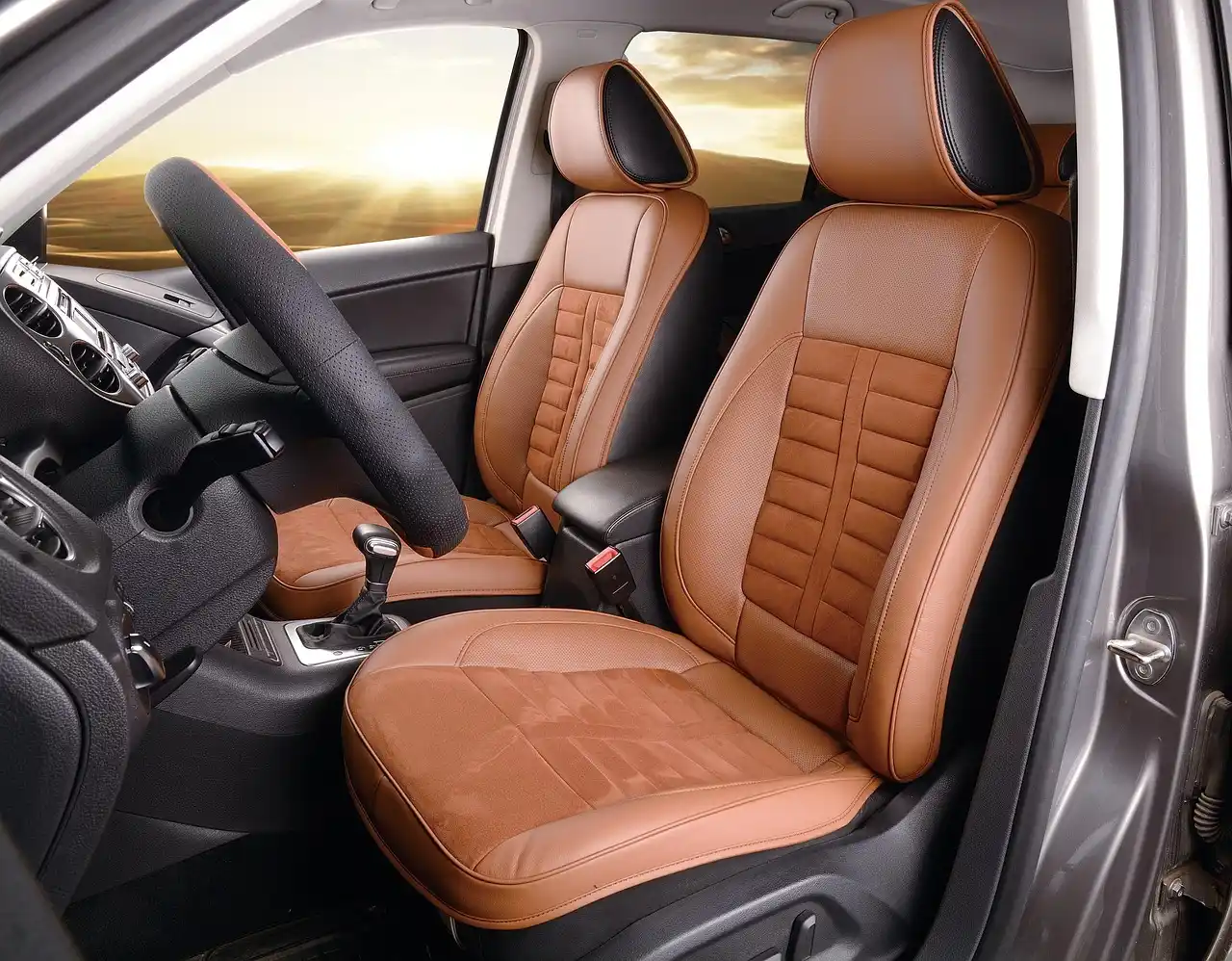


Damage size, location, and seat design do most of the pricing work. A small scuff on a flat seatback is far easier than a split on a side bolster, a torn seam near an airbag, or damage on perforated leather, where repair material can clog airflow holes.
Damage size and location
Small surface marks often need cleaning, color blending, and a topcoat. Deep cracks, tears, and seam splits usually add filler or adhesive work, sanding, feathering, and more cure time. Damage on a bolster or a folded edge is harder to hide because it flexes every time someone gets in and out.
Labor, material, and color-match factors
A leather upholstery technician usually prices by labor time, not just the visible defect. The quote rises when the job needs a close color match, grain matching, or a dye system that has to be cleaned, deglazed, recolored, and cured in stages. Mobile service can save towing or drop-off time, but setup, travel, and limited access can narrow the price gap versus a shop.
Why trim level changes the quote
Premium trim often uses softer leather, stitched patterns, perforation, heating, cooling, or side airbags. Those details make removal and reinstallation slower, and they can limit how much of the seat can be repaired without disturbing nearby trim. OEM-style material also costs more than a universal panel if the goal is to match grain and sheen closely.
Leather seat cost matrix
| Damage scenario | Likely repair method | Typical cost drivers | When replacement becomes more economical |
|---|---|---|---|
| Scuff on a flat seatback | Clean, recolor, topcoat | Prep time, color match, light blending | If the scuff repeats across the whole panel |
| Scratch through the finish | Deglaze, recolor, seal | Matching sheen, extra blending passes | If multiple scratches cover one section |
| Crack in high-flex area | Filler, sand, recolor | Crack depth, flexible finish, cure time | If cracks web across the panel |
| Small tear in one panel | Adhesive, backing, filler, recolor | Edge prep, reinforcement, grain restoration | If the tear enlarges or foam is exposed |
| Seam split | Restitch or replace seam area | Safe disassembly, thread matching, airbag caution | If stitching failure runs into adjacent panels |
| Bolster wear | Patch, rebuild, recolor | High-wear edge shaping, foam repair, repeated flex | If the bolster is thin through a wide area |
| Faded panel | Deep clean, recolor, topcoat | UV fade, color depth, finish uniformity | If fade affects nearby panels too |
| Multiple-panel damage | Panel replacement or full reupholstery | Labor, material match, trim removal | Often cheaper to replace once 2+ panels need work |
The break-even point usually appears when one repair area turns into two or more, or when the seat has repeated failures in the same place. At that stage, a seat panel replacement can cost less than repeated spot repair because one matched section solves the visible wear instead of chasing it panel by panel.
How much does a repair usually cost?
Minor spot repair often lands in the lowest band because it stays local: clean, prep, recolor, and seal. Panel replacement costs more because the technician has to remove trim, match grain and sheen, and install a new section. Full reupholstery is the highest tier because it replaces most or all of the cover.
Minor spot repair pricing
Scuffs and surface scratches are usually the cheapest jobs when the leather still holds its shape. The bill rises if the finish has worn through, the dye needs close matching, or the seat has perforation that makes cleanup slower. A leather dye or recoloring system often takes the most time in the prep stage, not the coloring stage.
Panel replacement pricing
Seat panel replacement makes sense when the damage is limited to one section but goes deeper than a surface fix. A technician may remove the damaged seat panel, match the grain, and install OEM-style or universal material depending on budget and availability. That is often the better choice when repeated color work would keep failing on the same stressed area.
Full reupholstery pricing
Full seat reupholstery is the right answer when damage is widespread, the leather has worn through in several places, or the seat has a mix of tears, fade, and seam failure. The labor cost is higher, but the result is usually more consistent across multiple panels than a series of patched sections.
Say your driver seat has a 2-inch bolster crack plus a faded outer panel. If the crack is isolated, a repair can still make sense. If the bolster, seatback, and cushion all show wear, replacement or full reupholstery usually becomes the better value because one fix will not solve the rest of the surface.
What does a leather upholstery technician do?
A leather upholstery technician starts by checking the damage, the trim level, and the seat’s construction. The quote usually reflects how much disassembly is needed, whether the color can be matched closely, and whether the seat needs repair, recoloring, panel replacement, or full reupholstery.
Inspection and quote
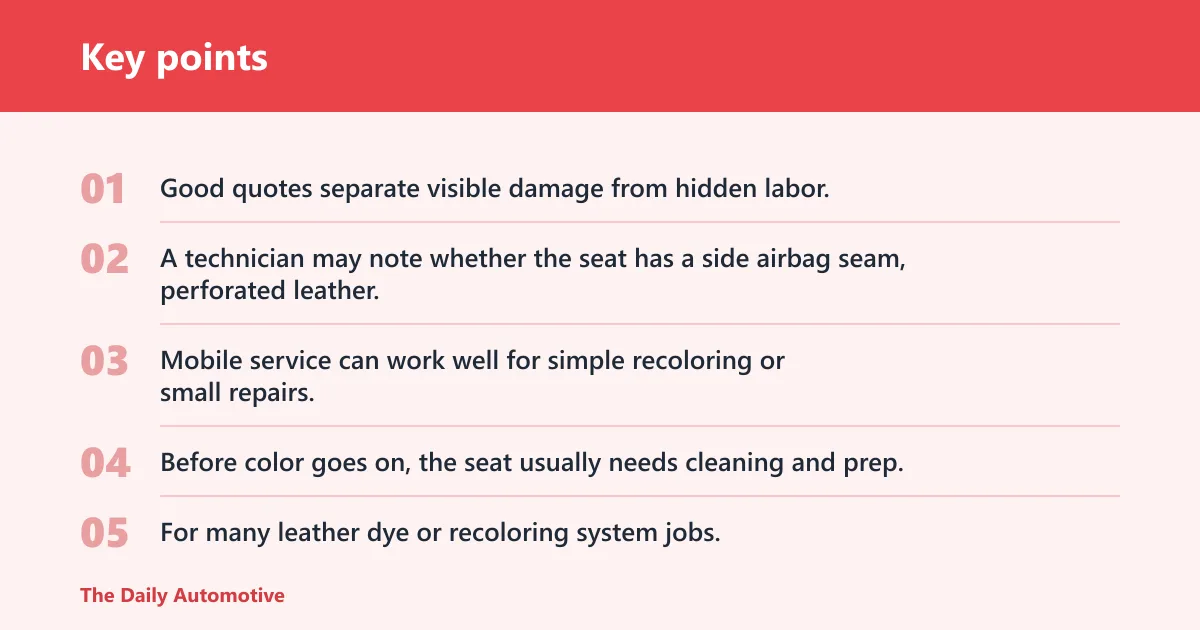
Good quotes separate visible damage from hidden labor. A technician may note whether the seat has a side airbag seam, perforated leather, or heater elements before pricing the work. Mobile service can work well for simple recoloring or small repairs, while larger jobs often need a shop for better access and controlled curing.
Cleaning, prep, and deglazing
Before color goes on, the seat usually needs cleaning and prep. For many leather dye or recoloring system jobs, that includes deglazing so the new finish can bond. Skipping prep raises the chance of peeling, patchy sheen, or a color match that looks close at first and then fails under daily use.
Filling, coloring, and curing
Cracks and small tears often need leather filler or adhesive before the surface can be sanded and feathered. After that, the technician blends color, applies a topcoat, and allows cure time. That curing step matters because a soft finish can transfer, wear unevenly, or show the repair line too soon.
Picture a rear seat cushion with a 1-inch scratch and no foam damage. That job may need only cleaning, recoloring, and a clear topcoat. A side bolster split near a seam is different; safe disassembly and a stronger repair plan are usually needed before any color work begins.
When does replacement cost less?
Replacement becomes the better value when the damage is no longer local. Once one panel, one seam, or one bolster keeps failing, repeated spot repairs can add up to more labor than a replacement section. The same is true when several panels need color work at once and the finish no longer matches well.
Single-panel damage
If one panel is damaged but the rest of the seat is sound, panel replacement can beat a long chain of spot fixes. That is especially true when the seat needs a precise color match and the surrounding leather still has a good grain and sheen. Matching one section once is often simpler than blending the same area multiple times.
Multiple-panel damage
Multiple damaged panels shift the math fast. A seat with worn bolster edges, a cracked cushion, and a faded backrest can cost less to re-trim than to keep repairing each area separately. Full seat reupholstery becomes more appealing when several panels would need different repairs anyway.
Repeat repair failure
When a patched area keeps reopening, the problem is usually flex, age, or thin material. At that point, the labor spent on repeat fixes can exceed the cost of replacing the damaged section. That is the clearest break-even point for many owners.
Seat features that change the price
Seat features change both the repair method and the risk. A heater element, an airbag seam, or perforation can turn a simple-looking job into careful disassembly work. These details matter because the wrong repair material or a rushed removal can create a bigger problem than the original defect.
Airbag-equipped seats
Side-airbag seats need special handling. The seam and trim around the airbag area must be left functional, and the seat has to be disassembled safely so the repair does not interfere with deployment. That usually adds labor and limits what can be replaced or stitched in that area.
Perforated leather
Perforated leather is harder to repair cleanly because the airflow holes can catch dye, filler, or topcoat. Technicians often need more masking and more careful application, and a poor job can clog the perforations. That raises the risk of visible texture changes even when the color is close.
Heated and cooled seats
Heated and cooled seats can add labor because the cover may sit over wiring, fans, or heating elements. The cover has to come off and go back on without pinching or shifting those parts. That can make panel replacement or full reupholstery more expensive than the same visible damage on a plain seat.
OEM-style versus universal material
OEM-style material is the safer choice when the goal is to match grain, sheen, and stretch as closely as possible. Universal material can lower cost, but it may not match the surrounding leather as well. On a premium seat, that difference can be easy to spot after the repair.
Who fixes leather seats?
Leather seats are usually fixed by a mobile repair technician, an auto upholstery shop, or a dealer referral to a specialist. The right choice depends on damage size, color-match needs, and whether the seat has airbags, perforation, or electrical parts that make the job more involved.
Mobile repair technician
Mobile service works well for small scuffs, scratches, and simple recoloring. It is convenient, but the quote can rise if the technician needs extra setup time, a hard-to-match color, or access that is tighter than a shop can offer. Leather repair specialists may come to you, but that does not guarantee the lowest price.
Auto upholstery shop
An upholstery shop is usually the better fit for cracks, seam splits, panel replacement, and full reupholstery. The shop can handle deeper disassembly, better blending, and more controlled curing. It is also the safer choice for seats with airbags or features that need careful removal and reinstallation.
Dealer and body shop referrals
Dealers and body shops often refer leather repair work to outside specialists. Local car clubs and forums are also common places to find names, especially when the seat needs exact color matching or a premium trim repair. A good referral should lead to a technician who can explain the repair method before any work starts.
Frequently asked questions
How much is leather seat repair?
Leather seat repair is usually priced by damage type, seat features, and labor time. Small scuffs and scratches are the least expensive, while cracks, tears, seam splits, and bolster wear cost more because they need prep, filler or adhesive, recoloring, and sometimes panel replacement. The quote changes fast with trim complexity.
How much does leather seat repair cost?
Leather seat repair cost depends on whether the job is cosmetic or structural. Minor spot repair often sits in the lowest range, panel replacement costs more, and full reupholstery is the highest tier. Perforation, airbag seams, heated seats, and exact color matching can all push the price higher.
How much does leather car seat repair cost?
Leather car seat repair cost varies with the seat’s wear pattern and construction. A scuffed side bolster may only need cleaning and recoloring, while a cracked cushion or seam split may need reinforcement and re-dyeing. If several panels are worn, replacement or reupholstery may be the better value.
How much does leather couch repair cost?
Leather couch repair cost follows many of the same rules as car seats, but access, panel size, and upholstery construction can change labor time. A couch tear, crack, or faded section may need filler, recoloring, or panel work. Wide cushions and large visible areas can make color matching more demanding.
How much does leather seat upholstery cost?
Leather seat upholstery cost is usually the highest option because it replaces the cover rather than blending the damage. It makes sense when multiple panels are worn, seams keep failing, or the seat has broad fading and tears. The cost depends on material grade, trim complexity, and whether the seat has airbags or perforation.
Who fixes leather seats: leather seats are fixed
Leather seats are fixed by mobile repair technicians, upholstery shops, and sometimes specialist referrals from dealers or body shops. Small cosmetic damage may suit mobile service, but deeper tears, seam splits, airbag seats, and full reupholstery usually belong in a shop. Local car clubs and forums can help find a qualified specialist.
Products related to this article
Sponsored / affiliate links. As an Amazon Associate I earn from qualifying purchases. I may earn additional commission from eligible campaigns.