How To Fix a Car Out Of Oil: Essential Guide
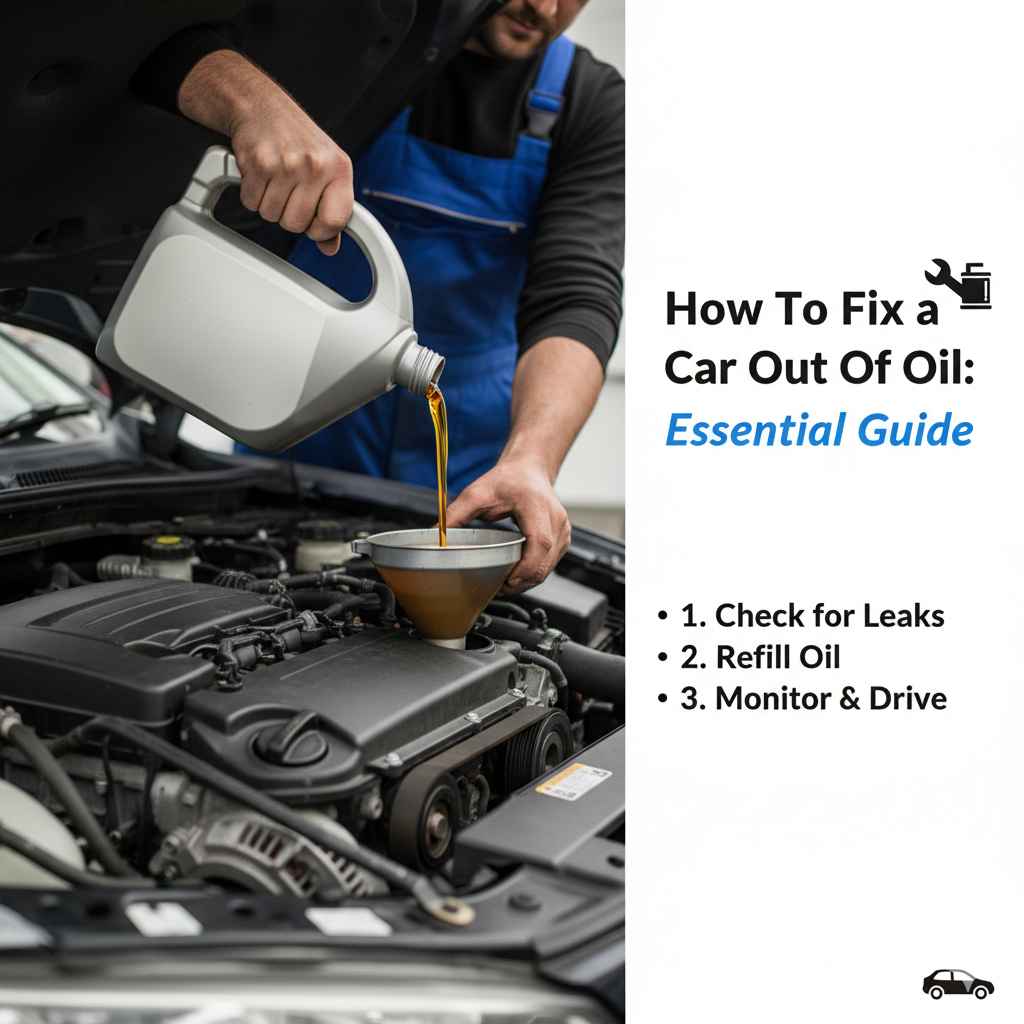
If your car is out of oil, the immediate fix is to add the correct type and amount of oil to your engine. It’s crucial to stop the engine immediately if you suspect it’s out of oil to prevent severe damage. After adding oil, check for leaks and monitor the oil pressure light closely.
Driving a car without enough oil is one of the most frustrating and potentially costly car problems you can face. It’s like trying to run a marathon with no water – your engine needs oil to keep its parts moving smoothly and to prevent them from grinding against each other. When that vital lubrication disappears, disaster can strike quickly. But don’t panic! This guide is here to walk you through exactly what to do if you find yourself in this sticky situation, making it easy to understand and safe for you to handle. We’ll cover the warning signs, the steps to take, and how to prevent it from happening again.
Why is Running Out of Oil So Bad?
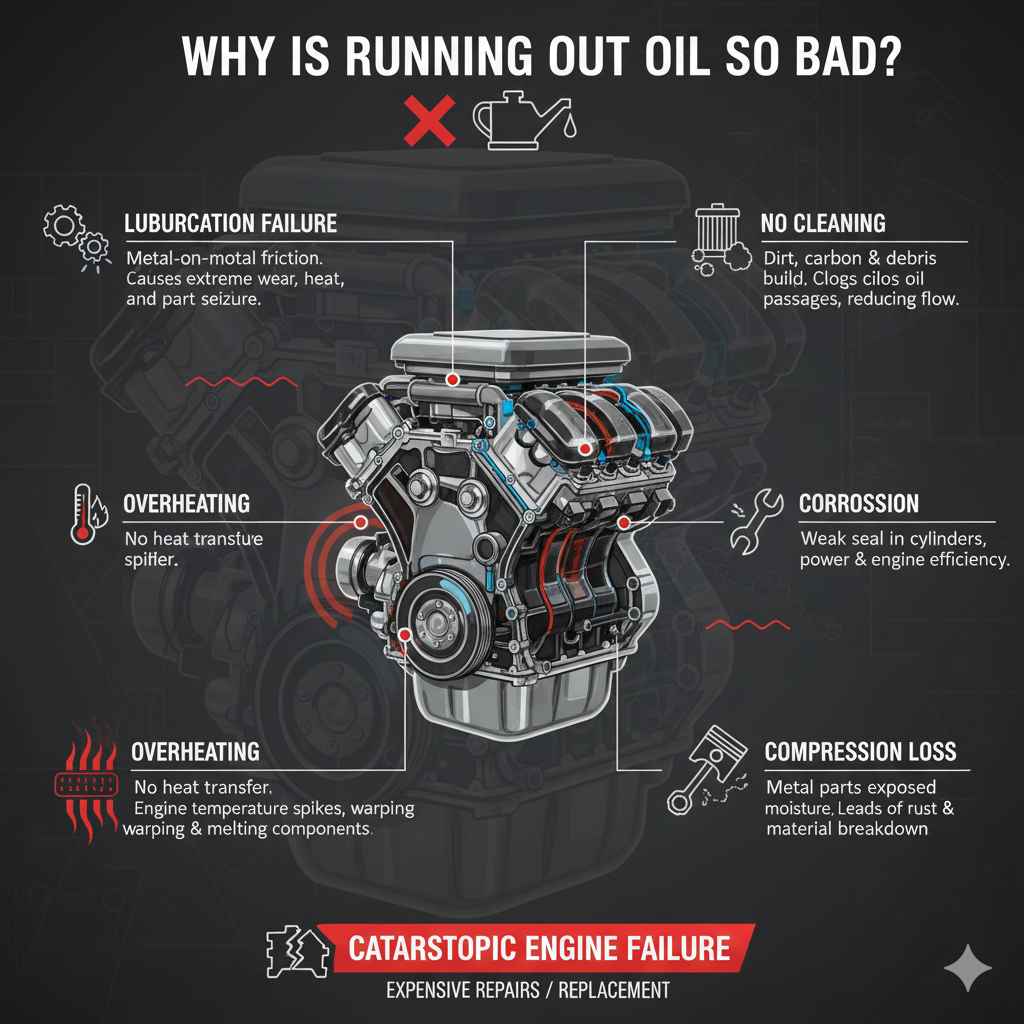
Think of your car’s engine as a complex machine with many moving metal parts. Oil is the slick superhero that travels everywhere within the engine, doing several critical jobs:
- Lubrication: It creates a thin film between moving parts like pistons and cylinders, so they don’t rub directly against each other. Without this, metal grinds against metal, causing immense friction and wear.
- Cooling: As parts move, they generate heat. Oil absorbs this heat and carries it away, helping to keep the engine from overheating.
- Cleaning: Oil picks up tiny bits of dirt, carbon, and other debris, carrying them to the oil filter to be removed.
- Sealing: Oil helps create a seal between the piston rings and the cylinder walls, ensuring proper compression and power.
- Corrosion Prevention: Oil coats metal surfaces, protecting them from moisture and preventing rust.
When your car runs out of oil, all these vital functions stop. The friction increases dramatically, parts can seize up, and extreme heat can warp or melt engine components. This can lead to catastrophic engine failure, requiring very expensive repairs or a complete engine replacement.
Signs Your Car Might Be Out of Oil (Or Low)
Fortunately, your car often gives you clues before it’s completely empty. Paying attention to these warnings can save your engine:
- Oil Pressure Warning Light: This is the most critical sign. It usually looks like an oil can with a drip coming out and might be red or yellow. If this lights up, even for a moment, pull over and shut off the engine as soon as it’s safe.
- Strange Noises: A knocking, ticking, or grinding sound coming from the engine is a serious concern. This often indicates metal-on-metal contact due to lack of lubrication.
- Decreased Performance: If your car feels sluggish, less powerful, or starts to stall, it could be a sign the engine isn’t getting the lubrication it needs to function optimally.
- Burning Smell: Overheating due to lack of oil can produce a burning smell from the engine bay.
- Visible Smoke: Blue smoke coming from the exhaust pipe is often a sign that oil is leaking into the combustion chamber and burning, which can happen if seals are damaged by running low on oil.
How To Fix a Car That Ran Out Of Oil: Step-by-Step
If you’ve identified that your car is out of oil or critically low, acting fast is key. Here’s what you need to do:
Step 1: Stop the Engine Immediately!
This is the absolute most important first step. If your oil pressure light is on, or you hear any alarming noises, pull over to a safe location as quickly as possible and turn off the engine. Continuing to run the engine without sufficient oil is like running a race on an empty tank – it will cause irreparable damage very, very fast.
Step 2: Let the Engine Cool
Once the engine is off, resist the urge to immediately open the hood and check the oil. The engine components will be extremely hot. Wait for at least 15-30 minutes to allow the engine to cool down to a safer temperature. This also allows any remaining oil to drain back into the oil pan, giving you a more accurate reading.
Step 3: Locate Your Oil Dipstick
Open the hood and find the engine oil dipstick. It’s usually a brightly colored (often yellow or orange) ring or tab, clearly labeled with an oil can symbol. If you’re unsure, check your car’s owner’s manual; it will show you exactly where it is.
Step 4: Check the Oil Level
Pull the dipstick out completely. Use a clean rag or paper towel to wipe off all the oil. Then, reinsert the dipstick fully, push it all the way back in, and pull it out again. Examine the end of the dipstick. There will be markings, usually two small holes or a set of lines labeled “ADD” (or MIN) and “FULL” (or MAX). If the oil level is at or below the “ADD” or “MIN” mark, your car is significantly low or out of oil.
Step 5: Add the Correct Type and Amount of Oil
This is crucial. Using the wrong type of oil can be as bad as having no oil at all.
- Consult Your Owner’s Manual: Your car’s manual is your best friend here. It will specify the correct viscosity grade (e.g., 5W-30, 0W-20) and the oil specification (API service rating) recommended for your vehicle. You can also often find this information on a sticker under the hood or on the oil cap itself.
- Purchase the Oil: Buy a reputable brand of oil that matches your car’s requirements. You can buy it in quarts or liters.
- Locate the Oil Fill Cap: In the engine bay, find the oil fill cap. It’s usually marked with an oil can symbol and the recommended oil weight (e.g., 5W-30).
- Add Oil Slowly: Unscrew the oil fill cap and slowly pour in about a quart (or liter) of the new oil. Don’t just dump it all in at once.
- Wait and Re-check: Wait a minute or two for the oil to settle into the oil pan.
Step 6: Re-check the Oil Level
After adding oil, re-check the dipstick using the same method as in Step 4. Is the oil level now between the “ADD” and “FULL” marks? If not, add a little more oil, waiting between additions, until the level is correct. Be careful not to overfill! Overfilling can also damage your engine.
Step 7: Replace the Fill Cap and Dipstick
Once the oil level is correct, securely screw the oil fill cap back on and push the dipstick all the way back into its holder. Make sure both are properly seated.
Step 8: Start the Engine and Monitor
Start the engine and let it run for a few minutes. Watch the oil pressure warning light – it should turn off within a few seconds. Listen for any unusual noises. Keep an eye on the oil pressure gauge (if your car has one) and check for any signs of leaks around the oil fill cap or the oil pan.
Step 9: Check for Leaks
After the engine has run for a bit, turn it off and let it cool slightly. Then, get under the car (if it’s safe to do so and you have a clear view) or look closely around the oil pan and the oil drain plug. You’re looking for any drips or wet spots that indicate a leak. A common place for leaks after topping up is around the oil filter, which might have been disturbed or might have been leaking previously.
Step 10: Drive Cautiously and Monitor
Initially, drive your car gently for a short distance. Continue to monitor the oil pressure light and listen for any strange sounds. If the light comes back on or you hear alarming noises, stop the engine immediately and have the car towed to a mechanic. If everything seems normal, drive to a trusted mechanic as soon as possible for a thorough inspection.
What If My Car Ran Out of Oil and I Drove It?
If your car ran out of oil and you continued to drive it, even for a short distance, there’s a high chance of internal engine damage. The severity depends on how long and how far you drove without oil. Here’s what might have happened and what you should do:
- Minor Wear: You might have caused some increased wear on engine components, which could lead to problems down the line.
- Serious Damage: This could include damaged bearings (the parts that allow rotating shafts to spin smoothly), scored cylinder walls, seized pistons, or even a completely seized engine.
- Immediate Engine Failure: The engine might have completely stopped running and refused to restart.
Action to take: If you suspect you’ve driven your car without oil, do NOT try to start it again. Have it towed to a qualified mechanic. They will need to inspect the engine thoroughly to assess the damage. This might involve draining the remaining oil (if any), removing the oil pan to inspect for metal shavings, and potentially more extensive dismantling to check internal components. Be prepared for potentially significant repair costs.
Tools You Might Need
While adding oil in an emergency might not require many tools, having these on hand for regular checks and potential minor fixes is beneficial:
- Clean Rags or Paper Towels: For wiping the dipstick and cleaning up spills.
- Gloves: To keep your hands clean.
- Funnel: A clean funnel makes pouring oil into the fill cap much easier and cleaner.
- Car Owner’s Manual: Essential for knowing your oil type and capacity.
- Correct Car Oil: The most critical item!
- Socket Wrench Set & Oil Drain Pan (for oil changes): Not for this emergency fix, but for when you do a full oil change.
- Oil Filter Wrench (for oil changes): Again, for planned maintenance.
Preventing Your Car From Running Out of Oil
The best way to “fix” a car out of oil is to prevent it from happening in the first place. Here’s how:
Regularly Check Your Oil Level
Make it a habit to check your oil at least once a month and before any long road trips. It only takes a few minutes.
Understand Your Car’s Oil Consumption
Some engines consume a small amount of oil as they age. If you notice your oil level dropping between scheduled oil changes, keep a closer eye on it and ask your mechanic about it.
Address Leaks Promptly
If you see oil spots under your car, don’t ignore them. Get them checked by a mechanic. Common leak sources include the oil pan gasket, valve cover gasket, or oil filter seal.
Follow Your Recommended Oil Change Schedule
Engine oil degrades over time and with use. Regular oil changes, using the correct type of oil and filter, are essential for engine health. Check your owner’s manual for the recommended intervals. Many modern cars will remind you visually or via a dashboard message when it’s time for an oil change.
For example, the Environmental Protection Agency (EPA) emphasizes the importance of regular maintenance, including oil changes, for vehicle efficiency and longevity.
Choose the Right Oil and Filter
Always use the oil and oil filter recommended in your owner’s manual. Using the wrong viscosity or a low-quality filter can lead to premature engine wear.
Oil Types and Viscosity Explained (Briefly)
You’ll see numbers and letters on oil bottles, like “5W-30”. Let’s break it down simply:
- The First Number (e.g., 5W): This is the ‘W’ for Winter rating. It tells you how well the oil flows when cold. A lower number means the oil is thinner and flows better in cold temperatures, helping with cold starts.
- The Second Number (e.g., 30): This is the oil’s viscosity at normal engine operating temperatures. A higher number means the oil is thicker at high temperatures.
Your owner’s manual specifies the best viscosity for your car and climate.
How Much Oil Does Your Car Need?
Most passenger cars hold between 4 and 6 quarts (or liters) of oil. However, this varies greatly by vehicle model and engine size. This is why checking your owner’s manual for the exact capacity is so important. Overfilling is as harmful as underfilling, so stick to the recommended amount after you’ve reached the correct level on the dipstick.
Here’s a general idea, but always verify. You can find this information in your owner’s manual:
| Vehicle Type | Typical Oil Capacity (Quarts) |
|---|---|
| Small Sedans | 4.0 – 5.0 |
| Mid-size Sedans | 4.5 – 5.5 |
| SUVs/Trucks (Small-Medium) | 5.0 – 7.0 |
| Larger Trucks/Performance Cars | 6.0 – 8.0+ |
When to Call a Professional Mechanic
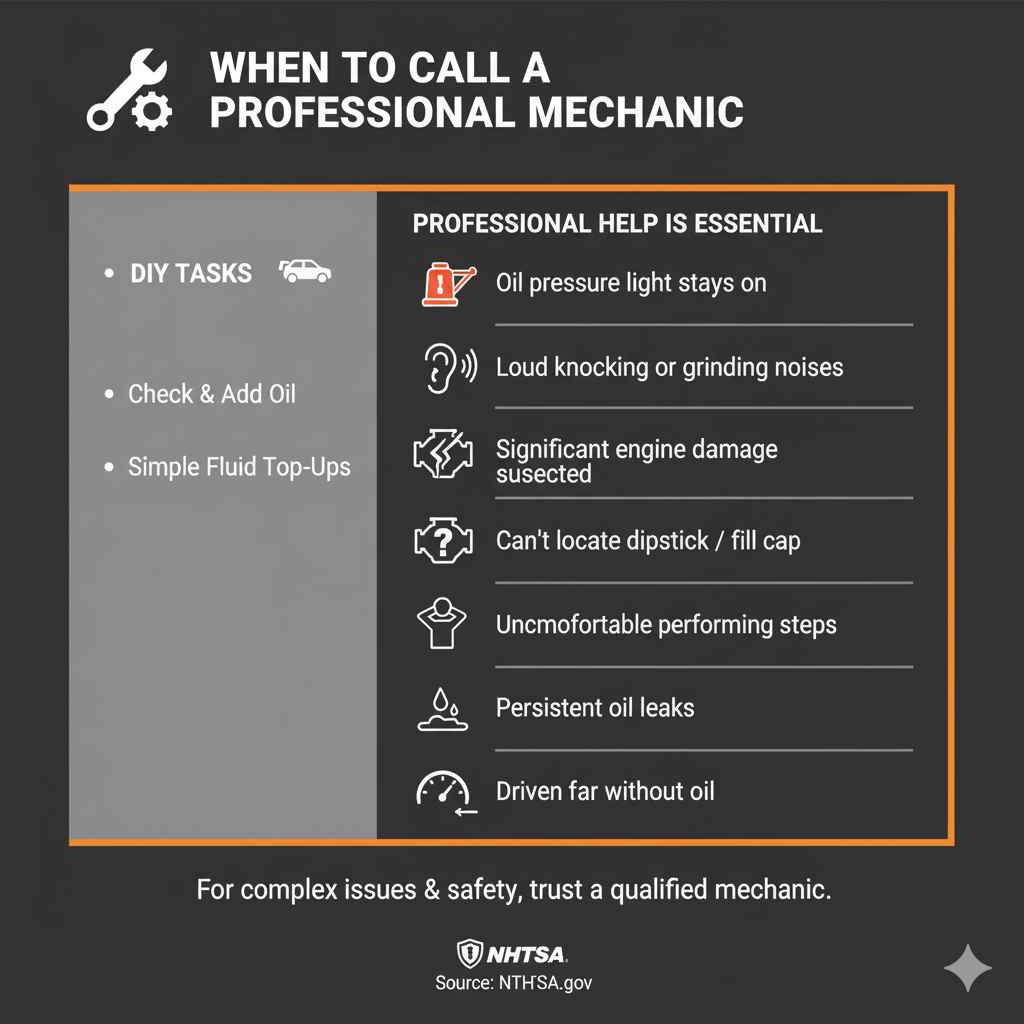
While adding oil can be a DIY task, there are times when seeking professional help is essential:
- If the oil pressure light stays on after adding oil.
- If you hear persistent knocking or grinding noises.
- If you suspect significant engine damage from driving without oil.
- If you can’t locate the dipstick or oil fill cap.
- If you’re uncomfortable performing any of the steps.
- If you notice persistent oil leaks.
- If you’ve driven a significant distance without oil and suspect internal damage.
A qualified mechanic has the tools and expertise to diagnose and repair complex automotive issues safely and effectively. For instance, resources like the National Highway Traffic Safety Administration (NHTSA) highlight the importance of professional auto repair and maintenance for vehicle safety.
Frequently Asked Questions (FAQ)
Q1: What happens if I add the wrong type of oil to my car?
A1: Adding the wrong type of oil can lead to poor lubrication, increased engine wear, reduced fuel efficiency, and potentially severe engine damage. Always use the type recommended in your owner’s manual.
Q2: Can I drive my car if the oil light is on?
A2: No, you should not drive your car if the oil pressure warning light is on. Pull over safely as soon as possible and turn off the engine to prevent catastrophic damage.
Q3: How often should I check my oil?
A3: It’s a good practice to check your oil level at least once a month and before any long trips. Some drivers prefer to check it every time they fill up with gas.
Q4: Is it bad to overfill my engine with oil?
A4: Yes, overfilling can be harmful. Excess oil can foam, reducing its lubricating properties, and it can cause damage to seals and gaskets, leading to leaks or even engine damage.
Q5: My car is burning oil, what does that mean?
A5: Burning oil, often indicated by blue smoke from the exhaust, means oil is getting into the combustion chambers. This is usually caused by worn piston rings, valve seals, or other internal engine problems and requires professional repair.
Q6: How much does it cost to get an engine repaired if it ran out of oil?
A6: The cost can vary greatly, from a few hundred dollars for minor repairs to several thousand dollars for a complete engine rebuild or replacement. It’s best to get a diagnosis from a mechanic for an accurate estimate.
Q7: Can a car start and run without any oil at all?
A7: A car might start briefly without oil, but it will make terrible noises and suffer immediate damage. It’s not designed to run for more than a few seconds at most without any lubrication, and even then, significant harm will occur.
Conclusion
Discovering your car is out of oil can be a moment of panic, but by understanding the signs and knowing the immediate steps to take, you can protect your engine from severe damage. Remember, the most critical action is to stop the engine immediately. Once safe, checking your oil level and adding the correct type and amount of oil are your priorities.