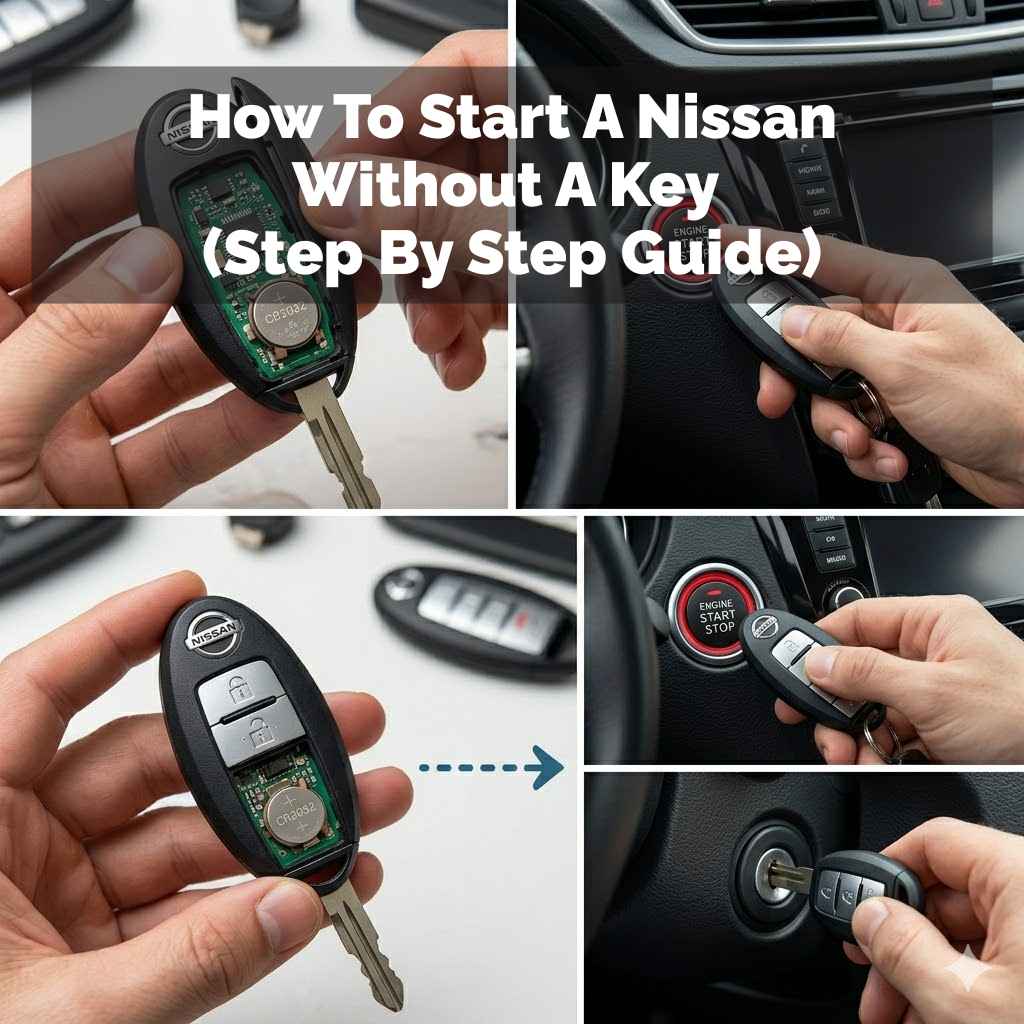
How To Start A Nissan Without A Key (Step By Step Guide)
Losing your car keys feels like a huge problem. It can happen to anyone. You’re rushing out the door.
Or maybe they just vanished into thin air. You look everywhere. Panic starts to set in.
You just need to get going. This guide helps you understand what to do.
If you’ve lost your Nissan key, starting it without one usually involves older models and specific methods. For newer Nissans with immobilizers, professional help is typically required. Common older methods involve bypassing the ignition cylinder or using a spare key if available.
Always proceed with caution and understand the risks involved.
Understanding the Nissan Ignition System
Cars need a signal to start. The key does this. It tells the car’s computer it’s okay to run.
Older cars are simpler. They have a physical lock cylinder. You turn the key.
This connects wires. The engine gets fuel and spark. Newer cars use transponder keys.
These have a chip. The car reads the chip. If it matches, the car starts.
Without the right chip, the car won’t start. This is a security feature.
Think of it like a secret handshake. The key has the secret. The car checks the handshake.
If it’s correct, the door opens. If not, the car stays locked. This chip technology is called an immobilizer.
It makes hot-wiring much harder. Most modern Nissans have this system. This means starting one without its specific key is very difficult.
Older models, like those from the late 1980s to early 2000s, often lack this advanced security. They rely more on mechanical locks. This makes them more susceptible to being started without the original key.
However, attempting to start a car without a key can still cause damage if not done carefully. It’s a last resort.
When Keys Go Missing: Common Scenarios
It’s easy to imagine. You’re at the grocery store. You put your keys down for a second.
When you look back, they’re gone. Or maybe they fell out of your pocket. You were walking to your car.
You search the ground. Nothing. This happens more often than you think.
It’s frustrating. You feel stranded.
Another common time is when you’re rushing. You have to get to work. Or pick up kids.
You grab your bag. Your keys are in there. Or are they?
You get to the car. You pat your pockets. No keys.
You search your bag. Still no keys. The clock is ticking.
You start to feel that sinking feeling.
Sometimes, keys get locked inside the car. You close the door too quickly. The car locks automatically.
Or you left them on the seat. Now you can’t get in. You can’t start the car.
It’s a common mistake. It happens to many people. Especially when you’re not paying close attention.
In some cases, a key might break. The metal part snaps off. Or the plastic head breaks.
Now you have a broken key. It might not work in the ignition. Or it might be impossible to turn.
This also leaves you without a usable key. You’re stuck in the same situation.
Can You Really Start a Nissan Without the Key?
For newer Nissans, the answer is generally no. Not without significant effort and potential damage. The immobilizer system is designed to prevent this.
It needs the specific transponder chip. Without it, the car’s computer won’t allow the engine to run. Even if you could physically turn the ignition, the engine wouldn’t start or would shut off immediately.
Older Nissan models are a different story. They might have a simpler ignition system. These can sometimes be bypassed.
This is often what people mean by “hot-wiring.” It involves directly connecting certain wires. These wires provide power to the ignition system. It bypasses the need for the key to turn the cylinder.
It’s important to know that this is not a common or recommended practice. It can cause electrical damage. It can also be illegal depending on your situation.
Most people consider this only in an emergency. When all other options are gone. And you absolutely need to move the vehicle.
The success of starting an older Nissan without a key depends on the specific model and year. Some systems are easier to bypass than others. But even with older cars, understanding the wiring is crucial.
Incorrect connections can fry your car’s computer. Or start a fire. It’s a risky move.
Methods for Older Nissan Models (Use with Extreme Caution)
These methods are for informational purposes only. They apply to older vehicles that lack advanced anti-theft systems. Attempting these on newer cars will likely fail and could cause damage.
Always consider the risks involved. Damage to your ignition or electrical system is possible. If you are unsure, it is always best to seek professional help.
Method 1: The Paperclip or Wire Trick (For Very Old Models)
This method bypasses the ignition switch. It’s like manually flipping the switches the key would normally turn. You need access to the steering column wires.
This often means removing plastic covers. Be gentle. You don’t want to break more parts.
First, you need to identify the correct wires. There are usually three main functions: battery power, ignition, and starter. The battery wire is always hot.
It has power from the battery. The ignition wire powers the car’s accessories and computer. The starter wire sends a signal to the starter motor.
You’ll need a piece of wire or a sturdy paperclip. You’ll bend it into a U-shape. Or just strip a piece of wire.
You connect the battery wire to the ignition wire. This powers up the car’s systems. Lights on the dashboard should come on.
This is like turning the key to the “ON” position.
Next, you’ll need to engage the starter. You can do this by momentarily touching the battery wire to the starter wire. Or sometimes, you connect the ignition wire to the starter wire.
This sends power to the starter motor. The engine should crank. If it starts, you remove the wire from the starter.
You leave the battery and ignition wires connected.
This sounds simple, but finding the exact wires is key. Older Nissan service manuals can help. Or online forums dedicated to specific models.
Misidentifying wires can cause short circuits. It can damage components. This is why caution is so important.
It’s not a guesswork situation.
Understanding Ignition Wire Functions
Battery Wire (B+): This wire is always live. It gets constant power directly from the battery. It’s the main power source for everything.
Ignition Wire (IGN): This wire powers the car’s electrical systems. It turns on the dashboard lights, fuel pump, and ignition system. It’s like turning the key to the ‘on’ position.
Starter Wire (ST): This wire engages the starter motor. It sends a jolt of power to crank the engine. It only needs a brief connection.
Method 2: Bypassing the Ignition Cylinder
This is similar to the wire trick but focuses on the back of the ignition switch. If the key is lost, but the ignition cylinder is still in place, you might be able to bypass it. This involves removing the plastic shroud around the steering column.
Then, you access the ignition switch itself.
The ignition switch has several electrical terminals. You’ll need to identify them. Again, a wiring diagram for your specific Nissan model is invaluable.
You’re essentially trying to create the same electrical connections the key would make.
You’ll need to connect the main power (battery) to the ignition terminal. This will power up the car’s electronics. Then, you’ll need to momentarily connect the ignition terminal to the starter terminal.
This will crank the engine. Once the engine starts, you remove the connection to the starter terminal.
This method requires a bit more mechanical aptitude. You need to be able to carefully remove the steering column covers without breaking them. You also need to be confident in identifying the correct electrical contacts on the ignition switch.
It’s very easy to misjudge and cause a short circuit.
A word of caution: many older vehicles still have steering wheel locks. If the steering wheel is locked, you might not be able to turn the ignition cylinder at all. Or even access the wires easily.
You might need to try and jiggle the steering wheel while attempting to bypass. This adds another layer of complexity and potential frustration.
Tools You Might Need
- Wire stripper/cutter
- Pliers
- Screwdrivers (Phillips and flathead)
- A piece of sturdy wire or a large paperclip
- A flashlight
- A wiring diagram for your specific Nissan model (highly recommended)
Why These Methods Don’t Work for Newer Nissans
Modern cars are built differently. They have advanced security systems. These systems are designed to prevent theft.
They also prevent unauthorized starting. The key isn’t just a piece of metal anymore. It’s a high-tech device.
Most Nissan models made in the last 15-20 years have an engine immobilizer. This system has a small computer chip inside the key. This chip emits a unique code.
When you try to start the car, the car’s computer reads this code. It’s like a secret password.
If the code doesn’t match, the car knows. It won’t allow the engine to start. Or it might start and then immediately die.
This system uses radio waves. It’s called RFID (Radio-Frequency Identification). The car has a receiver.
It detects the key’s signal when it’s close.
Even if you manage to bypass the ignition switch physically, the immobilizer will stop the engine. There’s no way to “hot-wire” a modern car’s computer. It requires special programming.
And access to diagnostic tools. Trying to force it can damage sensitive electronics.
So, if you have a 2007 or newer Nissan, these bypass methods won’t work. You’ll likely need a replacement key. Or to have your car towed to a dealership or a qualified locksmith.
This is a frustrating reality. But it’s also a sign of improved security.
Nissan Immobilizer System Facts
Chip Technology: Modern Nissan keys contain a transponder chip. This chip is programmed to communicate with the car’s immobilizer unit.
Unique Codes: Each key chip has a unique identification code. The car’s computer must recognize this code to allow starting.
No Signal, No Start: If the car’s computer does not detect a valid key signal, the engine will not start or will shut down immediately.
Immobilizer Unit: This is a separate computer module in the car that manages key recognition.
My Own Key-Less Nightmare
I remember this one time, I was heading out for a weekend trip. My car was an older Nissan Altima, maybe a 2002 model. I’d just finished packing the trunk.
I had my keys in my hand. I locked the doors with the remote. Then, I tossed the keys on the kitchen counter.
Or so I thought.
I got in the car, ready to go. Turned the key. Nothing.
Just a faint click. The dashboard lights were dim. I tried again.
Still nothing. I thought the battery was dead. But the lights were too weak for that.
Then it hit me. I didn’t have the keys in my hand.
My heart sank. I checked my pockets. Checked my bag.
I ran back inside. I tore apart the kitchen. Under the mail pile.
Behind the fruit bowl. Nowhere. I started to retrace my steps.
The trunk. The car door. The counter.
It was like they just vanished.
The feeling of panic was intense. I had a long drive ahead. I was supposed to meet friends.
I was stuck. I looked at the ignition. I knew about the older models being bypass-able.
But I’d never actually done it. Or even seen it done. I felt a surge of desperate curiosity.
But also fear. I didn’t want to break my car.
I spent the next hour searching. And feeling increasingly helpless. Eventually, I found them.
They had slipped behind a cabinet in the kitchen. Out of sight, out of mind. The relief was immense.
But the memory of that panic stuck with me. It made me appreciate having a spare key. And the security of modern cars, even if it means more hassle when things go wrong.
When is it Normal to Not Have Your Key?
It’s normal to not have your key when it’s misplaced. Or locked inside the car. Or if it breaks.
It’s a situation many drivers face. It happens to the best of us. The key itself is a physical object.
It can be lost or damaged.
In newer cars, it’s also normal to need a specific fob or key card. If you lose that, you can’t start the car. This is by design.
It’s a security feature. So, not having the correct key is the expected state for a car that requires one.
The abnormality is when you need to start the car and cannot. Because the key is missing or unusable. That’s when it becomes a problem.
And when people start looking for alternative solutions. Even if those solutions are difficult or not recommended.
What isn’t normal is finding your car in a place it shouldn’t be. Or seeing someone trying to tamper with your ignition. That’s when you know something is wrong.
And it’s not just a simple case of a lost key. It could be a sign of attempted theft.
Key-Related Scenarios
Lost Key: The key is simply not where you expect it to be. Searches are unsuccessful.
Locked Key Inside: The key is physically inside the car. You can see it, but cannot access it.
Broken Key: The physical key is damaged, making it impossible to insert or turn in the ignition.
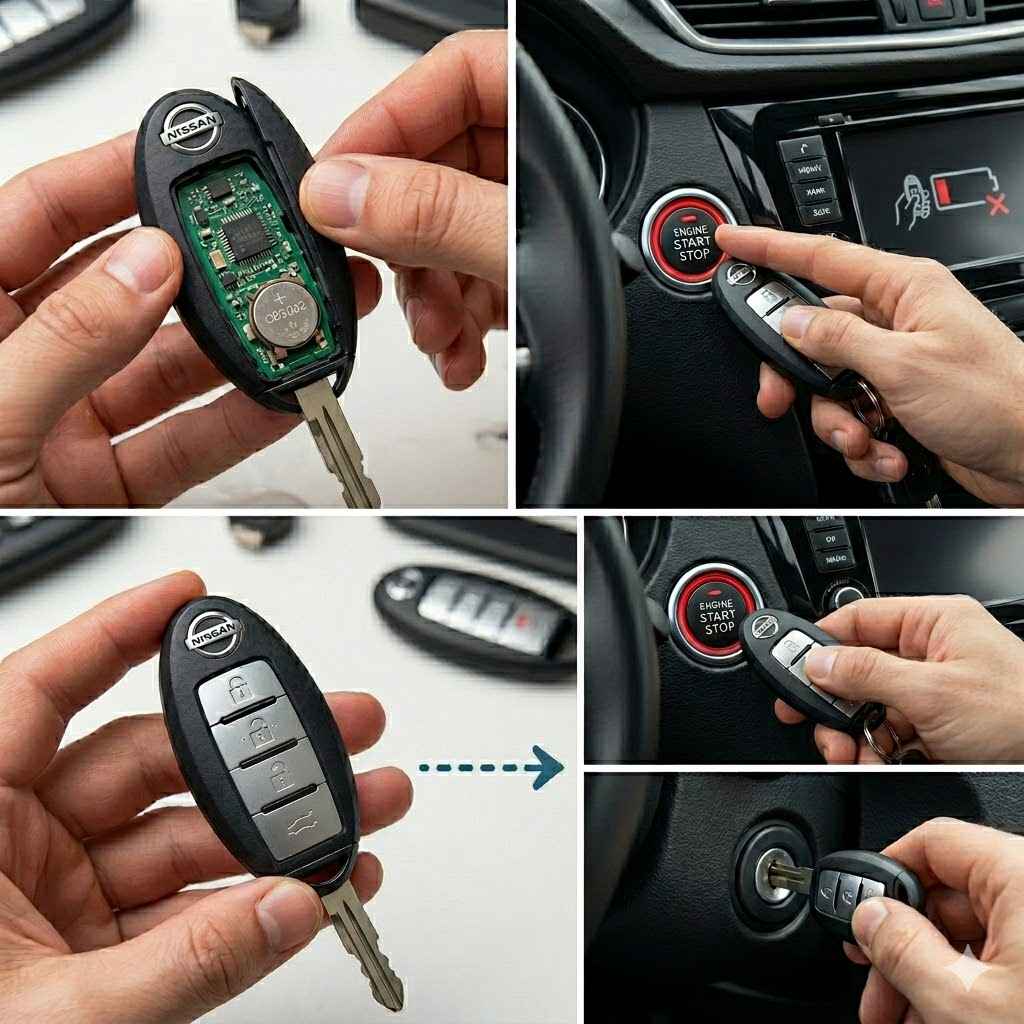
Dead Key Fob Battery: For keyless entry, a dead battery in the fob might prevent starting (though most have a manual override).
When to Worry: Red Flags
You should worry if your Nissan is started without your knowledge. Or if you find damage to your ignition or steering column. These are clear signs that someone might be trying to steal your car.
Or has already stolen it.
If you go to start your car and it cranks but doesn’t start, and you know your key is fine, that’s also a worry. It could be a problem with the immobilizer system itself. Or another electrical issue.
It’s not just a simple “lost key” scenario anymore.
Another red flag is if someone offers to start your car without a key and it’s a newer model. They might be trying to scam you. Or they might not know what they’re doing.
And could cause more damage. Always be suspicious of unsolicited advice on bypassing modern car security.
Trust your gut feeling. If something feels off about the situation, it probably is. Don’t ignore strange noises.
Or warning lights on the dashboard. These can be early indicators of trouble. Especially if they appear after you’ve tried to start the car without its key.
Practical Steps When You Can’t Find Your Nissan Key
The first and most important step is to stay calm. Panic makes it harder to think. Retrace your steps.
Look in all the places you’ve been. Check your pockets, your bag, your home, your workplace.
If you suspect you locked them inside, check all doors and the trunk. Sometimes a spare key is accessible. Or you might need roadside assistance to unlock the car.
Many insurance policies include this service.
If the key is truly lost, or broken, you have a few options:
- Spare Key: Do you have a spare key? This is the easiest solution. Use it and get a new key made as soon as possible.
- Nissan Dealership: They can cut and program a new key for your car. You’ll need proof of ownership and your car’s VIN. This is usually the most expensive option. But it guarantees a working, programmed key.
- Automotive Locksmith: Many locksmiths specialize in car keys. They can often come to your location. They can cut and program new keys. This can be cheaper than the dealership. And often faster. They can handle both older mechanical keys and newer transponder keys.
- Roadside Assistance: If you have a service like AAA, they can often help with lockouts. They might also offer key replacement services or towing to a place that can help.
If you have an older Nissan and are in a dire emergency, you might consider the bypass methods. But understand the risks. It’s generally better to call a professional.
They have the tools and knowledge. They can do it safely.
Key Replacement Options
Dealership: Guaranteed to work, often highest cost, requires towing or being at the dealership.
Automotive Locksmith: Can be more affordable, mobile service available, skilled with various key types.
Roadside Assistance: May cover lockouts, towing, or key services depending on your plan.
What This Means For You: Realistic Expectations
If you drive a newer Nissan (roughly 2007 and newer), trying to start it without its key is likely impossible. The security systems are too advanced. Your best bet is to get a replacement key.
Contact a locksmith or your Nissan dealer.
If you drive an older Nissan, there’s a chance you might be able to bypass the ignition. But this is a difficult task. It requires mechanical and electrical knowledge.
And carries a risk of damage. It’s not something to attempt lightly. Or without proper tools and guidance.
The best practice is to always have a spare key. Keep it in a safe place at home. Or with a trusted family member.
This can save you a lot of stress and money if you lose your primary key. Or if it breaks.
If you ever find yourself in this situation, don’t panic. Take a deep breath. Assess your car’s age and security system.
Then, choose the safest and most reliable solution. For most people, this means calling a professional. It’s an investment in peace of mind.
Quick Tips for Key Management
To avoid this problem, here are some simple tips:
- Get a Spare Key: This is the number one tip. Get a second key made. Keep it somewhere safe and accessible.
- Key Finder: Attach a small Bluetooth tracker to your keychain. You can use your phone to locate it if it’s nearby.
- Designated Spot: Have a specific place at home for your keys. A hook by the door, a bowl on a table. Always put them there.
- Key Chain Buddy: Use a brightly colored or unusually shaped keychain. It makes your keys more visible and harder to misplace.
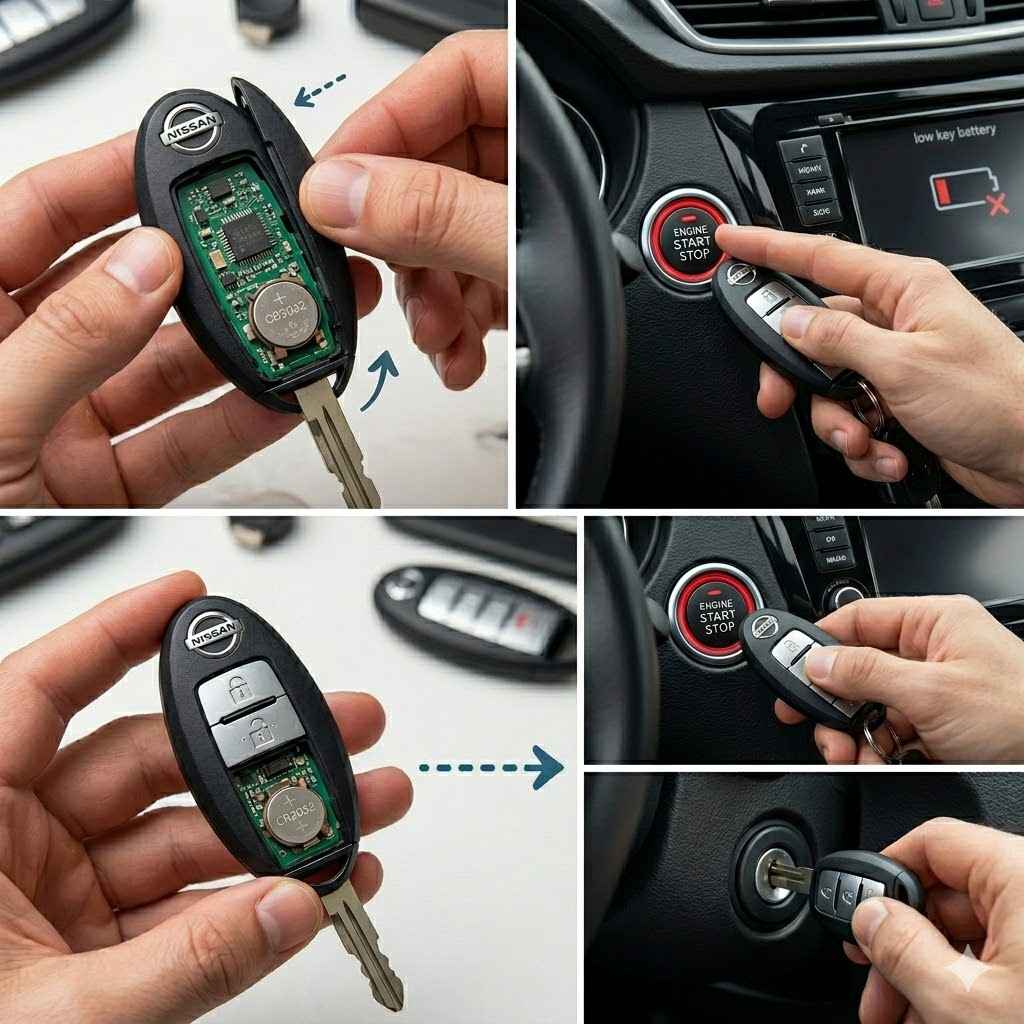
- Programmed Fobs: If your Nissan uses a key fob, check its battery regularly. Replace it when needed. Some fobs have a hidden physical key for emergencies.
- Be Mindful: When you get out of the car, make sure you have your keys. A quick pat of your pockets is a good habit.
Frequently Asked Questions
Can I start my 2015 Nissan Altima without a key?
No, a 2015 Nissan Altima has an immobilizer system. It requires a programmed key fob with a transponder chip. You cannot start it by bypassing the ignition switch.
You will need a replacement key programmed to your car.
What if I lost my Nissan key and my car won’t start?
If you lost your Nissan key and your car won’t start, the first step is to search thoroughly for the key. If it’s truly gone, you’ll need to get a new key. For newer Nissans, contact a Nissan dealership or an automotive locksmith.
For very old models, professional help is still advised due to the risk of damage.
How much does it cost to get a new Nissan key?
The cost can vary widely. A basic mechanical key for an older Nissan might be $50-$150 from a locksmith. A transponder key or intelligent key fob for a newer Nissan can cost $200-$500 or more.
This includes the cost of the key blank, programming, and labor. Dealerships are often on the higher end of this range.
Can an automotive locksmith make a new key for my Nissan if I don’t have the original?
Yes, most automotive locksmiths can make a new key for your Nissan even if you don’t have the original. They can usually do this using your car’s Vehicle Identification Number (VIN) or by accessing the ignition cylinder. You will need to provide proof of ownership.
What is a Nissan immobilizer system?
A Nissan immobilizer system is an anti-theft device. It prevents the car from starting unless the correct transponder chip, usually located inside the key or key fob, is detected by the car’s computer. If the correct code isn’t recognized, the engine will not start.
Is it illegal to start a car without a key?
Starting a car without the owner’s permission and key is illegal and considered theft. However, if it is your own car and you are in an emergency situation where you need to move it, the legality can depend on local laws and circumstances. It’s always best to avoid damaging your vehicle and seek proper solutions.
Final Thoughts
Losing your car key is a stressful event. It can disrupt your entire day. For older Nissan models, starting without a key might be technically possible, but it’s risky.
For newer models, it’s practically impossible without the right tools and programming. The best approach is always prevention: keep track of your keys and have a spare made. If you do lose one, professional help is usually the safest and most reliable route.
Products related to this article
Sponsored / affiliate links. As an Amazon Associate I earn from qualifying purchases. I may earn additional commission from eligible campaigns.