Proven Ways to Get Dried Concrete Off Car
Need to get dried concrete off your car? Safely remove concrete splatters and hardened drips with easily accessible household items and gentle scrubbing techniques. This guide provides simple, effective methods to protect your car’s paint and restore its shine.
Accidents happen. Sometimes, a quick trip to a construction site or a DIY project at home can lead to an unwelcome guest on your car’s paintwork: dried concrete. It looks ugly, and you might worry about it damaging your car’s finish. But don’t panic! Getting concrete off your car doesn’t have to be a messy or difficult job.
As your trusted automotive guide, I’m here to walk you through simple, step-by-step methods to safely clean that hardened concrete. We’ll use things you probably already have in your garage or kitchen, and I’ll show you how to do it without scratching your precious paint. By the end of this, you’ll be confident in restoring your car’s pristine look. Let’s get started on making that concrete disappear!
Why Concrete on Your Car is a Problem
Concrete is a mixture of cement, water, and aggregates like sand and gravel. When it dries, it hardens into a strong, solid material. This is great for buildings, but not so great for your car’s paint. Here’s why:
- Corrosive Nature: When wet, concrete has a high pH level, making it alkaline. This alkalinity can attack and etch into your car’s clear coat and paint if left on for too long.
- Abrasive Texture: Even after drying, concrete can have a rough, gritty texture. If you try to wipe it away without proper care, the small particles can act like sandpaper, causing scratches and swirl marks on your paint.
- Staining: Stubborn concrete residue can leave permanent marks or stains on your car’s surface, especially on lighter-colored vehicles.
- Adhesion: Once dry, concrete bonds tightly to surfaces. Simply washing it with regular car soap and water often isn’t enough to dislodge it.
The longer concrete sits on your car, the harder it becomes and the more damage it can potentially cause. That’s why acting quickly and using the right methods is key.
Gather Your Essential Tools and Supplies
Before we begin tackling the concrete, it’s important to have the right tools. Using the wrong materials can cause more harm than good. Here’s a list of what you’ll likely need:
- Warm water
- Car wash soap (pH-neutral is best)
- Several clean microfiber towels or cloths
- A soft-bristle brush or a gentle detailing brush
- A plastic scraper or old credit card
- White vinegar (undiluted)
- A spray bottle
- For stubborn spots: automotive bug and tar remover, or a dedicated concrete remover for vehicles.
- Lubricant: Car wash soap solution or a quick detailer spray
Having these items handy will make the process smoother and more effective. Remember, gentleness is key. We want to remove the concrete, not damage the paint underneath.
Step-by-Step Guide: How to Get Dried Concrete Off Your Car
Now, let’s get down to business! Follow these steps carefully to remove dried concrete without harming your car’s finish. We’ll start with the gentlest methods and move to more potent solutions if needed.
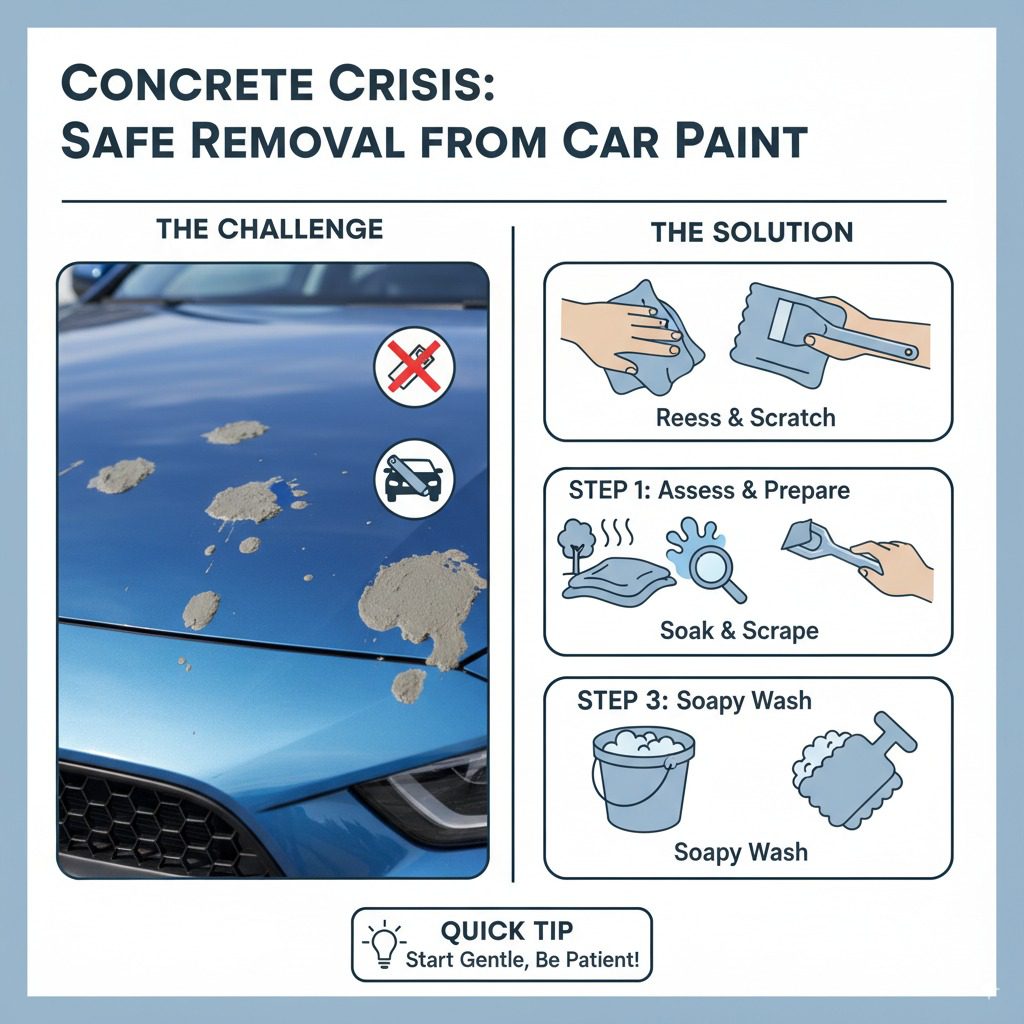
Step 1: Assess the Damage and Prepare the Area
First, take a good look at the concrete spots. Are they small splatters, or larger drips? Are they fresh or have they been there for a while? This will help you decide which method might be best.
Park your car in a shaded area. Direct sunlight can dry cleaning solutions too quickly, potentially leaving streaks or making the job harder.
Rinse the affected areas of your car thoroughly with plain water. This initial rinse helps remove any loose dirt or grit, preventing it from acting as an abrasive during the cleaning process. A gentle spray from a garden hose is usually sufficient.
Step 2: Start with Soaking and Gentle Scraping
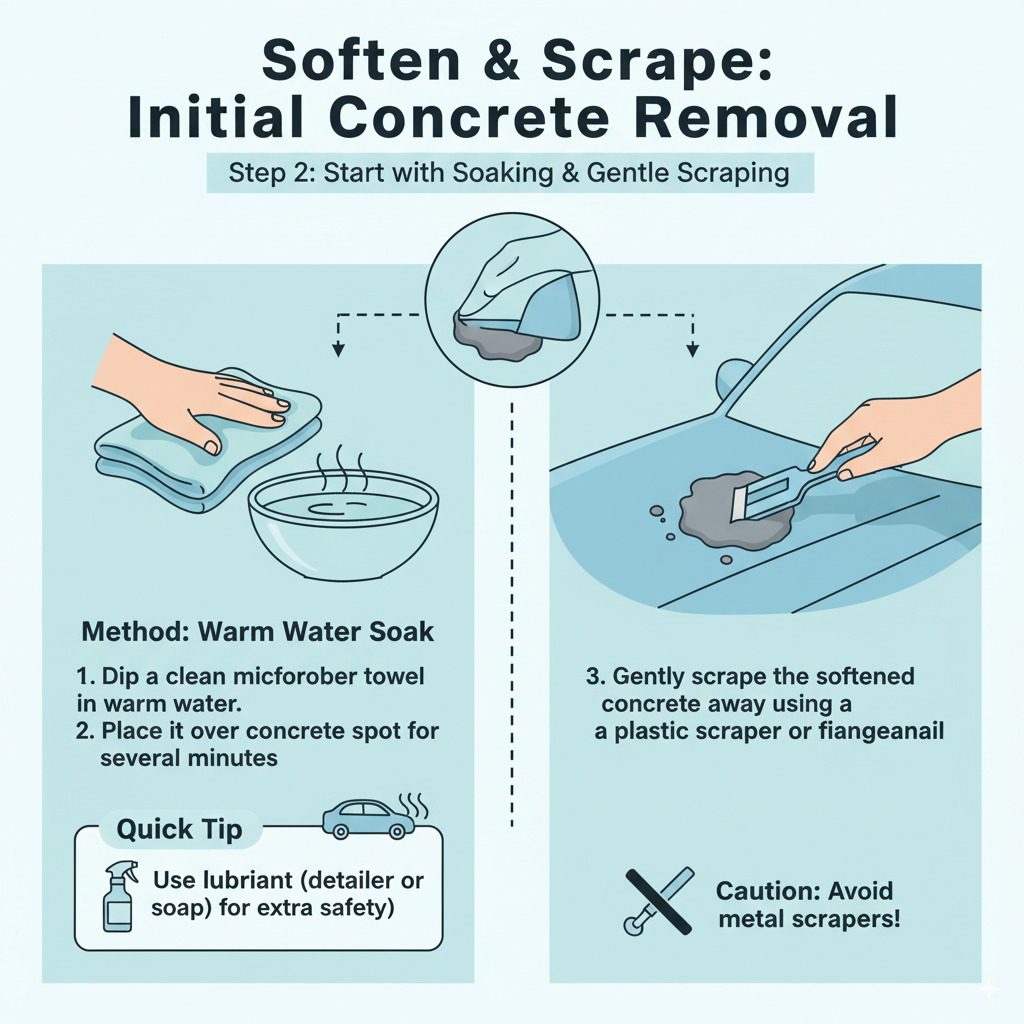
For dried concrete, the first step is to soften it. This makes it much easier to remove.
Method: Warm Water Soak
Dip a clean microfiber towel in warm water and place it directly over the concrete spot. Hold it there for several minutes to allow the water to penetrate and soften the concrete. You might need to re-wet the towel several times.
After soaking, try to gently scrape the concrete away. Use a plastic scraper, an old credit card, or even your fingernail. The goal is to lift the softened concrete off the paint. Be very careful not to scratch the paint with the edge of the scraper.
If the concrete is still quite hard, you can also try using a lubricant like a quick detailer spray or a diluted car wash soap solution as you scrape. This provides a slippery barrier, reducing the risk of scratching.
Step 3: Try a Soapy Water Wash
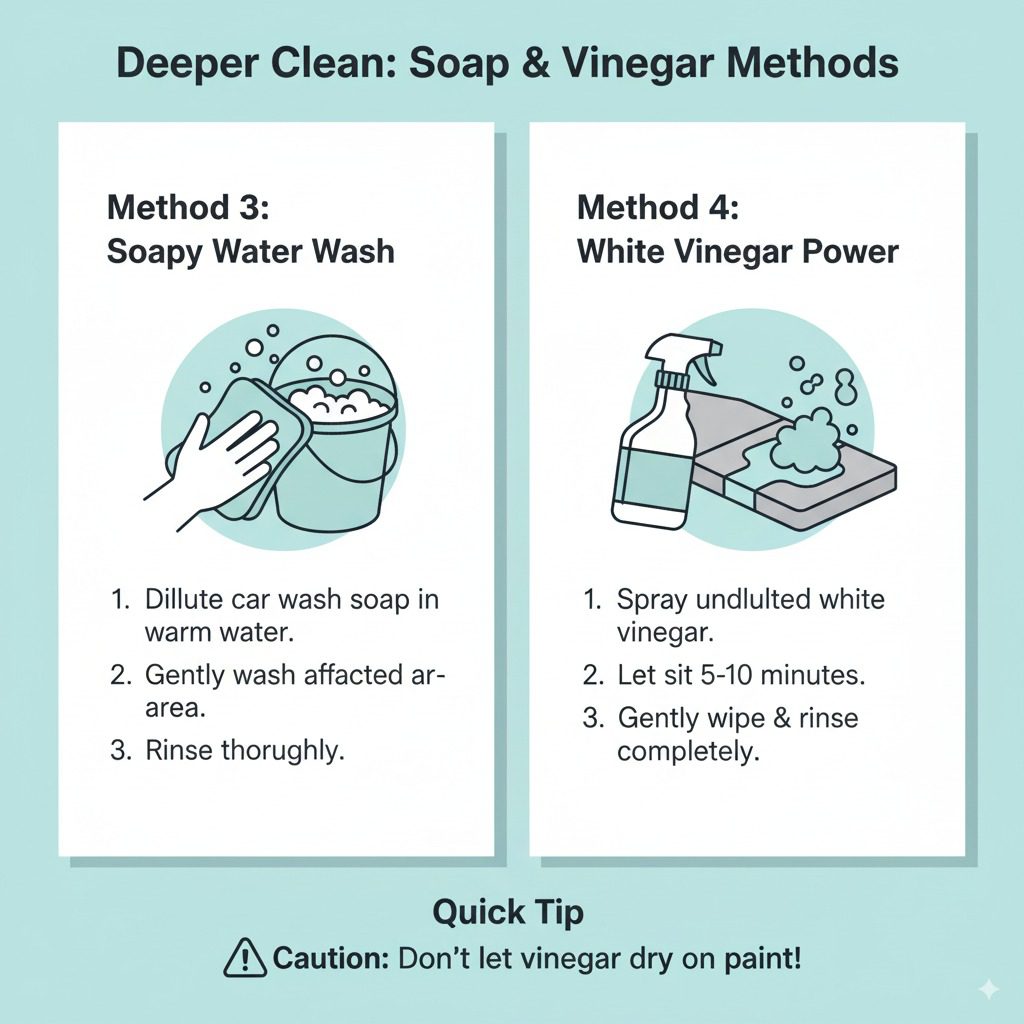
If plain water and gentle scraping didn’t do the trick, a good car wash soap can help. Use a proper car wash soap, not dish soap, as dish soap can strip your car’s wax or sealant.
Dilute car wash soap in a bucket of warm water according to the product’s instructions. Using a clean microfiber wash mitt or towel, gently wash the concrete-affected area. Work in gentle, circular motions.
For tougher spots, you can create a thicker soapy lather and let it sit on the concrete for a minute or two before gently trying to wipe it away with your microfiber towel.
Rinse the area thoroughly after washing to remove all soap residue.
Step 4: Harness the Power of White Vinegar
White vinegar is a mild acid that can help break down the mineral content in concrete, making it easier to remove. It’s a common household item that’s quite effective.
How to use vinegar:
- Pour undiluted white vinegar into a spray bottle.
- Liberally spray the vinegar directly onto the dried concrete spots.
- Let the vinegar sit for 5-10 minutes. You should see the concrete begin to slightly foam or soften.
- Gently wipe the area with a clean, damp microfiber towel. You may need to use a soft-bristle brush or the plastic scraper again, but remember to be gentle.
- Rinse the area thoroughly with plenty of water afterwards. Vinegar is acidic, so it’s important to wash it off the paint completely.
Important Note: While vinegar is generally safe for car paint, avoid leaving it on for extended periods (more than recommended) or letting it dry on the paint. Always rinse thoroughly.
Step 5: When to Use Automotive Cleaners
If the above methods don’t fully remove the concrete, you might need to move on to specialized automotive cleaners.
- Bug and Tar Remover: Many bug and tar removers are solvent-based and can be effective at breaking down stubborn, dried-on residues like concrete. Spray the product onto a microfiber towel, then apply the towel to the concrete spot. Let it dwell for the time recommended on the product label. Gently rub and then rinse.
- Dedicated Concrete Removers for Cars: There are specific products designed to remove cementitious materials from vehicles. These are often found at auto parts stores specializing in detailing supplies. Always read and follow the manufacturer’s instructions carefully. These products are typically stronger, so test them on an inconspicuous area first. Reputable brands like Mekanix offer various detailing chemicals for different needs.
When using any chemical cleaner, always wear gloves and ensure good ventilation. Work in small sections and rinse thoroughly after each application.
Step 6: Gentle Agitation and Removal
Throughout the process, gentle agitation is key. This means using something soft to help lift the concrete once it has been softened.
- Microfiber Towels: Always use clean, soft microfiber towels. Dab or gently wipe the softened concrete away.
- Soft-Bristle Brush: For textured areas or slightly more stubborn spots, a soft detailing brush or a soft-bristle car wash brush can be used for gentle scrubbing after applying a cleaning solution.
- Plastic Scraper: As mentioned, a plastic scraper is best for carefully lifting thicker patches of softened concrete. Avoid metal blades at all costs!
When rubbing, always use light pressure and a consistent motion. If you feel resistance, stop and reapply your softening agent (water, soap, or vinegar) rather than pushing harder.
Step 7: Final Wash and Protection
Once all the concrete residue is gone, give the entire car a thorough wash with your pH-neutral car wash soap. This ensures all cleaning agents are removed and the car is clean all over.
After washing, rinse the car completely and dry it with clean microfiber drying towels. Avoid air-drying, which can lead to water spots.
Protection is crucial: Concrete can strip your car’s wax or sealant. After cleaning, it’s a good idea to reapply a layer of wax or a paint sealant. This not only protects your paint from future contaminants but also restores the shine and makes future cleaning easier. You can find quality car waxes and sealants at most auto accessory stores.
Troubleshooting Common Issues
Even with the best intentions, you might encounter some challenges. Here are a few common issues and how to solve them:
- Stubborn Spots Won’t Budge: Increase the dwell time of the vinegar or automotive cleaner. You might need to repeat the softening process several times.
- Scratches Appear: If you notice fine scratches, don’t despair. Most minor paint scratches can be polished out using a fine automotive polishing compound. Always follow polishing with wax or sealant.
- Paint Discoloration: If you notice any dulling or discoloration, you may have left a strong cleaner on too long, or the concrete itself may have etched the paint. In this case, a polishing compound is your best bet to try and restore the shine.
DIY vs. Professional Help
For most minor concrete splatters, the DIY methods outlined above are perfectly sufficient. They are cost-effective and allow you to handle the situation yourself.
However, if the concrete is extensive, has been on your car for a very long time, or if you’ve tried the DIY methods without success, it might be time to consider professional help. A professional auto detailer has access to commercial-grade products and specialized tools that can remove even the most stubborn concrete without damaging your car’s paint. They can also perform paint correction, which can remove any scratches or etching left behind.
Preventing Future Concrete Mishaps
The easiest way to deal with concrete on your car is to avoid it in the first place! If you know you’ll be driving through or parked near a construction zone:
- Plan Your Route: If possible, choose alternative routes that avoid construction areas.
- Park Wisely: When visiting sites with active concrete work, park as far away as possible from the pouring or mixing areas. Look for spaces without recent concrete splashes on the ground.
- Consider a Protective Layer: Before a trip to a potentially messy area, applying a coat of quality car wax or a paint sealant can provide a sacrificial layer of protection. This layer can be cleaned off without affecting your car’s original paint. This is similar to how a car’s wax layer can protect against light road grime.
- Clean Promptly: If you do get wet concrete on your car, try to rinse it off with water as soon as possible. Fresh concrete is much easier to remove than dried, hardened concrete.
Frequently Asked Questions (FAQ)
Q1: Can I use a razor blade to scrape off dried concrete?
A1: It’s strongly advised against using a razor blade or any metal scraper. These tools are too sharp and will almost certainly scratch or gouge your car’s paint, causing more damage than the concrete itself. Always opt for plastic scrapers or credit cards.
Q2: How long can I leave white vinegar on my car’s paint?
A2: For dried concrete, let vinegar sit for about 5-10 minutes to soften the concrete. Avoid leaving it on for hours or letting it dry on the paint. Always rinse thoroughly with water afterward to neutralize the acid.
Q3: Will washing my car with regular car soap remove dried concrete?
A3: While a good car wash with pH-neutral soap is a necessary step for cleaning, it’s usually not enough on its own to remove hardened, dried concrete. It’s best used in conjunction with softening methods like soaking or specific cleaners.
Q4: What if the concrete has been on my car for weeks?
A4: For concrete that has been on your car for a long time, it will be much harder. You will likely need to repeat the softening process multiple times and may need to use specialized automotive concrete removers or consult a professional detailer.
Q5: Is it safe to use household cleaners like oven cleaner or ammonia on my car?
A5: Absolutely not! Household cleaners like oven cleaner, ammonia, or harsh degreasers can be extremely damaging to your car’s paint, clear coat, and plastic trim. Stick to automotive-specific cleaners or mild, tested household items like vinegar.
Q6: After removing concrete, my paint looks dull. What should I do?
A6: A dull appearance suggests that the concrete may have etched or the wax/sealant layer has been removed. You should try polishing the affected area with a fine automotive polishing compound using a microfiber applicator. This will help restore the shine. Finish by applying a layer of wax or sealant for protection.
| Method | Pros | Cons | Best For |
|---|---|---|---|
| Warm Water Soak & Plastic Scrape | Gentle, uses common items, low risk of damage | May not work on very hard/old concrete | Fresh or slightly dried concrete splatters |
| Car Wash Soap & Gentle Scrub | Cleans and helps dislodge, widely available | May not be strong enough for hardened concrete | Light concrete residue after initial soak |
| White Vinegar | Effective at breaking down minerals, household item | Must be rinsed off thoroughly, can be mildly acidic | Moderately dried concrete, slight etching |
| Automotive Bug/Tar Remover | Solvent-based, good for stubborn residues | Requires careful application, follow instructions | Stubborn dried concrete that other methods don’t touch |
| Dedicated Concrete Remover (Automotive) | Specifically formulated for car paint, effective | Can be aggressive, needs patch testing, more expensive | Very hard, old, or extensive concrete buildup |
This comparison table shows the different approaches you can take, highlighting their strengths and weaknesses to help you choose the best one for your situation.
Conclusion
Dealing with dried concrete on your car can seem intimidating, but as we’ve seen, it’s a manageable problem with the right approach. By starting with gentle methods like warm water soaks and plastic scrapers, and progressing to household solutions like white vinegar or specialized automotive cleaners when necessary, you can effectively remove concrete without damaging your car’s paint.
Remember the key principles: always work in a shaded area, use plenty of lubrication, employ gentle scrubbing and scraping techniques, and always rinse thoroughly. Protecting your car’s finish is paramount, so avoid abrasive materials like steel wool or harsh chemical cleaners not intended for automotive use. After the concrete is gone, a good wash and a fresh coat of wax or sealant will restore your car’s shine and protect it for the future.
With these proven methods and a bit of patience, you can confidently tackle dried concrete and keep your car looking its best. Happy detailing!