What Temp Do Cars Have Trouble Starting: Essential Cold-Weather Guide
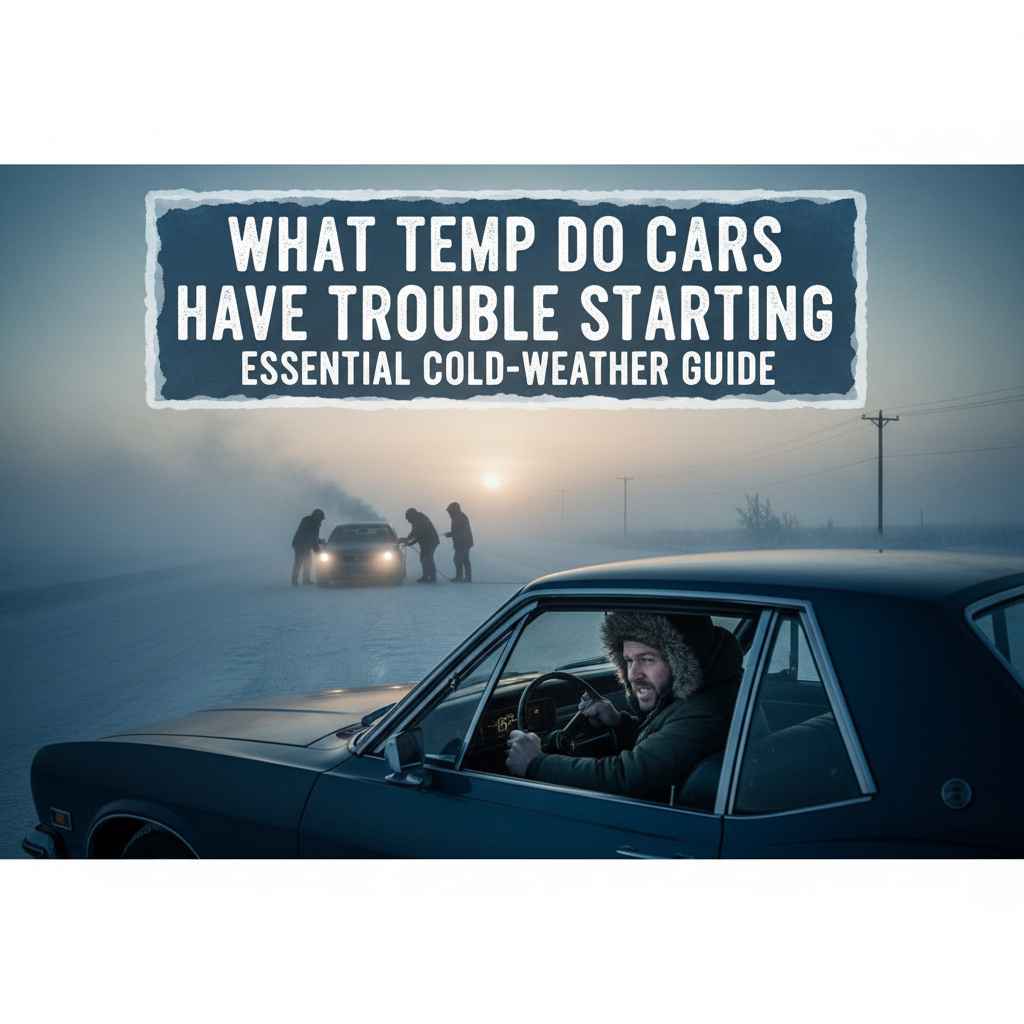
Cars typically start having noticeable trouble with starting below freezing, around 0°F (-18°C). Extreme cold significantly weakens batteries and thickens engine oil, making it harder for your car to turn over and ignite. This guide explains how to prepare your car for cold weather and what to do if it won’t start.
It’s that time of year again! The temperature drops, and suddenly your car seems to have a mind of its own, refusing to start when you most need it. This can be a real headache, especially when you’re in a hurry. But don’t worry! Understanding why this happens and what to do can save you a lot of stress and even money. This guide will break down exactly what temperatures can cause car starting problems and give you easy tips to keep your car running smoothly, no matter how cold it gets. Let’s dive in and make this winter a breeze for your car (and for you!).
What Temperature Causes Car Starting Problems?
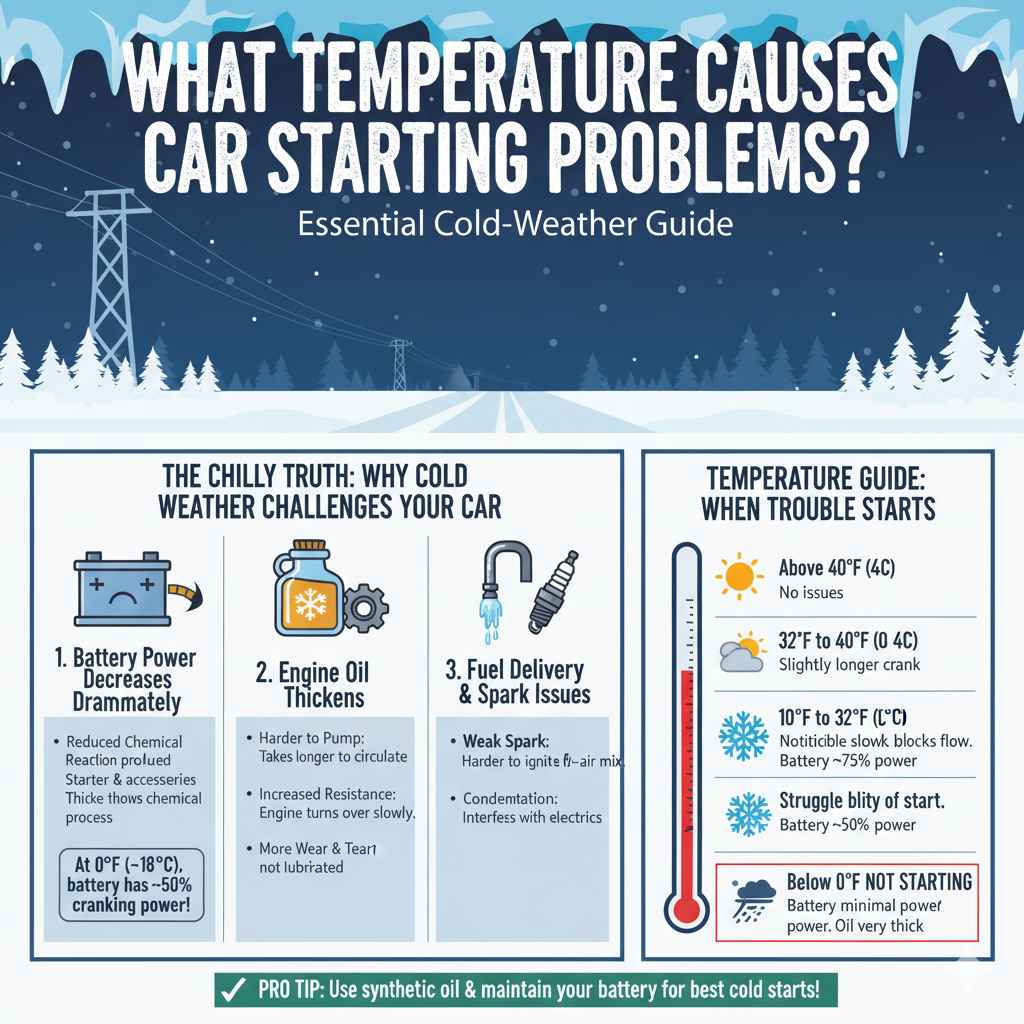
The magic number for car starting trouble usually hovers around the freezing point, but it gets significantly worse as temperatures plummet. While a car might struggle to start at 32°F (0°C), it’s really when temperatures dip below 0°F (-18°C) that you’ll see more widespread issues. Think of it like trying to move molasses versus water – that’s what cold does to critical car fluids like oil and battery electrolytes.
It’s not just one temperature, though. Even in moderately cold weather, say between 10°F and 20°F (-12°C to -7°C), your car’s battery is already working harder than it does on a warm day. As the thermometer continues to drop, the strain on your car’s systems increases dramatically. This is why understanding these temperature thresholds is key to preventing cold-weather car trouble.
Why Does Cold Weather Affect Car Starting?
Several factors in cold weather conspire to make your car’s engine reluctant to wake up. It’s a combination of physics and chemistry working against your vehicle’s ability to start.
1. Battery Power Decreases Dramatically
Your car battery is like its heart – it needs to provide a strong electrical jolt to get the engine going. Cold temperatures have a direct impact on a battery’s performance:
- Reduced Chemical Reaction: Car batteries work through a chemical reaction. Cold slows down these reactions, meaning the battery produces less power. Think of it as a sluggish chemical process.
- Increased Demand: In cold weather, you use more power right from the start. The starter motor has to work harder to crank a cold engine, and other systems like the heater, defroster, and lights also draw more power. This combination can drain a weakened battery very quickly.
- Thicker Electrolyte: The liquid inside your battery, called electrolyte, becomes thicker in the cold. This makes it harder for the chemicals to move around and do their job efficiently.
According to the Battery University, a battery’s capacity can drop significantly at low temperatures. For instance, at 0°F (-18°C), a battery might only have about 50% of its cranking power compared to its performance at 80°F (27°C).
2. Engine Oil Thickens
Engine oil is crucial for lubricating moving parts and reducing friction. In cold weather, oil becomes much thicker (more viscous):
- Harder to Pump: This thick oil doesn’t flow easily, making it incredibly difficult for the oil pump to circulate it throughout the engine. It takes longer for oil to reach critical components.
- Increased Resistance: The thicker oil creates more resistance for the engine’s crankshaft as it tries to turn over. This means the starter needs even more power to get the engine spinning fast enough to start.
- More Wear and Tear: Until the oil warms up and thins out, vital engine parts are not adequately lubricated. This can lead to increased wear and tear, sometimes referred to as “start-up wear.”
Using the correct type of oil is vital. Many modern vehicles recommend synthetic oils, which tend to perform much better in cold temperatures than conventional oils, remaining more fluid.
3. Fuel Delivery Issues
While less common than battery or oil issues, cold can sometimes affect your car’s fuel system:
- Fuel Line Freezing: If there’s any moisture in your fuel lines, it can freeze and block the flow of gasoline to the engine. This is more likely if you have a very small amount of fuel in the tank, as condensation can form more easily.
- Fuel Pump Strain: Like the oil pump, the fuel pump has to work harder to move thicker fuel, though its strain is usually less pronounced than the engine’s.
4. Spark Plugs and Ignition Systems
A strong spark is needed to ignite the fuel-air mixture in your engine. In very cold conditions:
- Weak Spark: The battery’s reduced power can sometimes lead to a weaker spark from the spark plugs, making ignition more difficult, especially if the spark plugs are already old or dirty.
- Moisture Interference: Moisture can condense on electrical components, sometimes interfering with the delivery of the spark.
When Exactly Do Cars Start to Have Trouble?
Let’s break down what you can expect at different temperature ranges:
| Temperature Range | Typical Car Performance Issues | Primary Causes |
|---|---|---|
| Above 40°F (4°C) | Generally no starting issues. | N/A |
| 32°F to 40°F (0°C to 4°C) | Slightly longer crank time possible for older cars or those with weak batteries. | Battery slightly less efficient. |
| 10°F to 32°F (-12°C to 0°C) | Noticeable longer crank time. Engine may turn over slowly. Increased risk of not starting for older batteries. | Battery power significantly reduced (up to 25-30% lower). Engine oil noticeably thicker. |
| 0°F to 10°F (-18°C to -12°C) | Most cars will struggle. Slow cranking. May not start on the first few attempts. | Battery power severely reduced (up to 50% lower). Engine oil very thick, creating significant resistance. |
| Below 0°F (-18°C) and dropping significantly | High probability of not starting. Very slow or no cranking. | Battery has minimal cranking power. Engine oil extremely thick. Risk of fuel line freezing increases. |
It’s important to remember that these are general guidelines. The age and condition of your car’s battery, the type of oil you use, and the overall health of your engine all play a role. A well-maintained car with a new battery might start fine at 0°F, while an older car with a worn-out battery and conventional oil could struggle even at 20°F.
Essential Cold-Weather Car Care Tips
Preventing cold-weather starting problems is always easier than fixing them. Here are some practical steps you can take to prepare your car for the chill:
1. Battery Health Check
Your battery is the most vulnerable component. Get it checked before winter truly sets in.
- Professional Testing: Most auto parts stores offer free battery testing. They can check the battery’s voltage and cranking amps to see if it’s still healthy.
- Clean Terminals: Corrosion on battery terminals can prevent a good electrical connection. Clean them with a wire brush and a baking soda/water solution if you see any white or bluish powder.
- Consider Replacement: If your battery is more than 3-5 years old or indicates it’s weak, consider replacing it before you get stranded.
2. Use the Right Engine Oil
This is a big one for cold starts. Modern cars often recommend synthetic oils, which are excellent in the cold.
- Check Your Owner’s Manual: It will specify the recommended oil viscosity (e.g., 5W-30, 0W-20) for your car and climate. The “W” stands for “winter.” Lower numbers before the “W” mean the oil is thinner when cold.
- Switch to Synthetic: If you currently use conventional oil and live in a very cold climate, switching to a full synthetic oil designed for cold weather can make a huge difference in starting ease and engine protection. For example, a 0W-20 synthetic oil flows much better at very low temperatures than a conventional 10W-30.
- Regular Oil Changes: Make sure your oil is fresh. Old, dirty oil loses its protective qualities and can become even more sluggish in the cold.
3. Keep Your Fuel Tank Full-ish
Avoid letting your fuel tank get below a quarter full, especially when temperatures drop significantly.
- Prevent Condensation: A fuller tank reduces the amount of air space where moisture can condense and form ice in the fuel lines.
- Easier Starts: While not directly related to starting difficulty, having enough fuel is essential for the engine to run once it starts.
- Diesel Engines: For diesel cars, using a winter-blend diesel fuel or adding a diesel anti-gel additive is crucial to prevent the fuel from gelling and clogging filters in extreme cold.
4. Check Your Antifreeze
While antifreeze primarily prevents your engine from overheating and freezing (which can cause catastrophic damage), it’s a vital part of overall car health.
- Correct Mixture: Ensure your coolant mixture is at the correct ratio (usually 50/50 coolant and distilled water) for your climate. This mixture has a specific freezing point.
- Test the Strength: You can buy a simple antifreeze tester at an auto parts store to check its freezing point capacity.
- Flush When Needed: Follow your car manufacturer’s recommendations for flushing and replacing the coolant. Old coolant loses its protective properties.
5. Inspect Tires
Cold weather can affect tire pressure and grip.
- Tire Pressure: Tires lose pressure in the cold. Check your tire pressure regularly (at least once a month) and inflate them to the level recommended on the sticker inside your driver’s side door jamb.
- Tread Depth: Ensure you have adequate tread depth for safe driving in potentially icy or snowy conditions. If you live in an area with harsh winters, consider winter tires.
What to Do If Your Car Won’t Start in the Cold
It happens to the best of us. If you turn the key (or push the start button) and nothing happens, or you hear a clicking sound, here’s a step-by-step approach:
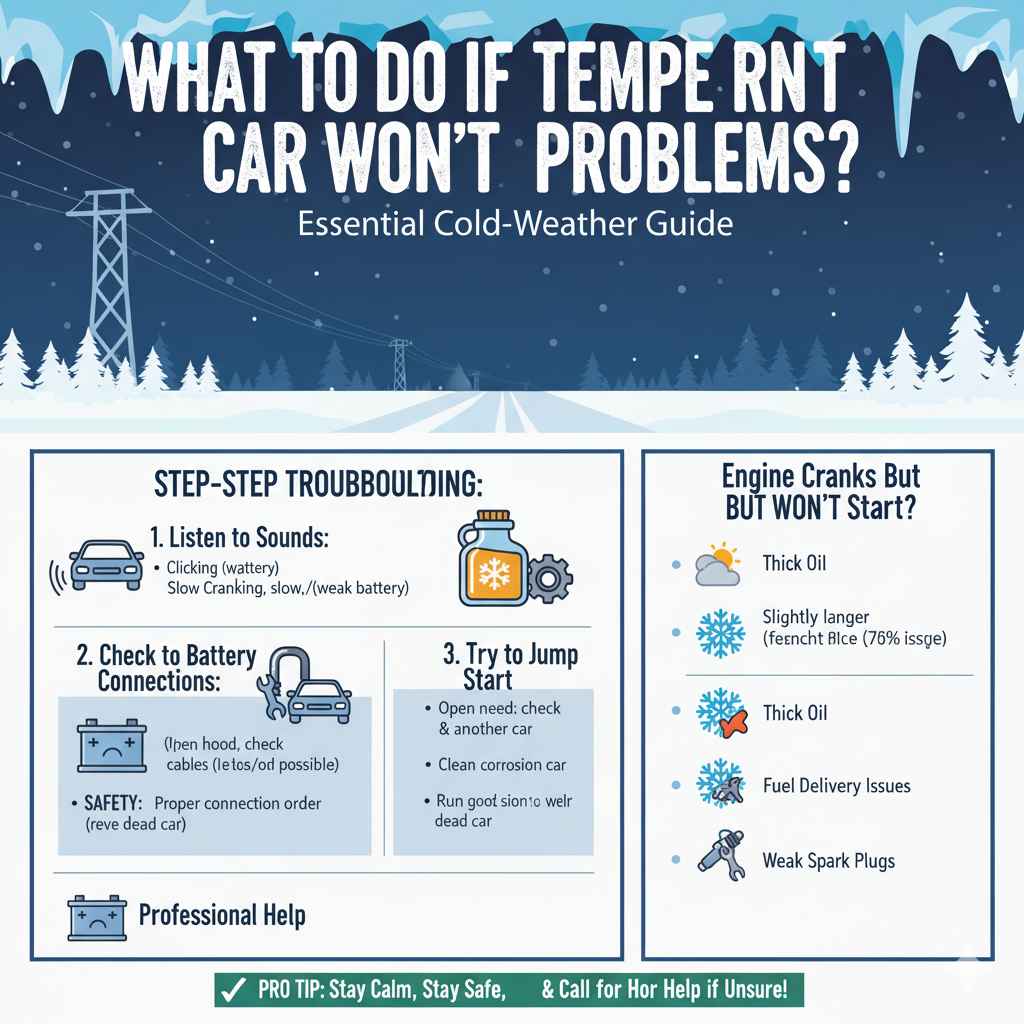
Step-by-Step Troubleshooting
-
Listen to the Sounds:
- Clicking Sound: This usually means the battery has some power, but not enough to turn the engine over. It’s often a rapid clicking.
- Slow Cranking: The engine turns over very slowly, like it’s struggling immensely. This points to a weak battery or very thick oil.
- No Sound at All: This could be a completely dead battery, a loose battery connection, or a more serious electrical issue with the ignition switch or starter.
-
Check Battery Connections:
- Open the hood and locate your battery.
- Check that the cables are securely fastened to the battery terminals. Ensure there’s no significant corrosion. If there is, and you have gloves and a stiff brush, you can carefully try to clean them.
- Attempt to start the car again.
-
Try a Jump Start:
- If you suspect a weak battery, a jump start from another vehicle is the most common solution.
- You’ll need jumper cables and a working vehicle.
- Safety First! Ensure both vehicles are parked correctly, not touching, and in Park or Neutral with parking brakes engaged. Turn off both engines and all accessories.
-
Connect the Cables (in the correct order!):
- Connect one red (positive) clamp to the positive terminal (+) of the dead battery.
- Connect the other red clamp to the positive terminal (+) of the good battery.
- Connect one black (negative) clamp to the negative terminal (-) of the good battery.
- CRITICAL STEP: Connect the other black clamp to an unpainted metal surface on the engine block of the car with the dead battery, away from moving parts and the battery itself. This helps prevent sparks near the battery, which can release flammable hydrogen gas.
- Start the good car and let it run for a few minutes to charge the dead battery.
- Turn the key or push the start button on the car with the dead battery.
- If it starts, let it run for at least 15-20 minutes to allow the alternator to recharge the battery.
- Disconnect the cables in the reverse order: Black from engine block, black from good battery, red from good battery, red from dead battery.
-
Use a Battery Charger:
- If you have a battery charger, you can connect it to your battery and let it charge for several hours. This is a slower, gentler way to revive a battery than jump-starting.
-
Check for Frozen Fuel Lines:
- If you suspect frozen fuel lines, driving the car a short distance to a warmer garage or using a hairdryer (carefully!) on the fuel lines might help. However, this is less common and harder to diagnose for beginners. If you have a very low fuel level and are in extreme cold, this is a possibility.
-
Call for Professional Help:
- If none of the above work, or if you’re uncomfortable performing these steps, it’s time to call a tow truck or roadside assistance. They have the tools and expertise to diagnose and fix the problem.
What if the Engine Cranks, but Won’t Start?
If your car’s engine is turning over (you hear the normal cranking sound, but it’s just not catching and running), the issue might not be the battery itself, but one of the other cold-weather culprits:
- Thick Oil: The starter is working, but the thick oil and cold engine conditions are preventing ignition.
- Fuel Delivery: The engine isn’t getting enough fuel, possibly due to frozen lines or a struggling fuel pump.
- Spark Plugs: A weak spark or fouled spark plugs can prevent combustion.
In these cases, jump-starting won’t help. Letting the car sit in a warmer spot for a few hours to let the oil and components warm up can sometimes resolve the issue. If it’s a recurring problem, it’s best to have a mechanic inspect the fuel system, ignition system, and confirm the correct oil is being used.
Frequently Asked Questions (FAQs)
Q1: Can extreme cold damage my car if it doesn’t start?
Yes, prolonged attempts to start a car in extreme cold, especially with thick oil, can put a lot of strain on the starter motor and the battery. If the car doesn’t start and the temperature is extremely low (well below 0°F), it’s better to stop trying after a couple of attempts to avoid potentially costly damage to the starter or draining the battery completely. More importantly, freezing of engine coolant can cause severe engine damage, but this is related to the cooling system’s ability to protect against freezing, not directly the starting process itself, unless the engine is already compromised.
Q2: How long does a car battery typically last in cold weather?
A healthy car battery’s lifespan is already around 3-5 years. In very cold weather, its effective lifespan can feel shorter because its performance is reduced. You might get fewer starts, and it will drain faster if accessories are left on.