How To Fix A Broken Door Handle On A Car (DIY Fix)
But here’s the good news. You don’t always need a mechanic for this. Many times, a broken car door handle is something you can fix yourself.
It just takes a little know-how and some patience. We’ll walk through the common reasons why handles break. We’ll also cover how to tackle the repair.
A broken car door handle can often be fixed with DIY steps. This guide helps you identify the problem and learn simple repair methods for common issues, saving you time and money.
Understanding Your Car Door Handle
Your car door handle seems simple. But it’s part of a bigger system. This system opens and closes your door.
Inside the door, there are rods and cables. These connect the handle to the latch mechanism. The latch is what holds the door shut.
When you pull the outside handle, it pulls a rod or cable. This, in turn, releases the latch. When you push the handle back, it resets the system.
There’s also usually an inside handle. It works the same way. Sometimes, the problem is with the handle itself.
Other times, it’s the parts it connects to.
Why Do Car Door Handles Break?
Several things can cause a car door handle to fail. It’s often a mix of wear and tear and specific events. Knowing the cause helps you find the right fix.
One common issue is a worn-out or broken cable. Over time, cables can stretch or fray. This makes them not pull hard enough.
Or they can snap completely. This often happens with the inside handle. You might pull it, and nothing happens at all.
Another culprit is a loose or broken rod. These metal rods connect the handle to the latch. They can bend, break, or pop out of their clips.
This might make the handle feel loose or just not work. You might even hear rattling inside the door.
The handle itself can also be the problem. Plastic parts inside the handle can crack or snap. This is more common on older cars.
Or the mounting points can break. This makes the handle wiggle or come off. Extreme weather can also play a role.
Cold can make plastic brittle. Heat can make it warp.
Sometimes, the issue is with the latch mechanism. This is the part that actually locks and unlocks the door. If the latch is stuck or broken, the handle won’t be able to release it.
This might feel like the handle is working, but the door just won’t open.
Finally, there’s simple age and use. Car doors are opened and closed thousands of times. Parts just wear out.
Think of it like anything you use a lot. Eventually, it’s going to need some attention.
Personal Experience: The Day My Door Handle Gave Up
I remember one sweltering summer afternoon. I was trying to get my kids out of the car after a trip to the park. I reached for the back passenger door handle – the one on the outside.
It felt… weird. It didn’t have that usual solid pull. Instead, it just wiggled loosely.
My youngest was already getting fussy, and this was the last thing I needed. I tried again, pulling harder. Nothing.
The door wouldn’t budge. Panic started to set in. Were we trapped?
Okay, maybe not trapped, but definitely stuck and hot. I had to get them out. I ended up having to get in from the driver’s side and crawl over.
It was a total mess. That’s when I knew I had to fix it, and fast.
Identifying the Broken Part
Before you start fixing, you need to know what’s wrong. This means looking inside the door. It sounds daunting, but it’s usually not too bad.
You’ll need some basic tools.
First, gather your tools. You’ll likely need a Phillips head screwdriver. A flathead screwdriver is good for prying.
You might also need a socket wrench set. Sometimes, a trim removal tool set is very helpful. These plastic tools prevent you from scratching your car’s interior.
Next, you need to remove the interior door panel. This is usually the biggest step. Look for screws.
They are often hidden behind small plastic covers. You might find them on the armrest, around the handle, or near the window controls. Gently pry around the edges of the panel.
You’ll feel clips holding it in place. Work your way around, releasing each clip. Be patient.
Don’t force it.
Once the panel is off, you’ll see the inner workings. Look at the handle itself. See if any plastic parts are cracked or broken.
Follow the rods and cables connected to it. Are they attached securely? Are they bent or frayed?
Wiggle the handle from the inside. Watch what happens to the rods and cables. This will show you where the connection is broken.
Common Door Handle Failure Points
Outside Handle Cable: This connects the outer handle to the door latch. If it snaps or stretches, the handle won’t work.
Inside Handle Rod: This connects the inner handle to the latch. It can bend or detach from clips.
Handle Mechanism: The internal plastic or metal parts of the handle itself can break.
Latch Assembly: The main locking mechanism can seize up or break.
Mounting Points: Where the handle attaches to the door can crack or break.
Fixing a Loose or Wobbly Handle
Sometimes, the handle isn’t broken, just loose. This is often because a clip has popped off or a screw has come undone. This is usually an easy fix.
After you remove the door panel, examine how the handle is attached. You’ll see rods or cables that attach to it. These often use small plastic clips.
If a clip is loose or broken, the rod or cable won’t move the handle properly. You might be able to simply reattach the clip. If the clip is broken, you might need to buy a replacement.
These are often sold in repair kits.
Some handles have screws that hold them in place. Make sure these screws are tight. If a screw hole is stripped, you might need to use a slightly larger screw or a plastic anchor.
This ensures the handle stays firmly attached.
Quick Handle Tightening Steps
- Remove the interior door panel.
- Locate the handle’s mounting screws or clips.
- Tighten any loose screws.
- Re-clip any detached rods or cables.
- Test the handle before reattaching the panel.
Repairing a Broken Cable or Rod
This is where things can get a bit more involved. If a cable has snapped or a rod is bent, you’ll likely need to replace the part.
First, identify the exact part. Look for any numbers on the cable or rod. You can also search online for your car’s make, model, and year, plus “door handle cable” or “door handle rod.” Many auto parts stores sell these specific pieces.
You can also often find them at dealerships or online OEM (Original Equipment Manufacturer) part suppliers.
When you get the new part, installation is usually the reverse of removal. You’ll need to disconnect the old part. This might involve unclipping it or unscrewing it.
Then, connect the new cable or rod. Make sure it’s routed correctly. It should move freely without kinks.
For cables, ensure the ends are seated properly in the handle and the latch mechanism. For rods, make sure they snap securely into all their clips. Small errors here can make the new part not work correctly.
Or it might break again soon.
It’s a good idea to test the handle multiple times after connecting the new part. Ensure it pulls smoothly. The door should open and close without issues.
If it feels stiff or sticky, check the routing and connections again.
Cable/Rod Replacement Checklist
- Identify Part: Find the exact cable or rod needed.
- Purchase New Part: Order from an auto parts store or dealer.
- Disconnect Old Part: Carefully remove the broken piece.
- Route New Part: Ensure it follows the correct path.
- Connect New Part: Securely attach it to the handle and latch.
- Test Thoroughly: Open and close the door several times.
When the Handle Itself is Broken
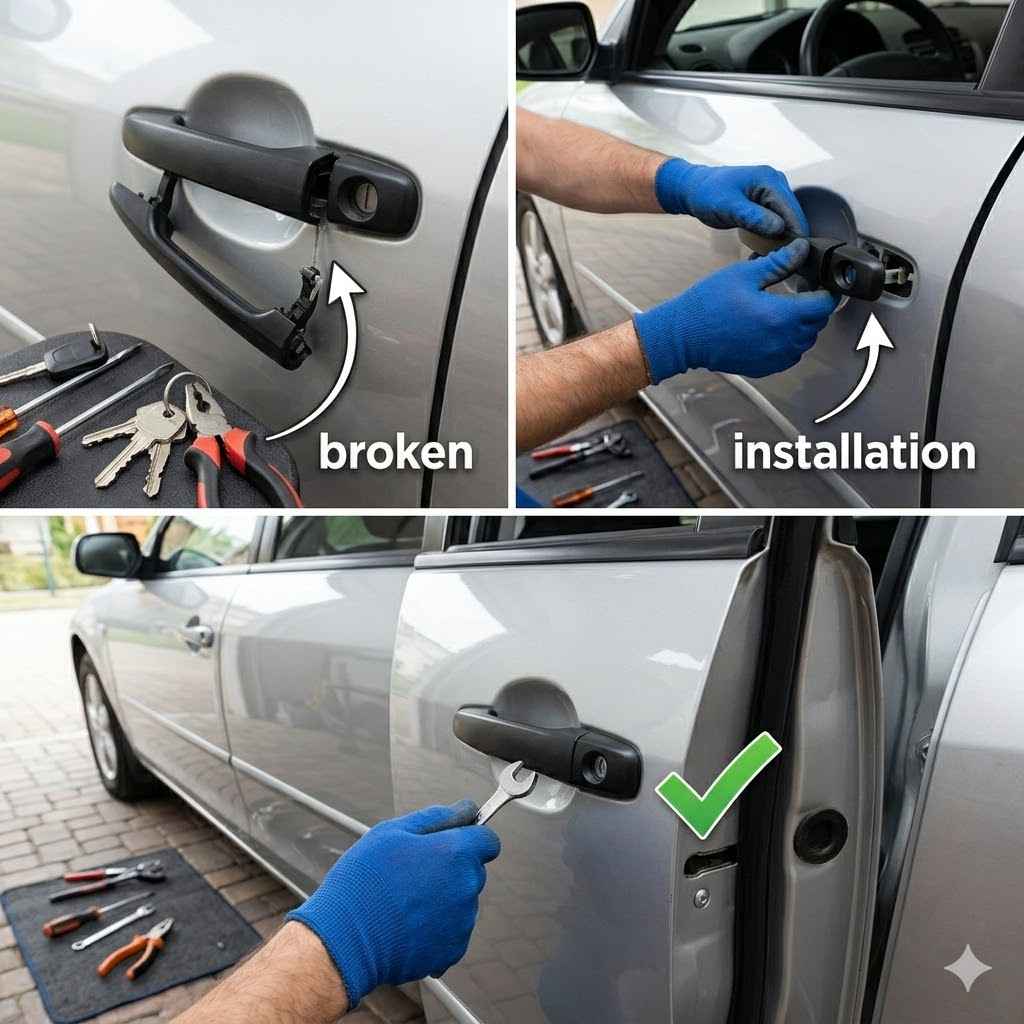
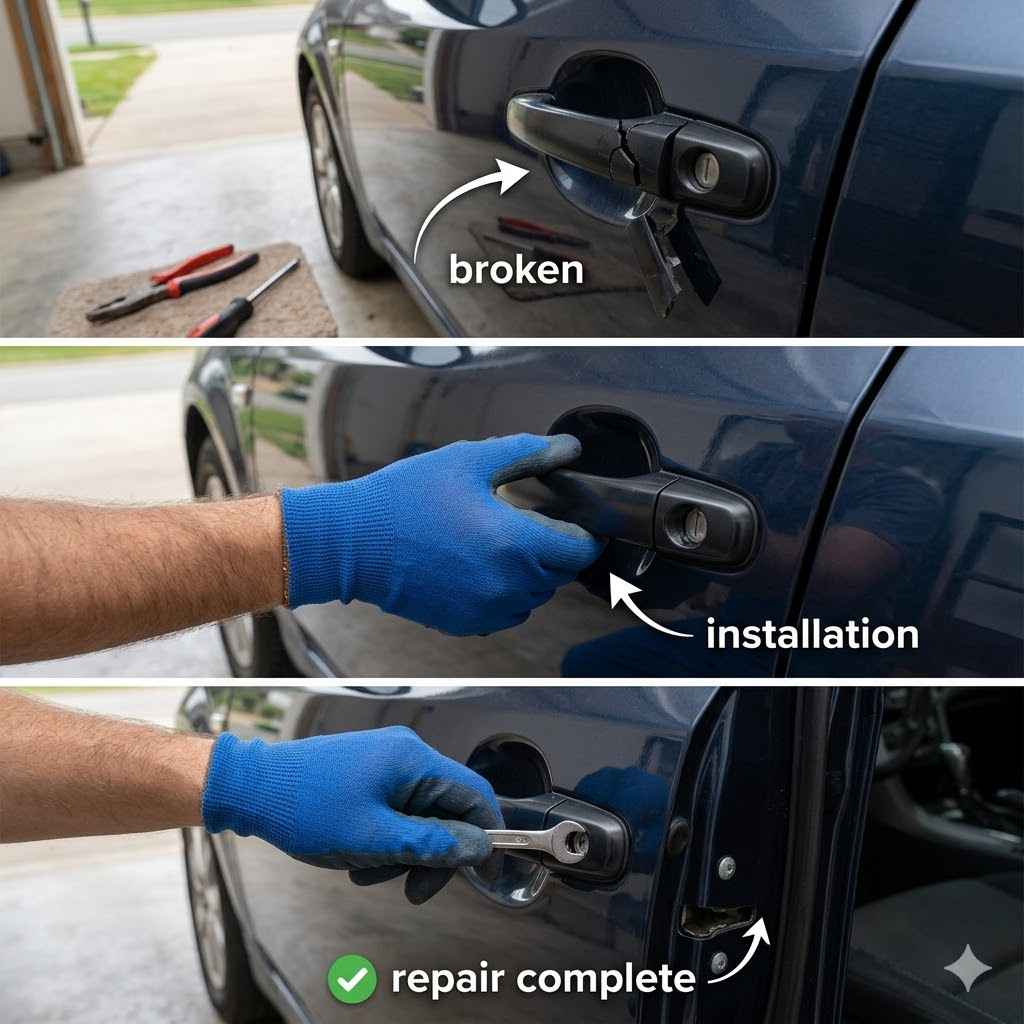
If the handle body is cracked or a piece has broken off, you’ll need to
You’ll usually find that the handle is held in place by screws or bolts from the inside. Once you have the door panel off, look for these. You might need to remove some other components inside the door to get to them.
This could include window regulators or speaker mounts.
Take pictures as you go. This helps you remember where everything connects. When you have the old handle out, compare it to the new one.
Make sure they match exactly. This is important for fit and function.
Installation is the reverse. Connect any electrical wires if your handle has them (like for illuminated handles or keyless entry). Then, secure the new handle.
Reconnect any other parts you removed. Finally, reattach the door panel.
Handle Replacement Steps
- Remove Door Panel: Gain access to the handle’s mounting.
- Disconnect Electrical (if any): Unplug any wires.
- Remove Handle Fasteners: Unscrew or unbolt the old handle.
- Install New Handle: Secure the new assembly.
- Reconnect Electrical: Plug wires back in.
- Reassemble Door Panel: Put everything back in place.
What If It’s the Latch Mechanism?
If you’ve checked the handle, rods, and cables, and everything looks okay, the problem might be the latch itself. This is the part deep inside the door that holds the door shut. It’s activated by the rods and cables from the handles.
A sticking or broken latch is less common than a handle issue. But it happens. If the latch is seized, it won’t release.
It might feel like your handle is working, but the door just stays locked. Sometimes, you can try lubricating the latch mechanism. Use a good quality spray lubricant designed for automotive use.
If lubrication doesn’t work, the latch might need to be replaced. This is usually a more complex job. It requires removing more components inside the door.
Accessing the latch itself can be tricky. It’s often held in by several bolts.
If you’re not comfortable with this level of repair, this is a good time to call a professional. Replacing a latch assembly can be fiddly work. You want to be sure it’s done right.
A faulty latch can also affect your car’s ability to lock and unlock properly.
Latch Troubleshooting
Inspect: Look for obvious damage or obstruction.
Lubricate: Apply a spray lubricant to moving parts.
Test Operation: Try to manually move the latch mechanism.
Consider Replacement: If damaged or seized, replacement may be needed.
Seek Professional Help: If unsure, consult a mechanic.
Real-World Context: Why Doors Stick
Think about how often you use your car doors. They face rain, snow, dirt, and salt. They get slammed.
Kids use them. They endure constant temperature changes. All these things wear down the parts.
In places with harsh winters, salt and moisture can cause rust. Rust can seize up the moving parts in the latch mechanism. This makes it hard for the rods and cables to release it.
This can then put extra strain on the cables and rods, causing them to stretch or break.
In very hot climates, the sun can bake the plastic parts. Plastic can become brittle over time. This makes it more likely to snap under pressure.
Even the paint on an exterior handle can chip. This can let moisture in, leading to rust or corrosion.
User habits also matter. If someone always yanks hard on the handle, it puts more stress on the system. If a door is frequently forced shut, it can misalign the latch and strike plate.
This can cause wear and tear over time.
What This Means for You
A broken car door handle isn’t just an inconvenience. It can be a safety issue. If a door won’t open from the outside, it’s a problem in an emergency.
If it won’t open from the inside, it can trap someone.
Most of the time, a faulty handle or cable is not a major emergency. You can usually still open the door from the other side. Or you can use the inside handle if the outside one is broken.
But it’s something you should fix sooner rather than later.
When is it time to worry? If the door won’t open at all, from the inside or outside, after you’ve tried the basic checks. If the handle feels completely unresponsive and you can’t see any obvious loose parts.
If you hear grinding or very loud noises when you try to open it.
Simple checks involve listening. Do you hear a click when you pull the handle? Or just a loose, hollow sound?
Look at the handle. Does it move at all? Is it hanging off?
If you’ve removed the door panel and can’t figure out what’s wrong, it’s best to get a professional opinion.
When to Call a Pro
- The door won’t open from either the inside or outside.
- You hear grinding or unusual noises.
- You’ve removed the door panel but can’t find the problem.
- The latch mechanism seems to be the issue.
- You don’t have the right tools or confidence.
Quick Fixes and Tips
When tackling this kind of repair, preparation is key. Make sure you have a safe, well-lit place to work. A garage or a flat driveway is ideal.
Always disconnect the car battery if you are working near electrical components. This prevents shorts.
When removing door panels, take your time. Don’t rush the process. Forcing clips can break them.
If a clip seems stuck, try wiggling it more or applying a little more gentle pressure.
Keep all the screws and small parts organized. A magnetic parts tray or small containers can be very helpful. Labeling them can also save you time later.
If you’re replacing a cable or rod, look for videos online for your specific car model. Seeing someone else do it can be incredibly helpful. YouTube is a great resource for this.
Finally, double-check your work. Before you put the door panel back on, test the handle thoroughly. Open and close the door several times.
Ensure everything works smoothly and feels secure. This saves you from having to take it all apart again.
Frequent Questions
How much does it cost to fix a car door handle?
The cost varies a lot. If you do it yourself, it could be as little as $20-$50 for a replacement part. If you take it to a mechanic, expect to pay anywhere from $100 to $500 or more, depending on the car and the part needed.
Can I fix a broken car door handle without removing the door panel?
Sometimes, if the problem is very minor, like a loose screw on the outside handle of some models. But for most issues, especially those involving cables, rods, or the latch mechanism, you will need to remove the interior door panel to get access.
How long does it take to replace a car door handle?
For an experienced DIYer, it can take 1-2 hours. For a beginner, it might take 2-4 hours, especially if it’s your first time removing a door panel. Mechanics can usually do it in about 1-2 hours.
What is the difference between an interior and exterior door handle repair?
The process is often similar, involving door panel removal. However, the specific parts that break can differ. Exterior handles often deal with more weather exposure.
Interior handles might have simpler rod connections. The complexity depends on your car model.
My car door handle is loose, but the door still opens. What’s wrong?
This usually means a mounting point for the handle has become loose, or a clip connecting the handle to the internal mechanism has detached. You’ll likely need to remove the door panel to re-secure the handle or reattach the clip.
Are car door handle repair kits worth it?
Yes, many repair kits include common clips and sometimes even small replacement rods. They can be very useful if a small plastic clip has broken, which is a frequent cause of handles becoming loose or unresponsive.
Conclusion
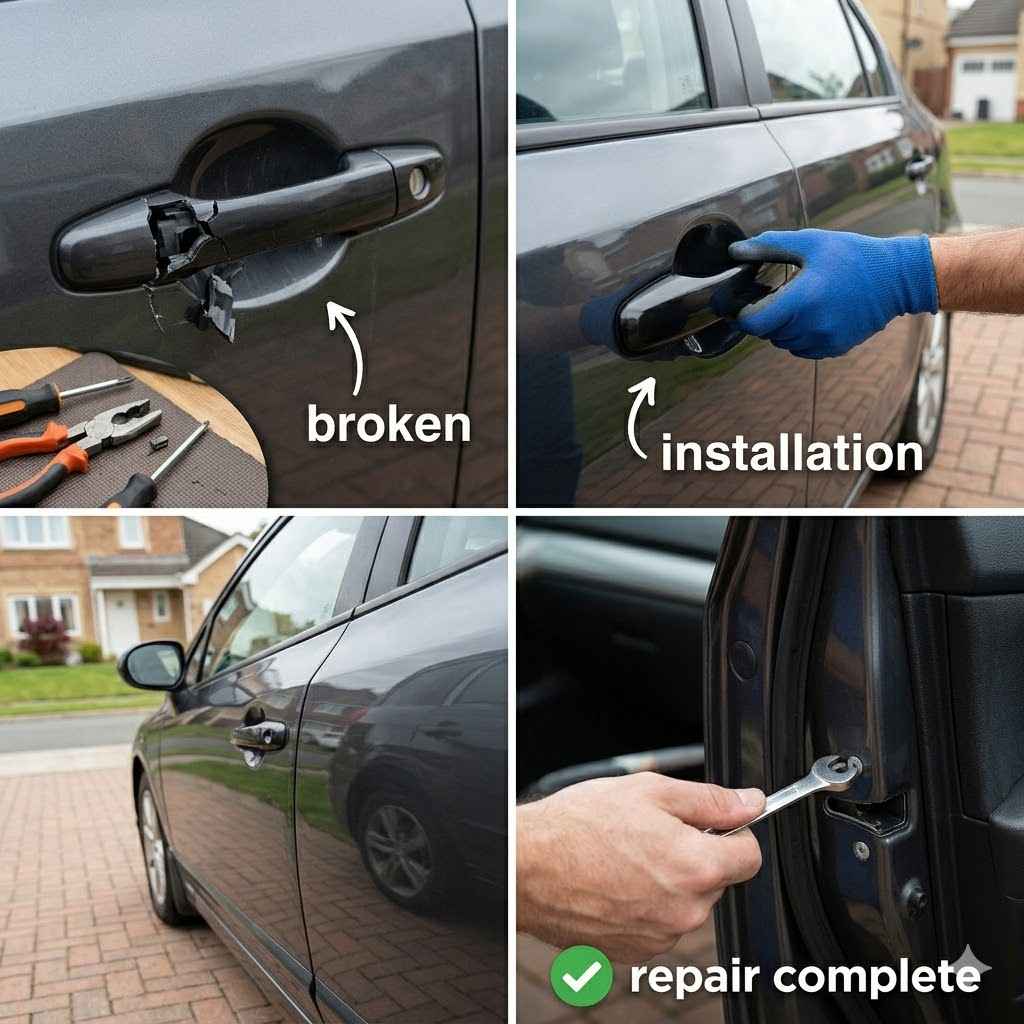
A broken car door handle is a common problem. It can seem like a big deal. But with a little guidance, it’s often a manageable DIY repair.
Understanding how your door works is the first step. Then, carefully diagnosing the issue helps you find the right solution. Whether it’s a loose clip, a broken cable, or a worn-out handle itself, there’s usually a way to get your door working smoothly again.
Products related to this article
Sponsored / affiliate links. As an Amazon Associate I earn from qualifying purchases. I may earn additional commission from eligible campaigns.