Is Coolant The Same For All Cars? The Real Answer
It’s a fair question, especially if you’re in a pinch or just trying to save a few bucks. The truth is, while most coolants do a similar job, they are NOT all the same. Using the wrong type can cause big problems for your car.
This guide will break down why.
We’ll look at what coolant does. We’ll also explore the different types out there. You’ll learn how to find the right one for your ride.
And we’ll cover why sticking to the right kind matters a lot. Let’s dive in and get your engine running smoothly.
The short answer is no, coolant is not the same for all cars. Different vehicles require specific types of coolant based on their engine materials, age, and manufacturer recommendations. Using the wrong coolant can lead to serious engine damage, reduced cooling efficiency, and costly repairs. Always check your owner’s manual.
What Coolant Does for Your Car
Coolant, also known as antifreeze, is a vital fluid for your car’s engine. Its main job is to manage engine temperature. Engines get very hot when they run.
Coolant flows through the engine’s cooling system. It absorbs excess heat.
This hot coolant then goes to the radiator. The radiator is like a big heat exchanger. Air blows over the radiator’s fins.
This cools the coolant down. The cooled coolant then cycles back to the engine. This keeps the engine from getting too hot.
This process is called preventing overheating.
But coolant does more than just cool. It also prevents freezing. In cold weather, water alone would freeze.
Ice expands. This expansion can crack engine parts. Coolant has a much lower freezing point than water.
So, it stops the water in the system from freezing. This protects your engine in winter.
Another key role is fighting corrosion. The inside of your engine is metal. Metal can rust and corrode over time.
Coolant contains additives. These additives form a protective layer on metal parts. They stop rust and other forms of decay.
This helps your engine last longer. It keeps the cooling system working well.
Understanding Different Coolant Types
So, why aren’t all coolants the same? The main reason is the chemistry. Coolants are made of a base fluid, usually ethylene glycol or propylene glycol.
They also have a mix of additives. These additives are what make them different. They protect different metals and materials inside your engine.
Think of it like different types of paint. You wouldn’t use house paint on a car. They have different jobs.
Coolants are similar. They are designed for specific needs. The wrong type can actually cause damage.
Let’s look at the main types you’ll find. This will help you see why picking the right one is so important.
Inorganic Additive Technology (IAT) – Green Coolant
This is one of the older types of coolant. It’s often bright green. It uses inorganic additives like silicates and phosphates.
These additives wear out over time. They need to be
However, IAT coolants can have drawbacks. The silicates can wear down water pump seals. They can also leave deposits in the cooling system.
This can block passages over time. Newer cars often use different types for better protection.
IAT coolant typically needs to be flushed and replaced every 30,000 miles or so. Or about every two years. This regular maintenance is key to preventing issues.
Always check your car’s manual for specific intervals.
Organic Acid Technology (OAT) – Orange/Red Coolant
OAT coolants are newer. They use organic acids as the main additives. These acids are designed to be more long-lasting.
They offer better protection against corrosion. They also don’t wear out as quickly as IAT additives.
This means OAT coolants can last much longer. Many can go up to 5 years or 100,000 miles. This is a big advantage for car owners.
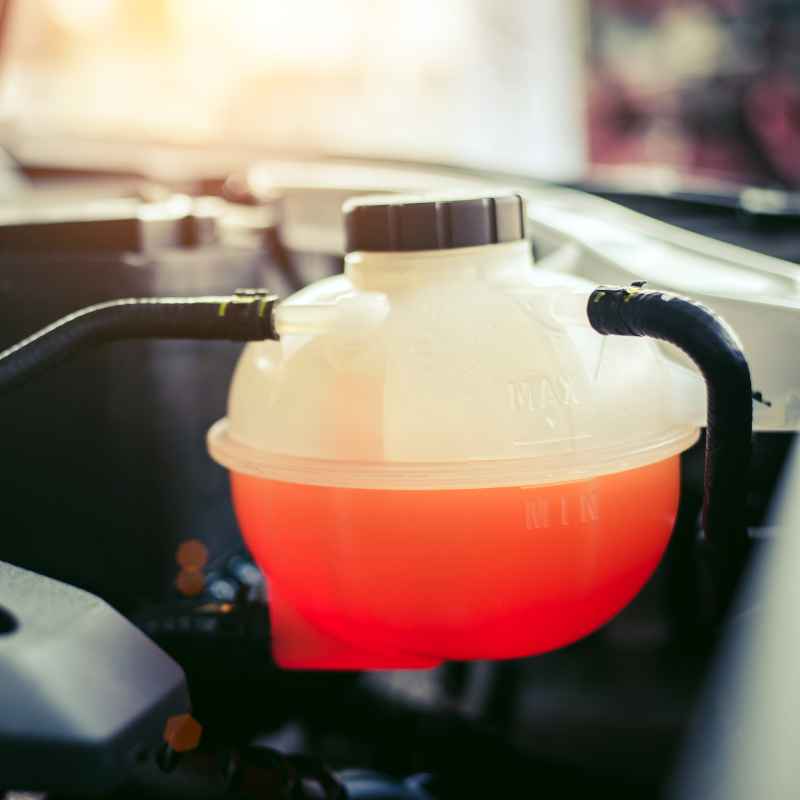
The most common colors are orange or red, but this can vary. Always look at the product label, not just the color.
OAT coolants work well with modern engine materials. They create a protective layer that is thinner. This can lead to better heat transfer.
Less buildup means cleaner cooling systems. They are common in many American and European cars made since the late 1990s.
Hybrid Organic Acid Technology (HOAT) – Yellow/Blue/Pink Coolant
HOAT coolants try to combine the best of both worlds. They use organic acids for long-term protection. They also include a small amount of inorganic additives.
These inorganic additives provide extra protection. They work quickly to shield parts when the engine is cold.
HOAT coolants offer a good balance. They last a long time. They also provide fast corrosion protection.
Colors for HOAT coolants vary. You might see yellow, blue, or pink. Again, the label is your best guide.
Some manufacturers use specific HOAT blends.
Many Asian car manufacturers, like Toyota and Honda, use HOAT coolants. They are designed to work with the specific metals in their engines. They offer excellent performance and longevity.
This type can often last 5 years or 150,000 miles.
Sub-Zero Cooling and Other Specialized Types
There are other types of coolant too. Some are designed for extreme climates. For example, some might offer even better freeze protection.
Others might be formulated for specific engine types, like diesel engines.
There are also “universal” or “all-makes, all-models” coolants. These are marketed as being safe for most cars. However, it’s still best to be cautious.
Even these might not be the absolute perfect match for your specific vehicle. They try to cover a wide range of needs.
Always consult your car’s owner’s manual first. It will tell you exactly what type of coolant your car needs. It will also tell you the correct color.
And it will tell you the change intervals. This is the most reliable source of information.
Why Using the Wrong Coolant is a Big Deal
It might seem like just pouring liquid into a tank. But putting the wrong coolant in your car can cause serious, expensive damage. It’s not just about the color.
It’s about the chemical makeup. It’s about how it interacts with your engine’s parts.
One major problem is corrosion. Different engines are made of different metals. Some have aluminum parts.
Others have cast iron. Older cars might have copper and brass components. Each metal needs specific protection.
The additives in the wrong coolant might not protect certain metals.
This can lead to corrosion. Rust and other forms of decay can eat away at engine parts. This weakens them.
It can cause leaks. It can lead to catastrophic engine failure. Repairing this kind of damage can cost thousands of dollars.
Another issue is scale and sludge buildup. Some older coolants can leave deposits. These deposits can clog up narrow passages in the radiator.
They can block the flow of coolant. This reduces the cooling system’s efficiency. The engine can overheat.
It can also lead to premature wear on the water pump.
Mixing coolant types is also a problem. If you mix two different types of coolant, it can cause a chemical reaction. This reaction can create a gel-like substance.
This gel can clog your cooling system. It can also reduce the effectiveness of the coolant. It might even corrode parts.
For example, mixing an IAT (green) with an OAT (orange) is a common mistake. This can create sludge. It’s like mixing oil and water and expecting them to blend smoothly.
They don’t. They can form a thick, harmful goo.
My Own Close Call with Coolant
I remember one time, a few years back. My old truck was making a strange noise. It was a faint hissing sound.
I knew something wasn’t quite right. I checked the coolant level. It was a little low.
I didn’t have the exact type of coolant on hand. I was out of town visiting family.
I thought, “It’s just coolant. It’s all the same, right? I’ll just top it off with whatever I can find at the local auto parts store.” I grabbed a bright orange bottle.
The label said “Extended Life.” I figured that sounded good. I poured it in. The hissing stopped.
I felt relieved. Problem solved, or so I thought.
A few weeks later, I noticed the engine temperature gauge starting to climb higher than usual. Then, I saw a small leak under the front of the truck. It was a reddish-orange fluid.
It wasn’t good. I took it to my mechanic. He looked at it and immediately asked what kind of coolant I had put in.
He explained that my truck, an older model, used the traditional green IAT coolant. The orange OAT coolant I had added was not compatible. The additives in the orange coolant had started to react with the older seals and hoses.
It was causing them to break down. That was the hissing sound I heard.
The mechanic had to flush the entire cooling system multiple times. He replaced some hoses and seals. It was a much bigger job than just topping off the fluid.
The bill was more than I wanted to think about. It was a hard lesson learned. The color and type of coolant matter a lot.
Coolant Color vs. Type: What You Need to Know
Don’t rely on color alone! Coolant colors can be confusing. Manufacturers use different colors for different types. And some “universal” coolants come in various colors.
Always check the label for the specific technology (IAT, OAT, HOAT) and specifications.
Common Color Associations (Not Rules!):
- Green: Often IAT (Inorganic Additive Technology)
- Orange/Red: Often OAT (Organic Acid Technology)
- Yellow/Pink/Blue: Often HOAT (Hybrid Organic Acid Technology)
Always prioritize the vehicle manufacturer’s recommendation. Your owner’s manual is the ultimate guide.
How to Find the Right Coolant for Your Car
Knowing the right coolant is crucial. But how do you find it? Luckily, it’s not a guessing game.
There are clear steps you can take.
1. Consult Your Owner’s Manual
This is your most important resource. The owner’s manual has a section on maintenance. It will tell you the exact type of coolant your car needs.
It will often list the specific brand or OEM (Original Equipment Manufacturer) part number. It will also specify the required color and specifications.
If you don’t have your manual, you can usually find it online. Most car manufacturers have digital versions available on their websites. Just search for ” owner’s manual PDF.”
2. Check Under the Hood
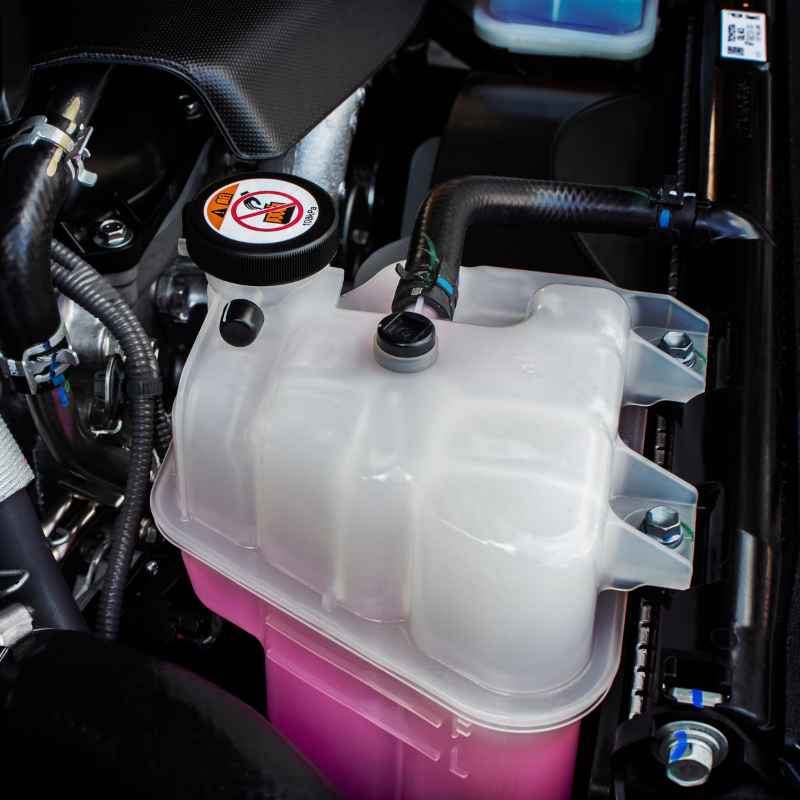
Sometimes, there’s a sticker under the hood. It might be on the radiator support or the coolant reservoir. This sticker can sometimes tell you the type of coolant to use.
It’s not always there, but it’s worth a look.
3. Look Up Your Car Online
If you can’t find your manual, you can search online. Use terms like ” coolant type.” Many automotive forums and parts websites will have this information. However, always cross-reference this with other sources if possible.
4. Consider the “Universal” Option (With Caution)
There are coolants labeled “universal” or “all-makes, all-models”. These are designed to be compatible with a wide range of vehicles. They often use a blend of technologies. While they can be a good option in an emergency, they are not always the ideal choice.
The specific additives in a universal coolant might not be the absolute best for your engine’s materials. Your car’s manufacturer developed its cooling system with a particular coolant in mind. Sticking to that specific type is always safest.
If you must use a universal coolant, ensure it meets the specifications listed in your owner’s manual.
When is it Okay to Mix Coolants? (Spoiler: Rarely!)
This is a big area of confusion for many drivers. Can you top off a gallon of green coolant with some orange? The answer is almost always no.
Mixing different coolant types is generally a bad idea.
Here’s why: Coolants have specific additive packages. These packages are designed to work together. They are designed to protect certain metals.
When you mix them, you can disrupt this balance. You can create chemical reactions. This can lead to:
- Sludge formation: The additives can clump together. This creates a thick, goopy mess.
- Reduced effectiveness: The protective properties of the coolant can be weakened.
- Corrosion: The mixture might not protect all engine parts. It could even cause new corrosion.
- Gelation: In some cases, the mixture can turn into a gel. This can clog the cooling system.
The only time mixing is sometimes considered acceptable is if you are topping off a system with the EXACT same type of coolant. For example, if your car uses a specific HOAT coolant, and you add a small amount of the exact same HOAT coolant. Even then, it’s best to avoid it if possible.
Coolant Mixing: Quick Guide
Myth: All coolants are interchangeable. Reality: Coolants have different chemistries. Mixing can be harmful.
Scenario 1: Topping Off Low Level
- Ideal: Use the exact same type and color of coolant recommended by your manufacturer.
- Acceptable (Use with extreme caution): If you cannot find the exact type, a universal coolant that meets your vehicle’s specifications might be used in a pinch for a small amount. Avoid if possible.
- Never Mix: Do NOT mix green IAT with orange OAT or yellow HOAT.
Scenario 2: Complete Coolant Change
- Always: Flush the entire system thoroughly. Then refill with the manufacturer-recommended coolant. Never mix old and new types during a flush.
What Happens if You Use the Wrong Coolant?
We’ve touched on this, but let’s spell it out. The consequences can be severe. And often, they don’t happen overnight.
They build up slowly.
Short-term effects:
- Reduced cooling efficiency: The engine might run hotter than normal. The temperature gauge might creep up.
- Leaking: The wrong coolant can degrade seals and hoses. This leads to leaks.
- Corrosion indicators: You might see rust particles in the coolant. Or signs of pitting on metal parts.
Long-term effects:
- Water pump failure: Some additives can damage water pump seals.
- Radiator blockage: Sludge or scale can clog radiator tubes. This leads to overheating.
- Heater core issues: The heater core can also get clogged. This means no heat in the cabin.
- Head gasket failure: Overheating is a major cause of blown head gaskets.
- Engine seizure: In extreme cases, severe overheating can cause the engine to seize. This is a total engine failure.
The cost to fix these problems can easily run into thousands of dollars. It’s far cheaper to use the right coolant from the start.
My Experience with a Clogged Radiator
I had a friend who drove an older sedan. He was always trying to save money. He thought coolant was just coolant.
He’d buy the cheapest stuff he could find. Usually the bright green kind. One summer, his car started to overheat badly.
The temperature gauge was in the red.
He brought it to me, worried. I opened the hood. The coolant looked thick and murky.
It had a strange, oily sheen to it. I suspected he had been putting different types of coolant in over the years. Or maybe using tap water.
He admitted he had topped it off with whatever was available.
We decided to flush the system. But as we drained it, thick sludge came out. It was like mud.
We flushed it multiple times with distilled water. We even used a radiator flush product. But the radiator seemed partially blocked.
Coolant wasn’t flowing through it very well.
He ended up needing a new radiator. The old one was beyond saving. The cost of the new radiator plus the coolant flush was more than he would have spent on the correct coolant for years.
He learned a valuable lesson about preventative maintenance. Ignoring coolant type is a gamble with your engine.
Quick Coolant Checks You Can Do
1. Check the Level: Regularly look at the coolant reservoir. Is it between the “MIN” and “MAX” lines?
Do this when the engine is COLD.
2. Inspect the Color: Does it look clean and bright? Or is it murky, rusty, or oily?
Dirty coolant needs attention.
3. Look for Leaks: Check under your car after it’s been parked. Are there any colorful puddles?
4. Check the Hoses: Are they firm but not rock hard? Squeeze them gently (when cold).
They shouldn’t be brittle or mushy.
What This Means for You and Your Car
So, what’s the takeaway? It’s simple: your car’s cooling system is a precise piece of engineering. It relies on specific fluids to function correctly. Treat it with the care it deserves.
When it’s normal:
- Your engine temperature stays steady.
- There are no visible leaks under the car.
- The coolant in the reservoir looks clean.
- You follow the manufacturer’s recommended service intervals for coolant changes.
When to worry:
- The temperature gauge climbs into the red zone.
- You see colorful puddles under your car.
- The coolant looks rusty, murky, or oily.
- You hear hissing or boiling sounds from the engine bay.
- Your heater stops working or blows cold air.
Simple checks:
- Check the manual! This is the first and best step.
- Know your coolant type. Write it down if you have to.
- Don’t guess. If you’re unsure, ask a trusted mechanic.
Think of your car’s coolant like its blood. It needs the right kind to stay healthy. The wrong kind can cause all sorts of problems.
Quick Tips for Coolant Care
Here are a few easy things you can do to keep your cooling system happy:
- Always use distilled water if you need to mix coolant concentrate. Tap water has minerals that can cause scale buildup.
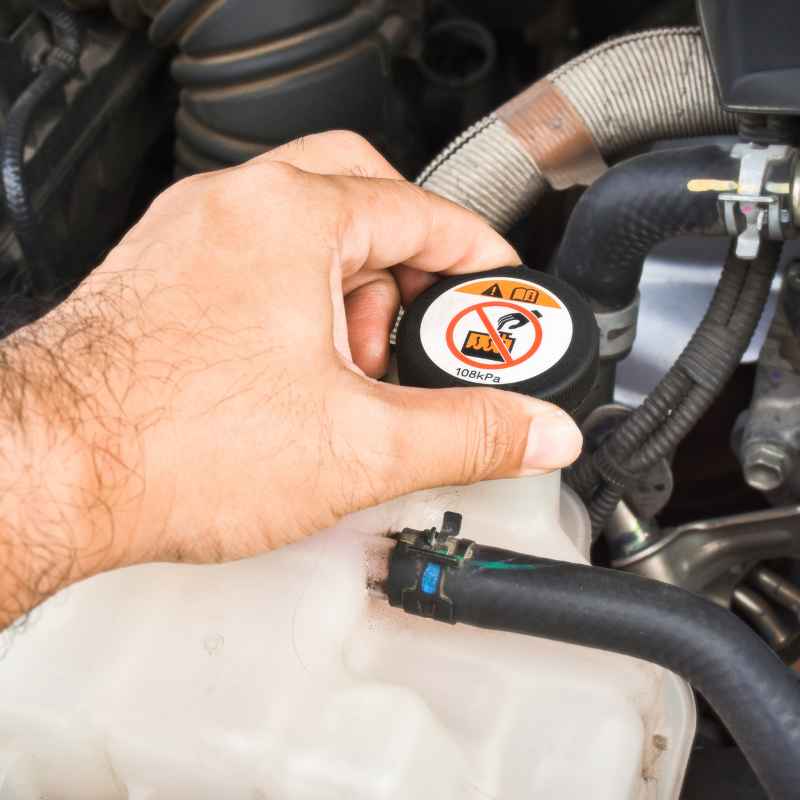
- Never open the radiator cap or coolant reservoir cap when the engine is hot. The system is under pressure. You can be severely burned.
- Dispose of old coolant properly. It’s toxic. Take it to a recycling center or auto parts store that accepts it.
- Follow the recommended flush and fill schedule. This prevents the additives from breaking down and losing their effectiveness.
- If you’re ever unsure, ask! It’s better to ask a mechanic than to make a costly mistake.
Frequently Asked Questions about Car Coolant
Can I use universal coolant in my car?
While universal coolants are designed for a broad range of vehicles, it’s always best to use the specific type recommended by your car’s manufacturer. If you must use a universal coolant, ensure it meets the specifications listed in your owner’s manual and is compatible with your engine’s materials.
Is it bad to mix different colors of coolant?
Yes, mixing different colors of coolant is generally bad. Colors are often associated with different coolant technologies (like IAT, OAT, HOAT). Mixing them can cause chemical reactions, leading to sludge, reduced effectiveness, and corrosion in your cooling system.
What happens if I put regular water in my radiator instead of coolant?
Using regular water alone is risky. In cold weather, it can freeze and crack engine parts. In hot weather, it doesn’t offer the same boiling point protection as coolant, leading to overheating.
Water also lacks the anti-corrosion additives found in coolant, which can lead to rust.
How often should I change my car’s coolant?
Coolant change intervals vary by type and manufacturer. Older IAT coolants might need changing every 2 years or 30,000 miles. Newer OAT and HOAT coolants can last 5 years or up to 100,000-150,000 miles.
Always check your owner’s manual for the specific recommendation for your vehicle.
What’s the difference between antifreeze and coolant?
Antifreeze is the concentrated chemical (usually ethylene or propylene glycol) that prevents freezing and boiling. Coolant is the mixture of antifreeze and water, along with other additives, that circulates in your car’s cooling system. So, while often used interchangeably, coolant is the working fluid.
Can I use tap water to mix with coolant concentrate?
It’s strongly advised against using tap water. Tap water contains minerals and impurities that can build up as scale in your cooling system. This scale can reduce efficiency and even cause blockages.
Always use distilled water to mix with coolant concentrate for optimal performance and longevity.
Conclusion
To wrap things up, the answer to whether all coolants are the same is a clear no. Different cars need different coolants. These fluids have specific chemical makeups.
They protect your engine’s unique materials.
Using the wrong type can lead to expensive repairs. Always check your owner’s manual. It’s your best guide.
By using the correct coolant, you help your engine stay cool. You protect it from freezing. And you keep it running smoothly for years to come.
Your car will thank you for it.
If your coolant is old or contaminated rather than just the wrong type, see our step-by-step coolant flush guide for the full drain-and-refill process.
Products related to this article
Sponsored / affiliate links. As an Amazon Associate I earn from qualifying purchases. I may earn additional commission from eligible campaigns.