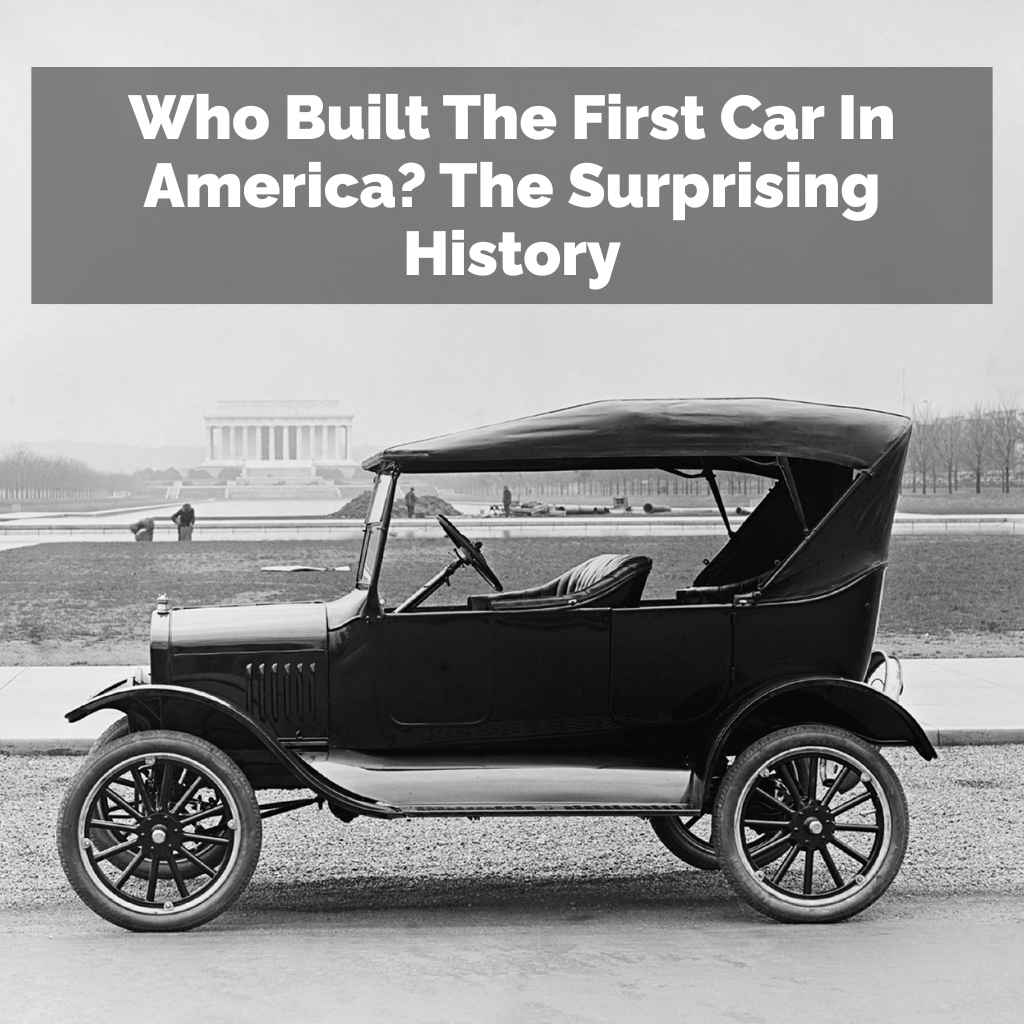
Who Built The First Car In America? The Surprising History
It’s a question that sparks curiosity for many. When you think about cars, you might imagine big, powerful engines and sleek designs. But before all that, someone had to make the very first one.
It’s a story full of hard work and new ideas. Let’s dive into who really made the first car in America and the fascinating journey it took.
The very first automobile built in America was by John Lambert in 1891. His “Lambert Automobile” was a three-wheeled, steam-powered vehicle. Many often consider it the true start of the American car industry. Other inventors were also working on similar ideas around the same time.
The Birth of the American Automobile
The idea of a horseless carriage was a dream for many inventors in the late 1800s. People were tired of relying on horses. Horses needed constant care and could only go so far.
A machine that could move on its own was a big leap forward. This dream fueled a lot of tinkering and trying new things.
Many tried to build these new machines. They looked at steam engines, which were already used on trains. They also looked at the new gasoline engines that were becoming popular in Europe.
The race was on to create something reliable and useful.
It wasn’t just about making something that moved. It was about making it work well enough for everyday people. This meant thinking about power, steering, and stopping.
These were big challenges back then. No one had a clear road map to follow.
Who Was John Lambert?
John Lambert was an inventor from Ohio. He worked on his car in a small workshop. He wasn’t trying to build a fancy machine.
He wanted something practical. His goal was to create a vehicle that could help farmers and others get around easier.
He believed steam power was the way to go at first. Steam engines were proven technology. They were powerful.
But they were also heavy and took a long time to warm up. He worked tirelessly on his design. He faced many setbacks.
Lambert’s first car was called the “Lambert Automobile.” It was made in 1891. This was a key year. His car had three wheels.
This made it lighter and simpler to build. It was powered by steam. It was a major step for American invention.
He patented his design. This showed he believed in his work. He wanted to protect his idea.
This patent was important. It marked his claim to being the first. Many people credit him with this achievement.
The Lambert Automobile: A Closer Look
Lambert’s car was not like the cars we see today. It was a simple machine. It had a steam boiler.
This boiler heated water to make steam. The steam then pushed a piston. This piston made the wheels turn.
It had a steering tiller, like a boat. It was basic. The brakes were also very simple.
They worked by rubbing against the wheels. Speed was not very high. But it could move on its own.
That was the main point.
The car was made mostly of wood and metal. It was heavy. Driving it was probably bumpy.
It needed constant attention. The water had to be kept full. The fire had to be managed.
It was a lot of work to operate.
Despite its simple design, it was a success. It proved that a person could build a working automobile in America. It was a step towards bigger things.
It showed what was possible with new ideas and hard work.
The Steaming Debate: Steam vs. Gasoline
In the late 1800s, steam power was king for heavy machines. Trains and boats used steam engines. So, it made sense for early car builders to try steam.
John Lambert’s choice of steam was logical for his time.
However, steam had its limits. The boilers were bulky. They took a long time to get hot enough to work.
You had to carry a lot of water. And the engines needed constant maintenance. They were not very efficient for a car.
Meanwhile, gasoline engines were developing. They were invented in Germany. They were smaller and lighter than steam engines.
They could start up much faster. They also used fuel more efficiently. This made them a better choice for cars in the long run.
In America, inventors like the Duryea brothers were focusing on gasoline. They worked hard to improve these engines. They faced their own set of problems.
But they saw the future. They understood that gasoline was the key to making cars more practical.
Other Early American Automakers
While John Lambert is credited with the first car, others were also busy. The automotive world was buzzing with innovation. Many inventors were pursuing similar dreams.
The Duryea brothers, Charles and Frank, were also pioneers. They built their first gasoline-powered car in 1893. This was just two years after Lambert’s steam car.
Their car was a tricycle. It used a single-cylinder engine.
They were very determined. They faced many challenges. Their early cars were not very reliable.
But they kept improving them. They were key figures in making gasoline cars popular. They believed gasoline was the future.
There were others too. Henry Ford’s name comes up often. But he built his first car much later, in 1896.
And he didn’t become famous until he started the Ford Motor Company. So, while Ford is a giant in car history, he wasn’t the very first.
Oliver Evans had plans for steam vehicles much earlier, in the late 1700s. But these were more like self-propelled carts. They were not quite what we consider cars today.
Lambert’s 1891 vehicle is seen as the first true American automobile.
The Rise of the Gasoline Engine
The shift from steam to gasoline was a big turning point. Gasoline engines were much more practical for cars. They were smaller.
They started up quickly. They didn’t need as much water. And they were more fuel-efficient.
Inventors worked on making these engines better. They improved the ignition systems. They made carburetors that mixed fuel and air well.
They created better transmissions to control speed. Each improvement made cars more reliable and easier to drive.
The Duryea brothers were instrumental in this. They not only built cars but also sold them. They were among the first to sell cars to the public.
This showed that there was a market for these machines. People were ready to buy them.
This competition and innovation were good for everyone. It pushed inventors to be better. It led to faster progress.
The early American car industry was born from this spirit of invention.
Early Challenges and Triumphs
Building the first car was tough. Inventors faced many problems. Finding the right materials was hard.
Making parts that fit precisely was even harder. There were no factories set up to make car parts.
Everything had to be made by hand. Or adapted from other machines. This made production slow and expensive.
It also meant cars were not very uniform. Each one might be a little different.
Reliability was a huge issue. Early cars broke down often. Roads were not good.
They were mostly dirt paths. Driving on them was bumpy and dangerous. Getting a car to go anywhere far was a big achievement.
But the triumphs were huge. Every time a car started and ran, it was a victory. It showed that the dream was possible.
It inspired more people to get involved. This belief in the future kept inventors going.
Key Milestones in Early American Cars
1891: John Lambert builds the first American automobile, a steam-powered three-wheeler.
1893: The Duryea brothers build their first gasoline-powered automobile.
1895: The first automobile race is held in Chicago. The Duryea entry wins.
1896: Henry Ford builds his first Quadricycle.
1901: Ransom Olds begins mass production of the Curved Dash Oldsmobile.
1903: Ford Motor Company is founded.
The Impact of the First Car
The invention of the first car in America changed everything. It wasn’t just a new machine. It was a symbol of progress.
It promised a new way of life.
It meant people could travel further and faster. They could visit places they couldn’t before. Businesses could transport goods more easily.
It opened up new opportunities for trade and travel.
The automobile also changed how cities were built. People could live further from their jobs. This led to the growth of suburbs.
Roads had to be improved to handle cars. This changed the landscape of America.
It created new industries. Building cars, making parts, selling fuel, repairing cars – all these jobs came about because of the automobile. It became a huge part of the American economy.
The feeling of freedom that a car offered was immense. People could go where they wanted, when they wanted. This sense of independence was very powerful.
It shaped the American spirit.
What Does This Mean for Us Today?
Understanding the story of the first car helps us appreciate what we have. We often take cars for granted. We get in, turn the key, and go.
We don’t think about the immense effort it took to get here.
The early inventors faced huge unknowns. They had no examples to follow. They were creating something entirely new.
Their dedication and vision are what made it possible.
John Lambert’s 1891 car was a spark. The Duryea brothers fanned the flames. And many others followed, building on those first ideas.
This continuous innovation is what drives progress.
It reminds us that even the biggest, most complex things start with a simple idea. And the courage to try and build it, even when it’s hard. It’s a lesson for us all.
Keep dreaming, keep building.
Myth vs. Reality: Early Cars
Myth
The first car was a luxury item for the rich.
Reality
Many early cars, like Lambert’s, were designed for practicality and accessibility, even if initially expensive.
Myth
Cars replaced horses overnight.
Reality
It took decades for cars to become common. Horses were used for much longer.
When It’s Normal to Think About Early Cars
It’s completely normal to wonder about the very beginning. When you see an old car, you might ask, “Who made this first?” Or when you learn about a big invention, you want to know its origin story.
Thinking about the first car made in America is like looking at the roots of a giant tree. It helps you understand how far we’ve come. It’s about appreciating the journey.
It’s also normal to recognize that history can be debated. The “first” is not always a clear-cut answer. Different people might define “car” differently.
Was it steam? Was it gasoline? Did it have three wheels or four?
What’s important is acknowledging the efforts of people like John Lambert. He was one of the very first to achieve something remarkable. His work laid a foundation for others to build upon.
This is how progress happens.
Quick Tips for Appreciating Car History
If you’re curious about early cars, here are some simple things you can do:
- Visit Museums: Many car museums have early models on display. Seeing them in person is amazing.
- Watch Documentaries: There are many great shows about car history. They bring the past to life.
- Read Books: Look for books about automotive pioneers. They tell fascinating stories.
- Look at Old Photos: Old pictures show how cars looked and how people used them.
Fast Facts: The First American Car
| Inventor: | John Lambert |
| Year: | 1891 |
| Type: | Steam-powered automobile |
| Wheels: | Three |
Frequently Asked Questions About the First American Car
Was John Lambert the only person building cars in America then?
No, many inventors were working on similar ideas around the same time. However, John Lambert is widely recognized for building the first self-propelled automobile in 1891. Other notable early figures include the Duryea brothers, who built a gasoline-powered car in 1893.
Why isn’t Henry Ford credited with the first car?
Henry Ford built his first experimental car, the Quadricycle, in 1896. This was five years after John Lambert’s first automobile. While Ford became a massive figure in car manufacturing, he was not the first inventor of an automobile in America.
Were early cars powered by electricity?
Yes, early electric cars were also being developed at the same time. In fact, electric cars were quite popular in the early 1900s for their quiet ride and ease of use. However, they had limited range and were not as powerful as gasoline cars.
How fast could the first American cars go?
Very slow! John Lambert’s steam car likely moved at a walking pace. Early gasoline cars were also quite slow.
Speed was not the main concern. The ability to move without a horse was the big achievement.
Did John Lambert patent his car?
Yes, John Lambert did patent his automobile design. Patents helped inventors protect their ideas. This was important for him to get recognition for his work.
What happened to John Lambert’s car?
His original 1891 automobile is preserved. It is located at the Indiana State Museum in Indianapolis. It’s a piece of history that you can see.
The Enduring Legacy of Early Automotive Innovation
The story of the first car built in America is more than just history. It’s a testament to human ingenuity. It shows what can happen when people dream big.
And they are brave enough to try new things.
From John Lambert’s steam-powered tricycle to the complex vehicles of today, the automotive world has traveled an incredible path. Each step was vital. Each inventor played a role.
It’s a journey we continue to be part of.
Products related to this article
Sponsored / affiliate links. As an Amazon Associate I earn from qualifying purchases. I may earn additional commission from eligible campaigns.