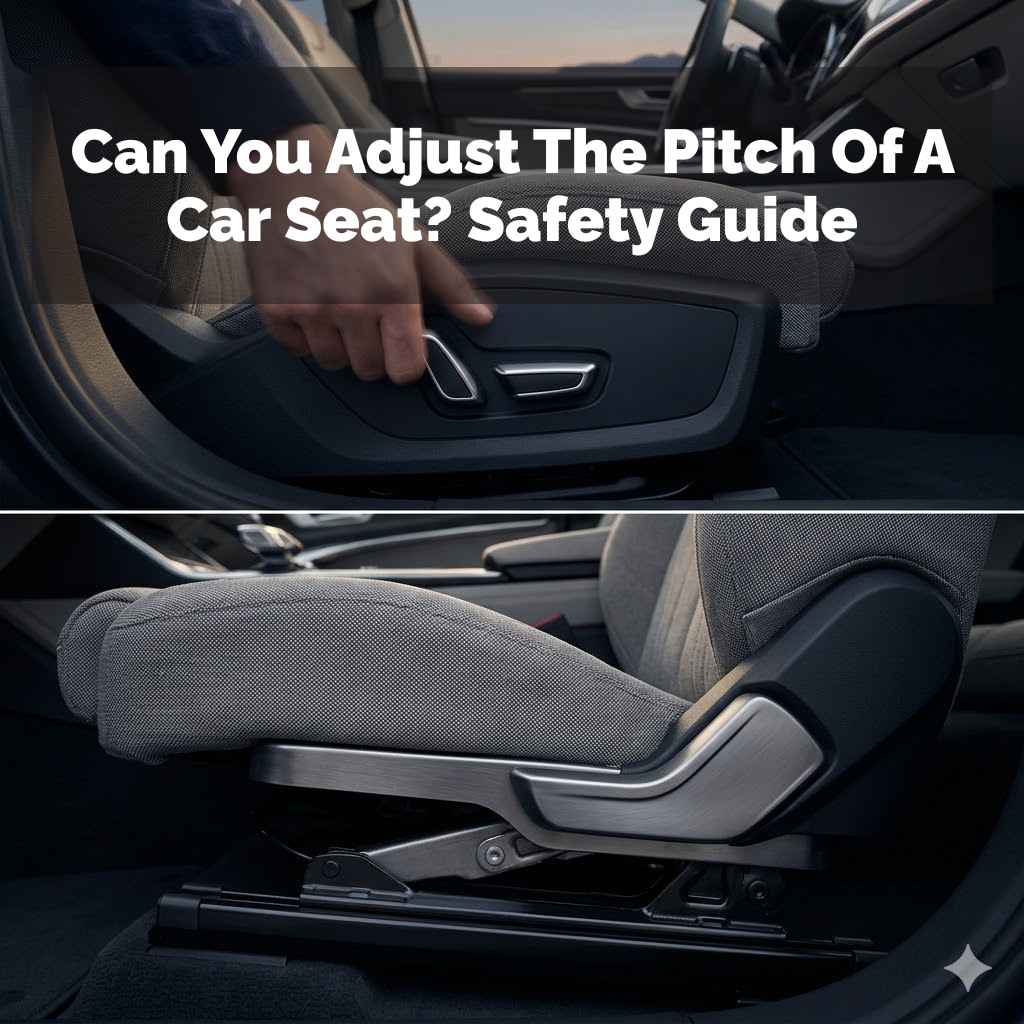
Can You Adjust The Pitch Of A Car Seat? Safety Guide
Car seat pitch refers to the angle of the seat relative to the vehicle’s seat. Adjusting this angle is crucial for ensuring a proper recline, especially for infants, to maintain an open airway and provide safety in a crash. While direct adjustment mechanisms are uncommon, proper installation techniques and base adjustments allow for safe and correct angling.
Understanding Car Seat Pitch
Car seat pitch is all about the angle. It’s how much the car seat leans back or tilts forward. Think of it like the tilt on a beach chair.
For babies, a good tilt is super important. It helps keep their breathing clear. A seat that’s too upright can make their chin slump down.
This can block their airway. This is why car seat pitch is a big safety point.
When we talk about pitch, we mean the recline angle. For rear-facing car seats, this angle is very specific. It’s often checked with a level indicator built into the seat.
This level is usually a bubble or a line that needs to be in a certain zone. For forward-facing seats, the angle is usually less critical. Most seats are designed to be installed fairly upright when facing forward.
But, there are still guidelines to follow.
The angle matters most for newborns and very young infants. They don’t have strong neck muscles yet. Their heads can flop forward easily.
A proper recline angle supports their head and neck. It also helps spread the crash forces across their body better. This reduces the stress on their delicate bodies during an impact.
So, getting the pitch right isn’t just about comfort; it’s a key safety feature.
Why Car Seat Angle is So Important
The primary reason car seat pitch is so important is infant safety. Little ones, especially newborns, have a harder time keeping their airway open. Their heads are large and heavy for their bodies.
Their neck muscles are weak. If a car seat is too upright, their chin can fall onto their chest. This can restrict airflow.
It’s a serious risk.
Manufacturers design car seats with specific recline angles in mind. These angles are tested to ensure optimal safety for different age groups. For rear-facing seats, this usually means a recline between 30 and 45 degrees.
This range supports the infant’s head and keeps their airway clear. It also helps to keep the baby’s body positioned correctly in case of a crash.
When a car seat is installed at the correct angle, it can also help distribute crash forces more evenly. This is especially true for rear-facing installation. The angled position can help to cushion the impact.
It uses the seat’s shell to protect the child’s head and neck. A seat that’s too upright might not offer this same level of protection. It could put more direct force on the child’s body.
On the other hand, a seat that’s too reclined can also be unsafe. In a forward-facing position, a seat that’s too far back might not protect the head and neck properly. It could lead to the child submarining (sliding down under the harness).
It’s a balance that engineers work hard to perfect. That’s why following the manufacturer’s instructions is so vital. They know their seat best.
Can You Directly Adjust the Pitch of a Car Seat?
This is where things get a little nuanced. Most car seats don’t have a simple knob or lever to “adjust the pitch” like you might adjust a car’s steering wheel. The pitch is primarily determined by how you install the seat and the seat’s own design.
Some seats have built-in recline indicators. Others might have adjustable bases that allow for different recline angles.
For rear-facing seats, the ability to achieve the correct pitch often depends on the vehicle’s seat. Car seats are designed to fit a wide range of vehicles. However, some car seats have sloped vehicle seats.
This can make it hard to get the right angle. In these cases, a car seat recline angle adjuster or a pool noodle can be used. These are inserted under the base of the car seat.
They help to prop it up and achieve the correct recline. Always check your car seat manual to see if these are allowed.
Forward-facing seats are generally installed more upright. Some seats have a limit on how far they can recline, even when facing forward. This is to ensure proper protection in a crash.
Again, the car seat manual is your best friend here. It will tell you the acceptable range of angles for both rear-facing and forward-facing installation.
Some infant car seats come with a separate base. This base often has multiple recline positions. You can select the position that gives you the correct angle on your car’s seat.
This is a common way to “adjust” the pitch. Once the base is in the correct position, you just click the infant carrier in and out of it. The angle stays set.
So, while you might not be turning a dial, you can definitely influence and achieve the correct pitch. It’s all about using the features of the seat and base correctly. And knowing when you might need an approved accessory like a recline adjuster.
Types of Car Seat Adjustments for Pitch
Let’s break down how you can influence the pitch of your car seat. It’s not always a direct “adjustment,” but rather a result of proper installation and seat design.
Built-in Recline Indicators
Many car seats have these. They are visual guides. You’ll see a bubble level or lines on the side of the seat.
These tell you if the seat is reclined correctly. You just need to make sure the indicator is in the “safe zone” for your child’s weight or age. This is the easiest way to check the pitch.
Adjustable Bases
Some infant car seats come with a separate base. This base often has a foot or lever that can be moved. This changes the angle of the base.
You adjust this foot to make the car seat recline correctly. It’s like giving the seat a little boost from underneath. This is a very common and effective method.
Recline Angle Adjusters (Approved Accessories)
If your car seat’s vehicle seat is too sloped, you might need help. Some car seats allow the use of approved accessories. These can be foam wedges or inflatable devices.
They go under the car seat base. They help to prop up the seat. This creates the correct recline angle.
Always check your car seat manual before using one. Not all seats permit these.
Pool Noodles (with Caution)
Some parents use pool noodles. They cut them to fit. They place them under the car seat base.
This can help achieve the right angle. However, this is not always approved by car seat manufacturers. Check your manual. If it’s not allowed, it could void the warranty or compromise safety.
It’s safer to use an officially approved recline adjuster if needed.
It’s important to remember that the goal is always to achieve the angle recommended by the car seat manufacturer. They have done the safety testing. Using unapproved methods could put your child at risk.
The pitch is not about making the seat super comfy for a long nap. It’s about maximizing safety in a crash and ensuring a clear airway.
My Own Experience: The Pool Noodle Dilemma
I remember when we first brought our daughter home from the hospital. She was so tiny. Our car’s back seat had a bit of a slope to it.
The infant car seat’s built-in level showed it was too upright, even when fully reclined according to the manual. I panicked, naturally. My mind raced through all the “what ifs.” What if her airway closed up?
I spent hours online, reading forums and manufacturer sites. Everyone seemed to have an opinion. Some swore by pool noodles.
Others warned against them like they were poison. I even called the car seat company directly. The customer service rep was kind but firm.
She said, “We only approve our specific recline angle adjuster for this model.”
So, I bought their adjuster. It was basically a firm foam wedge. It wasn’t cheap.
But installing it was simple. It slid right under the base. The level indicator then showed the perfect angle.
It was such a relief. That little wedge made all the difference. It gave me peace of mind.
It also ensured my daughter was as safe as possible. It taught me a valuable lesson: always trust the manual. And if in doubt, buy the approved accessory.
Checking the Recline Angle: Step-by-Step
Getting the angle right is crucial. Here’s how you can check it yourself.
Step 1: Read Your Manuals
This is non-negotiable. You need to read both your car seat manual and your vehicle’s owner’s manual. They will tell you the correct recline angle for rear-facing and forward-facing.
They will also tell you how to achieve it. Look for sections on installation and recline.
Step 2: Locate the Level Indicator
Most rear-facing car seats have a built-in level. This might be a bubble indicator or colored lines. Find it on the side or front of the car seat or its base.
This is your main guide.
Step 3: Position the Seat
Place the car seat or its base on your vehicle’s seat. Make sure it’s installed according to the car seat manual (using LATCH or the vehicle belt). Do not overtighten it yet.
Step 4: Check the Level
Look at the level indicator. For rear-facing, the indicator needs to be within the designated “infant zone” or show the correct angle. If it’s too upright or too reclined, you need to make adjustments.
Step 5: Make Adjustments
This is where you might use an adjustable base, a recline adjuster, or carefully position the seat. If using an adjustable base, move the recline foot. If using an adjuster, place it under the base as instructed.
If the vehicle seat is sloped, you may need to push down firmly on the car seat and then tighten the installation belt or LATCH strap. This downward pressure can help the seat sit more upright.
Step 6: Re-check and Tighten
Once you have the correct angle shown on the level, tighten the car seat installation securely. Use the vehicle seat belt or LATCH system. Make sure the seat doesn’t move more than one inch side-to-side or front-to-back at the belt path.
Then, double-check the level indicator one last time. It should still be in the correct zone after tightening.
For forward-facing seats, the angle is usually less critical. Many seats are designed to be installed with minimal recline. Your manual will specify if there’s a particular angle to achieve.
The main goal is a secure installation that doesn’t allow the child to lean too far forward.
When is the Pitch “Wrong”?
Knowing what’s wrong is as important as knowing what’s right. A car seat’s pitch is incorrect if it doesn’t meet the manufacturer’s safety guidelines. Here are some common signs:
For rear-facing seats:
The level indicator shows the seat is too upright. This means the bubble is not in the infant zone, or the line is past the correct angle marker. Your baby’s chin could potentially rest on their chest.
The level indicator shows the seat is too reclined. This can be a problem too, especially if the seat is tilted so far back that the baby’s airway might be compromised in a specific way, or if it prevents a secure installation.
The seat rocks back and forth excessively even after tightening. This can sometimes be an issue if the recline is too extreme and doesn’t allow for a snug fit against the vehicle seat.
For forward-facing seats:
The seat is significantly tilted backward, allowing the child’s head to fall forward. While forward-facing seats are more upright, they still need to protect the head and neck.
The child can easily slide down in the seat, known as submarining. An incorrect angle can contribute to this.
It’s also important to consider your specific vehicle seat. Some vehicle seats have a natural slope. This slope can make it difficult to achieve the correct pitch.
This is why car seat manuals often mention how to deal with sloped vehicle seats. They might suggest using a pool noodle (if allowed) or a specific recline adjuster.
If you’re ever unsure about the angle, don’t guess. There are certified Child Passenger Safety Technicians (CPSTs) available. They can help you check your installation.
They can confirm the pitch is correct for your child and vehicle. This is a free service in many communities. It’s a fantastic resource.
Common Issues and How to Solve Them
Getting the car seat angle right isn’t always straightforward. Here are some common problems and how you might solve them:
Issue: Vehicle seat is too sloped, making the rear-facing seat too upright.
Solution: Check your car seat manual. It may allow the use of a recline angle adjuster (a firm foam wedge or inflatable device). Ensure it’s an approved accessory for your specific car seat model.
If not allowed, you might need to try a different car seat that is compatible with your vehicle.
Issue: Vehicle seat is very sloped, making the rear-facing seat too reclined.
Solution: This is less common but can happen with some vehicles. Your car seat manual might have instructions. Sometimes, firmly pushing down on the car seat while tightening the installation can help it sit more upright.
If the angle is still too reclined, you might need to explore options for a different car seat or base that has a better range of adjustment.
Issue: The level indicator is hard to read or understand.
Solution: Carefully re-read the section in your car seat manual that explains the level indicator. Some have multiple lines or zones for different weight ranges. If it’s still confusing, look for online videos specific to your car seat model.
Or, better yet, have a CPST check it for you.
Issue: The car seat seems to wobble even after tightening.
Solution: First, ensure you’re tightening the correct belt path (the one for rear-facing or forward-facing installation). Check that the LATCH strap or vehicle belt is snug. Wiggle the seat at the belt path, not the top.
It should not move more than one inch in any direction. If it still moves too much, the installation method might be the issue, or the angle might be preventing a secure fit.
Issue: Child outgrows the rear-facing angle limits before outgrowing the weight/height limits.
Solution: This is a common transition point. As babies grow, their neck muscles strengthen. Many car seats have a maximum rear-facing recline position that’s suitable for older babies.
Once your child reaches an age or weight where their head no longer falls forward, you can move the seat to a more upright position (within the manufacturer’s limits). Your car seat manual will specify when this transition can happen.
Remember, always prioritize the car seat manual’s instructions. They are based on rigorous safety testing. When in doubt, seek expert help from a Child Passenger Safety Technician.
Forward-Facing Seat Pitch Considerations
Once your child transitions to a forward-facing car seat, the pitch requirements change significantly. For most forward-facing installations, the seat should be installed much more upright. The goal here is to provide optimal protection in a frontal crash, which is the most common type of serious car crash.
The primary concern for a forward-facing seat is ensuring the child stays properly positioned within the harness. An angle that is too reclined could potentially allow the child to “submarine,” meaning they slide down under the harness. This can put dangerous pressure on their abdomen and reduce the effectiveness of the harness in a crash.
Many forward-facing car seats have an indicator that shows when the seat is in an acceptable upright position. Some manuals may simply state “install upright” or provide a very narrow range. It’s less about a specific degree for comfort and more about a secure, upright position that works with the vehicle’s seatbelt or LATCH system.
Some convertible car seats might have a slightly reclined position that’s still considered acceptable for forward-facing. This is usually for passenger comfort on longer journeys. However, there will be strict limits on how reclined this position can be.
Always check the manual to understand these specific guidelines. The primary installation should always be the most upright and secure position recommended.
It’s also worth noting that the vehicle seat’s slope can affect forward-facing installation, though usually to a lesser extent than rear-facing. If the vehicle seat is very sloped, you might need to push down firmly on the top of the car seat while tightening the installation. This can help to achieve a more upright position.
Ultimately, for forward-facing seats, the focus shifts from airway protection to secure positioning and harness effectiveness. An upright installation ensures the harness is across the child’s shoulders and hips correctly, and it prevents the child from sliding out of position during a crash.
When to Seek Professional Help
Navigating car seat installation can be tricky. You’re dealing with safety equipment that needs to be just right. If you’re ever feeling unsure or overwhelmed, it’s always best to get professional help.
Child Passenger Safety Technicians (CPSTs) are specially trained to help parents and caregivers with car seat installations.
Here are some situations where seeking help is highly recommended:
You can’t get the correct recline angle: If the built-in level on your car seat won’t show the correct angle for your infant, even after trying different installation methods or approved accessories.
The seat moves too much: If you’ve installed the seat using the vehicle belt or LATCH system, and it still moves more than one inch at the belt path, a CPST can help you diagnose the issue.
You’re switching vehicles: Moving a car seat to a different car can be challenging. Vehicle seats have different slopes and contours. A CPST can help ensure a correct installation in the new vehicle.
You’re unsure about using accessories: If you need to use a recline adjuster, pool noodle (if approved), or any other accessory, a CPST can guide you on the correct usage and ensure it’s appropriate for your seat and vehicle.
You’re confused by the manual: Car seat manuals can be dense and confusing. A CPST can walk you through the specific instructions for your seat and answer any questions you have.
You’ve recently experienced a minor crash: Even minor fender-benders can potentially compromise a car seat’s integrity. A CPST can inspect your seat to ensure it’s still safe to use.
You’re expecting a baby: Many expectant parents find it helpful to have a CPST check their installation before the baby arrives. This way, they are confident in their setup from day one.
You can usually find a local CPST through organizations like Safe Kids Worldwide or by contacting your local police or fire department. Many hospitals and health departments also offer car seat check events. Taking advantage of this service is a proactive step towards ensuring your child’s safety.
Conclusion
Adjusting the pitch of a car seat is not about a simple dial. It’s about understanding the correct recline angle. This angle is vital for infant safety and proper harness function.
Always refer to your car seat and vehicle manuals. Use built-in indicators and approved accessories to achieve the right pitch. When in doubt, a Child Passenger Safety Technician is your best resource.
Ensuring the correct angle means your child is as safe as possible on every ride.
Products related to this article
Sponsored / affiliate links. As an Amazon Associate I earn from qualifying purchases. I may earn additional commission from eligible campaigns.