Is 12.3 Volts a Good Battery Reading? 2026 Expert Guide
Figuring out if your car’s battery is healthy can sometimes feel tricky, especially if you’re new to car care. You might see a number like 12.3 volts and wonder, “Is 12.3 Volts a Good Battery Reading? 2026 Expert Guide.” This question pops up a lot because battery health is super important for your car to start and run right. But don’t worry! This guide makes it easy. We’ll walk through exactly what that reading means and what you should do. Get ready to learn simple steps to check your battery and feel confident about its condition.
Understanding Car Battery Voltage Readings
Understanding what battery voltage means is like learning a new language for your car. A car battery stores electrical energy. This energy powers everything from your headlights to the starter motor that gets your engine going. When you check the voltage, you’re essentially taking a snapshot of how much “charge” or “power” the battery currently holds. Different voltage readings tell different stories about the battery’s state. A fully charged battery will show a higher voltage than one that is partially discharged or has a problem.
Think of it like a fuel gauge for your car’s electrical system. A full tank of gas lets you drive further, and a fully charged battery ensures all your car’s electrical components work correctly. Voltage is measured in volts (V). Most car batteries are 12-volt systems, but the actual reading can fluctuate. This fluctuation depends on whether the engine is running, how recently the car was driven, and the battery’s overall health. Knowing these numbers helps you catch potential issues before they leave you stranded.
Is 12.3 Volts a Good Battery Reading?
When you see a reading of 12.3 volts, it’s a good sign, but it’s not the absolute best. This reading typically means your car battery is about 75% charged. For most everyday situations, this is perfectly fine. It’s enough to start your car and power its systems. However, a truly “full” or “excellent” charge would be higher. A battery in peak condition, when the car is off and has been sitting for a while, usually reads around 12.6 volts or even a little higher.
So, 12.3 volts is a decent reading, indicating your battery is not critically low. It suggests the battery can still hold a significant charge. But, if you consistently see readings around 12.3 volts, or if it drops quickly after charging, it might signal that the battery is starting to age or is not holding its charge as effectively as it used to. It’s a good middle-ground reading, not cause for immediate panic, but worth monitoring.
What a 12.3 Volt Reading Means for Your Battery Health
A 12.3-volt reading means your battery has a substantial amount of charge left. It’s not completely drained. This is why your car can likely still start and run. However, it’s not a “fully charged” state. For optimal performance and longevity, batteries are happiest when they are fully charged. Think of it like your phone battery; 75% is okay for a while, but you feel more secure when it’s at 100%.
The important aspect here is consistency and how quickly the voltage changes. If your battery consistently reads 12.3 volts even after a good drive or charging, it might be a hint that its capacity to hold a full charge is diminishing. It’s like a water bottle that used to hold a full liter but now only holds three-quarters of a liter, even when you fill it to the brim. This is a common characteristic of aging batteries.
Comparing 12.3 Volts to Optimal Battery Readings
To truly understand if 12.3 volts is “good,” we need to compare it to what’s considered excellent. A fully charged 12-volt car battery, when at rest (engine off, no accessories running for at least a few hours), should read between 12.6 volts and 12.8 volts. This range indicates the battery is in a healthy, fully charged state.
So, 12.3 volts is indeed a bit lower than ideal. It represents a state of around 75% charge. While still functional for many tasks, it’s not the peak performance level. If you were to check your battery after a long drive or after it has been on a trickle charger, and it only reaches 12.3 volts, it suggests it’s not accepting a full charge. This could be due to several factors, including the battery’s age, internal degradation, or even issues with the charging system.
When 12.3 Volts Might Be Cause for Concern
While 12.3 volts isn’t an emergency reading, it can be a cause for concern in specific situations. If you check your battery voltage and it’s 12.3 volts, and you know the car has been sitting for a while, or if you just completed a long drive and it hasn’t charged higher, that’s a sign. It might mean the battery is not holding its charge effectively. This can happen as batteries age.
Another concern arises if the voltage drops significantly from this 12.3-volt reading in a short period. For example, if you check it today and it’s 12.3 volts, and tomorrow it’s 11.8 volts without using the car, that’s a strong indicator of a problem. This rapid discharge suggests an internal issue with the battery, like a short circuit, or a parasitic drain from your car’s electrical system. It’s like a leaky bucket – it holds some water, but it’s losing it fast.
How to Properly Test Your Car Battery Voltage
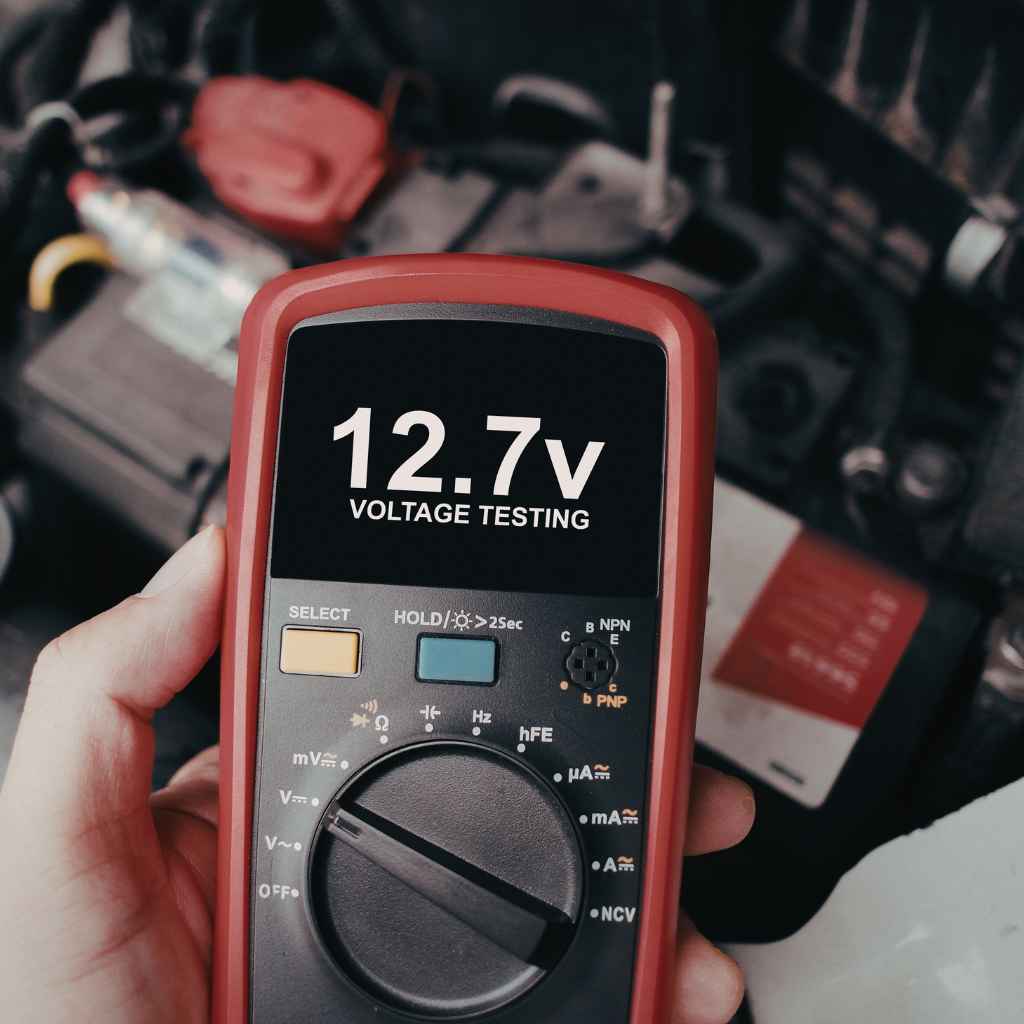
Testing your car battery voltage is a straightforward process that can give you valuable insight into its health. You’ll need a tool called a multimeter. These are readily available at auto parts stores and electronics shops. Using a multimeter is simple once you know what to do. It involves connecting the multimeter’s probes to the positive and negative terminals of your battery.
Before you start, make sure your car’s engine is off. Also, ensure no accessories like lights or the radio are running. For the most accurate reading, let the car sit for a few hours (ideally overnight) so the surface charge from driving dissipates. This gives you a true “resting voltage” of the battery. The process itself takes only a minute or two and can save you from future headaches.
Using a Multimeter to Check Battery Voltage
A multimeter is your best friend for this task. It’s a device that measures electrical properties like voltage, current, and resistance. To check your battery, you’ll set the multimeter to measure DC voltage (indicated by a ‘V’ with a straight line and possibly dots above it). Then, you’ll connect the red probe to the positive (+) terminal of your battery and the black probe to the negative (-) terminal.
The multimeter display will then show a numerical value. This number is the voltage of your battery at that moment. It’s crucial to ensure the probes make good contact with the terminals. If they are loose, you’ll get an inaccurate reading. A clean battery terminal will help ensure a solid connection for a precise measurement. Most modern multimeters are digital, making the reading very easy to see.
Interpreting Multimeter Readings Beyond 12.3 Volts
Once you have your multimeter reading, you can interpret it. As mentioned, 12.6 to 12.8 volts is considered fully charged. Readings between 12.4 and 12.6 volts usually mean the battery is about 75% to 90% charged, which is still good. A reading of 12.3 volts, as we discussed, is around 75% charged.
Any reading below 12.3 volts starts to indicate a lower state of charge. For instance, 12.0 volts is roughly 50% charged. Readings below 11.8 volts are considered discharged and can be harmful to the battery if left in that state for too long. Deep discharges can damage the battery’s internal structure, reducing its lifespan and ability to hold a charge in the future. So, while 12.3 is okay, higher is always better for resting voltage.
Battery Voltage and State of Charge Chart
Here’s a simple chart to help you understand common resting voltage readings for a 12-volt car battery:
| Voltage Reading (Approximate) | State of Charge (Approximate) |
|---|---|
| 12.6 – 12.8 V | 100% |
| 12.4 – 12.5 V | 75% – 90% |
| 12.3 V | ~75% |
| 12.1 – 12.2 V | 50% – 75% |
| 11.9 – 12.0 V | ~50% |
| Below 11.8 V | Discharged (Below 50%) |
This table shows that 12.3 volts sits at a healthy, but not fully charged, level.
When to Consider a Battery Load Test
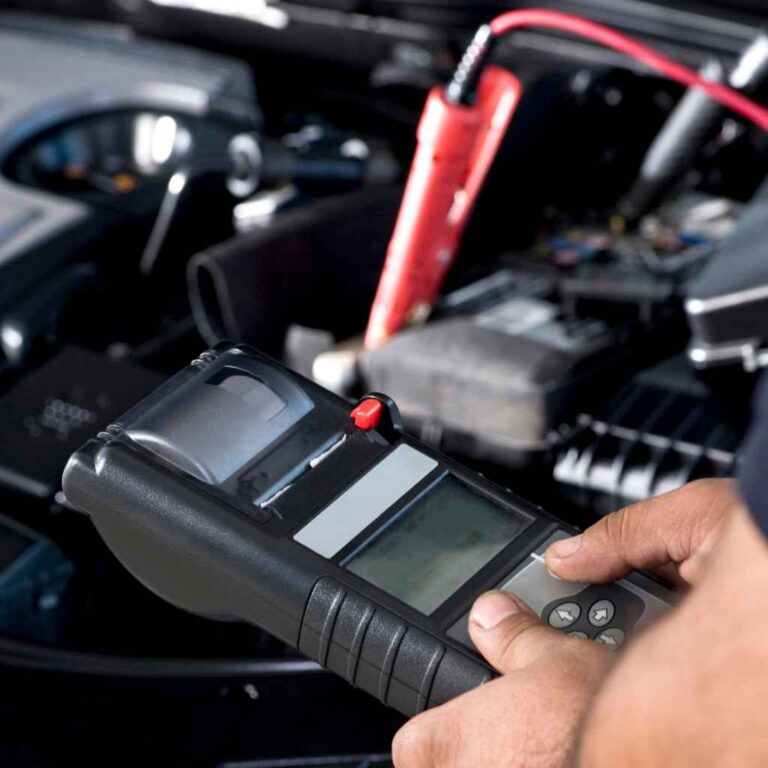
If your multimeter consistently shows readings around 12.3 volts, or if you’ve noticed other signs like slow cranking or warning lights, it might be time for a load test. A load test is more advanced than a simple voltage check. It simulates the heavy demand placed on the battery when starting your car. This test can reveal if the battery can deliver enough power under stress, even if its voltage seems okay when idle.
Most auto parts stores offer free battery load testing. They use specialized equipment that applies a specific load to the battery and measures its voltage output during that load. If the voltage drops too low during the test, it indicates the battery is failing and needs replacement. This test is a more definitive way to assess the battery’s overall health and its ability to perform its primary job.
Factors Affecting Car Battery Readings
Several things can influence the voltage reading you get from your car battery. It’s not just about whether the battery is old or new. The temperature, how recently the car was driven, and even the condition of the battery terminals can all play a role. Understanding these factors helps you get a more accurate picture of your battery’s true state.
For example, a car battery will show a slightly higher voltage in colder weather when fully charged. Conversely, in very hot weather, the voltage might appear slightly lower, though this is more related to the battery’s chemical reactions and potential for self-discharge. Also, if you’ve just turned off your engine after a drive, the battery might have a temporary “surface charge” that makes the voltage appear higher than its true resting voltage.
Temperature and Its Impact on Voltage
Temperature is a significant environmental factor that affects battery performance and voltage readings. Batteries are essentially chemical machines. Their chemical reactions are temperature-dependent. In cold weather, the chemical reactions inside the battery slow down. This means a battery might produce less cranking power and its resting voltage could appear slightly lower if tested immediately.
However, when a battery is charging in cold weather, it might show a slightly higher voltage reading because the internal resistance increases, causing the charging voltage to build up more. Conversely, hot weather can accelerate battery degradation and increase self-discharge rates. A hot battery might test a bit lower in voltage, and its overall lifespan can be reduced by extreme heat. So, a 12.3-volt reading might be more concerning in extreme cold if it doesn’t improve after charging.
Surface Charge vs. Resting Voltage
This distinction is critical for accurate battery assessment. A “surface charge” is a temporary voltage increase that occurs immediately after the car’s engine is turned off or after the battery has been charging. This charge is on the surface of the battery plates and doesn’t reflect the battery’s overall capacity. If you test your battery voltage right after a drive, you might get a reading of 13.0 volts or even higher, which is misleading.
The “resting voltage” is the true indicator of the battery’s state of charge. To get this reading, you need to let the car sit for a period, typically several hours or even overnight. This allows the surface charge to dissipate, and the voltage to stabilize. A resting voltage of 12.3 volts, as discussed, is a good indicator of about 75% charge, whereas a surface charge of 12.3 volts would mean the battery is actually quite low.
Battery Terminal and Cable Condition
The connection points for your battery are crucial. The battery terminals and the cables that connect them to your car’s electrical system must be clean and tight. Corrosion, which often looks like a white or bluish powdery substance, can build up on the terminals. This corrosion acts as an insulator, hindering the flow of electricity. It can lead to poor connections, unreliable readings, and difficulty starting your car.
Loose cable connections are another common issue. If the cables are not securely fastened to the battery terminals, they can create resistance. This resistance can make your voltage readings appear lower than they actually are. It’s like trying to drink through a straw that’s partly blocked; the flow is restricted. Regularly inspecting and cleaning battery terminals, and ensuring cables are tight, is a simple maintenance step that ensures accurate readings and reliable power.
What Happens If Your Battery Is Low
If your car battery voltage is consistently low, below the 12.3-volt mark we’ve discussed, or if it drops too quickly, you can face several problems. The most obvious is that your car might not start. The starter motor requires a significant amount of power, and a weak battery simply cannot provide it. This can leave you stranded unexpectedly.
Beyond starting issues, a weak battery can cause other electrical components to malfunction. Your headlights might appear dimmer than usual, your power windows might move slower, and other electronic systems could behave erratically. Some modern cars have sophisticated computer systems that can be affected by unstable voltage. Addressing low battery voltage promptly is essential for keeping your vehicle running smoothly and preventing more costly repairs down the line.
Signs of a Failing Battery
Besides low voltage readings, there are several other tell-tale signs that your car battery might be failing. One of the most common is a slow or sluggish engine crank when you try to start the car. Instead of a quick “vroom,” you might hear a drawn-out “rrr-rrr-rrr.” This is the starter motor struggling to get enough power.
Other signs include dimming headlights or interior lights, especially when you’re at idle. You might also notice that your car battery warning light on the dashboard illuminates. Sometimes, you might even smell a “rotten egg” odor around the battery, which can indicate overheating or a damaged battery. Corrosion on the battery terminals is also a common visual cue of a battery that needs attention.
The Risk of Being Stranded
The most significant risk of a failing battery is being stranded. Imagine you’re on your way to an important appointment, or perhaps on a long trip. If your battery suddenly dies, you won’t be able to start your car. This can lead to missed meetings, delays, and the inconvenience of having to arrange for a tow truck or roadside assistance.
In some cases, a weak battery can also affect the operation of your car’s anti-theft system or keyless entry. This can make it even more difficult to get your vehicle moving. Being proactive with battery checks can help you avoid these stressful situations. A little bit of regular maintenance can go a long way in ensuring reliable transportation.
Impact on Other Vehicle Systems
Your car’s battery is the heart of its electrical system. When it’s not functioning correctly, it can have a ripple effect on other components. For example, sensitive electronics like the car’s computer (ECU), radio, and navigation system can experience glitches or reset if they don’t receive a stable voltage. This can lead to unexpected errors or malfunctions in these systems.
Modern cars are equipped with numerous sensors and electronic modules that rely on consistent power. A weak battery can cause these modules to receive insufficient power, leading to erratic behavior or system failures. Some of these issues might not be immediately obvious but can lead to more serious problems or expensive repairs if left unaddressed.
When Is It Time to Replace Your Battery?
Deciding when to replace your car battery is a crucial part of vehicle maintenance. Batteries don’t last forever. They have a lifespan, typically between 3 to 5 years, depending on usage, climate, and maintenance. If your battery is showing signs of age or is consistently failing tests, it’s time to consider a replacement.
Ignoring a failing battery can lead to the problems we’ve discussed, like being stranded or damaging other vehicle components. It’s better to replace a battery proactively than to wait for it to fail completely. Think of it as replacing worn-out tires; you do it before they become unsafe. A new battery provides peace of mind and ensures your car will start when you need it most.
Battery Lifespan and Age
The typical lifespan of a car battery is usually around 3 to 5 years. However, this is just an average. Many factors can shorten or extend this lifespan. Batteries in areas with extreme temperatures (very hot or very cold) tend to have shorter lives. Frequent short trips where the battery doesn’t get fully recharged can also wear it out faster.
Conversely, proper maintenance, like keeping terminals clean and ensuring the battery is fully charged regularly, can help extend its life. If your battery is approaching or has passed the 3-year mark, it’s a good idea to start paying closer attention to its voltage readings and overall performance. Some batteries even have a date code stamped on them that can help you determine their age.
Signs Indicating Replacement is Necessary
Besides consistently low voltage readings (e.g., below 12.3 volts even after charging), several other signs point to a need for a new battery. If your car struggles to start, or if the engine cranks slowly, it’s a strong indicator. Any warning lights on the dashboard related to the battery or charging system should be taken seriously.
Visible signs of damage, such as a swollen battery case or leaking fluid, mean immediate replacement is necessary. Also, if you’ve had to jump-start your car multiple times recently, even after charging the battery, it’s a clear sign of a failing battery. A professional load test that shows the battery cannot hold a charge under stress is also a definitive reason to replace it.
Choosing the Right Replacement Battery
When it’s time to replace your battery, choosing the right one is important. You’ll want a battery that meets your vehicle manufacturer’s specifications. This usually includes the correct physical size, terminal type, and power output ratings (like Cold Cranking Amps – CCA). Your car’s owner’s manual is the best source for this information.
There are different types of batteries available, including standard flooded batteries, absorbed glass mat (AGM) batteries, and enhanced flooded batteries (EFB). For vehicles with start-stop technology or advanced electrical systems, an AGM or EFB battery might be recommended or required. Always check your car’s manual or consult with a professional to ensure you get the most suitable replacement battery.
Tips for Maintaining Your Car Battery
Keeping your car battery in good condition can prevent many problems and extend its life. Simple maintenance tasks are often overlooked but can make a big difference. These include keeping the terminals clean, ensuring connections are tight, and making sure the battery is properly secured in its mount.
Regularly checking the battery’s voltage is also a key part of maintenance. It allows you to catch issues early. If you live in a region with extreme temperatures or often take short trips, considering a battery tender or trickle charger can help maintain a full charge. This is particularly useful for vehicles that sit for extended periods.
Keeping Terminals Clean and Connections Tight
Corrosion on battery terminals is a common enemy of good electrical connections. It’s a powdery, crystalline substance that forms over time. You can clean it using a wire brush and a mixture of baking soda and water. After cleaning, you can apply a thin layer of dielectric grease or a terminal protector spray to help prevent future corrosion.
Ensure that the battery cables are firmly clamped to the terminals. Loose connections can cause intermittent power loss, difficulty starting, and inaccurate voltage readings. If a cable feels loose, tighten it securely. A snug fit is essential for optimal electrical flow. This simple step is a cornerstone of battery maintenance.
The Role of Battery Mounts and Covers
Your car battery should be securely held in place by a battery mount or hold-down clamp. A loose battery can vibrate excessively. This vibration can damage the battery’s internal components and shorten its lifespan. It can also lead to loose connections as the terminals get jostled.
Some batteries also have protective covers that help shield them from road debris and moisture. These covers can contribute to battery longevity by protecting it from harsh environmental conditions. Ensuring the battery is firmly mounted and that any protective covers are in place is part of a comprehensive battery maintenance routine.
Using a Battery Tender or Trickle Charger
If you don’t drive your car very often, or if you live in a climate with extreme temperatures, a battery tender or trickle charger can be a lifesaver for your battery. A battery tender is a smart charger that maintains a battery’s charge at an optimal level without overcharging it. It can be plugged into a wall outlet and connected to your battery.
A trickle charger is similar, providing a slow, steady charge. These devices are especially useful for classic cars, seasonal vehicles, or any car that sits for long periods. By keeping the battery fully charged, they prevent deep discharges, which are very damaging to battery health and can significantly shorten its lifespan. This proactive approach can save you money and hassle in the long run.
Importance of Regular Battery Checks
Regularly checking your battery’s voltage is one of the most important preventative maintenance steps you can take. It doesn’t take much time and can give you early warnings of potential problems. A quick voltage check before a long trip or at the start of winter can save you from being stranded.
Consider making it a habit to check your battery voltage every few months, or at least twice a year, perhaps when you change your oil. If you notice a gradual decline in voltage, or if it never reaches the optimal 12.6+ volts, it’s a signal to investigate further, perhaps with a load test, and plan for a potential replacement.

Conclusion
A 12.3-volt battery reading is a good indicator of a partially charged battery, around 75%. While it’s not a fully charged battery (which is 12.6-12.8 volts), it’s generally sufficient for many vehicle functions and indicates the battery is still functional. However, consistently seeing this reading or a rapid drop in voltage warrants attention. Regular checks with a multimeter, clean terminals, and understanding battery aging are key to ensuring your car starts reliably.
Frequently Asked Questions
Question: Is 12.3 Volts a Good Battery Reading?
Answer: Yes, 12.3 volts is a decent battery reading, indicating about 75% charge. It means your battery is functional but not at its full capacity.
Question: What voltage is considered a fully charged car battery?
Answer: A fully charged 12-volt car battery typically reads between 12.6 and 12.8 volts when the engine is off and has been resting.
Question: How often should I check my car battery voltage?
Answer: It’s good practice to check your car battery voltage at least twice a year, or every few months, especially before extreme weather seasons like winter.
Question: Can a 12.3 volt battery start my car?
Answer: In most cases, yes. A 12.3 volt battery has enough charge to crank most car engines, but performance might be slightly reduced compared to a fully charged battery.
Question: What does it mean if my battery voltage drops quickly from 12.3 volts?
Answer: A rapid voltage drop from 12.3 volts indicates a problem, possibly a weak battery or a parasitic drain in your car’s electrical system, and should be investigated.
Summary
A 12.3-volt reading for your car battery signifies a functional charge, around 75%. While not ideal, it’s a solid middle ground. Pay attention if this is your consistent reading or if it drops fast. Regular checks, clean terminals, and understanding battery age help keep your car running. Knowing this simple number empowers you to manage your car’s electrical health effectively.
Products related to this article
Sponsored / affiliate links. As an Amazon Associate I earn from qualifying purchases. I may earn additional commission from eligible campaigns.