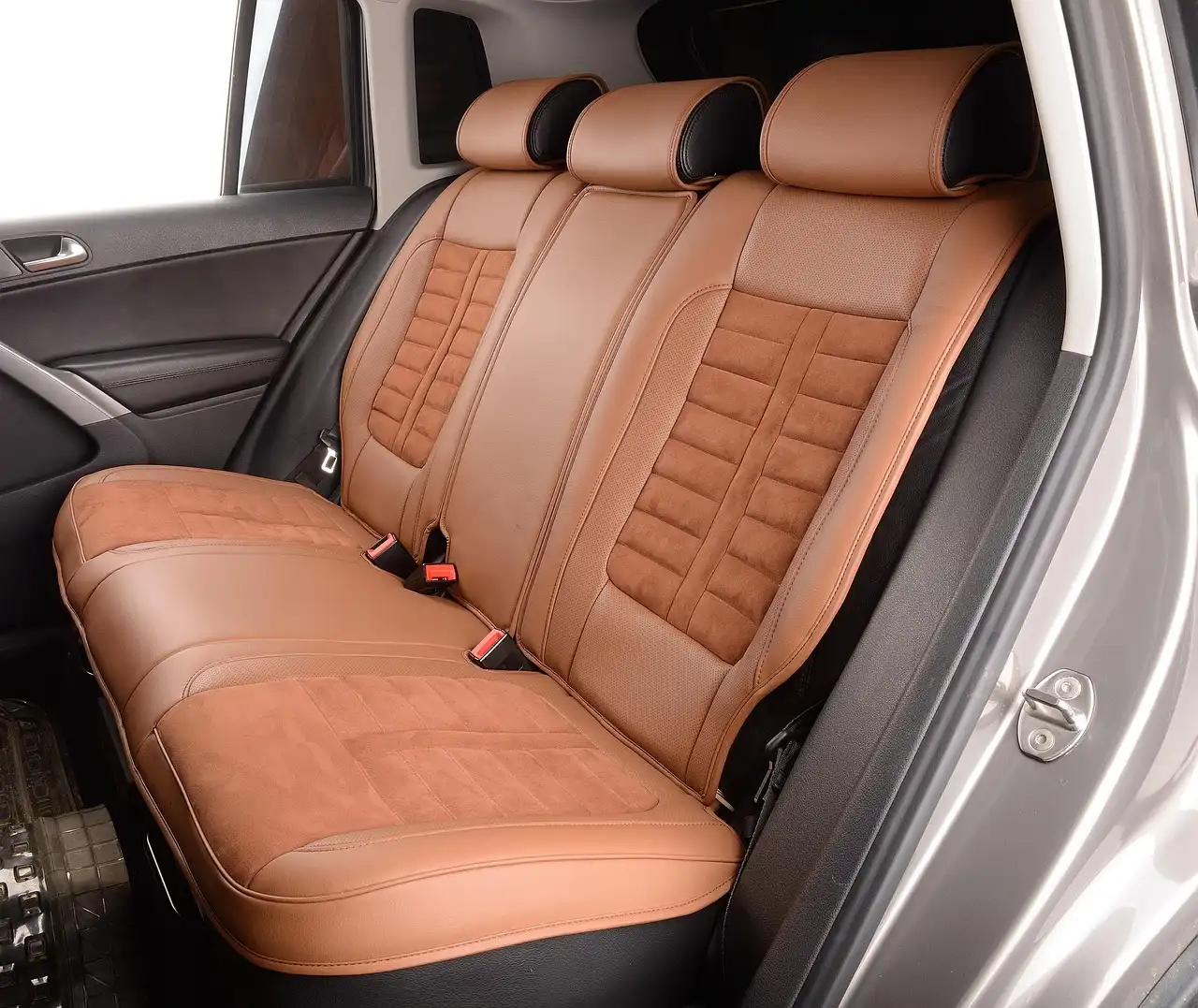
Leather Seat Covers vs Factory Leather: Which Fits Best
Factory leather is usually the better pick for safety, fit, heated and ventilated seat performance, and resale. Choose seat covers only when they are airbag-safe, model-specific, and cheaper than repairing worn upholstery. Cheap covers can block seat airbags, blunt heaters and fans, and drop resale value fast. This guide compares fitment, comfort features, lease risk, and long-term cost so you can decide what actually pays off.
Leather seat covers vs factory leather: the real trade-off


| Decision factor | Leather Seat Covers | Factory Leather | Winner |
|---|---|---|---|
| Safety integration | Depends on vehicle-specific patterning and verified airbag seams | Built for the seat structure, sensors, and tear paths from the start | Factory Leather |
| Heated and ventilated seat performance | Can slow heat transfer and restrict airflow | Designed around heaters, thermistors, and fans | Factory Leather |
| Upfront cost | Usually lower for budget kits | Higher because it is part of the trim and upholstery package | Leather Seat Covers |
| Resale and trade-in impact | Can help only if the originals are protected and the cover fits cleanly | Usually stronger for trade-in appeal and buyer trust | Factory Leather |
| Removal and reversibility | Removable, but install and removal can be slow and messy | Permanent factory trim | Leather Seat Covers |
What factory leather is built to do
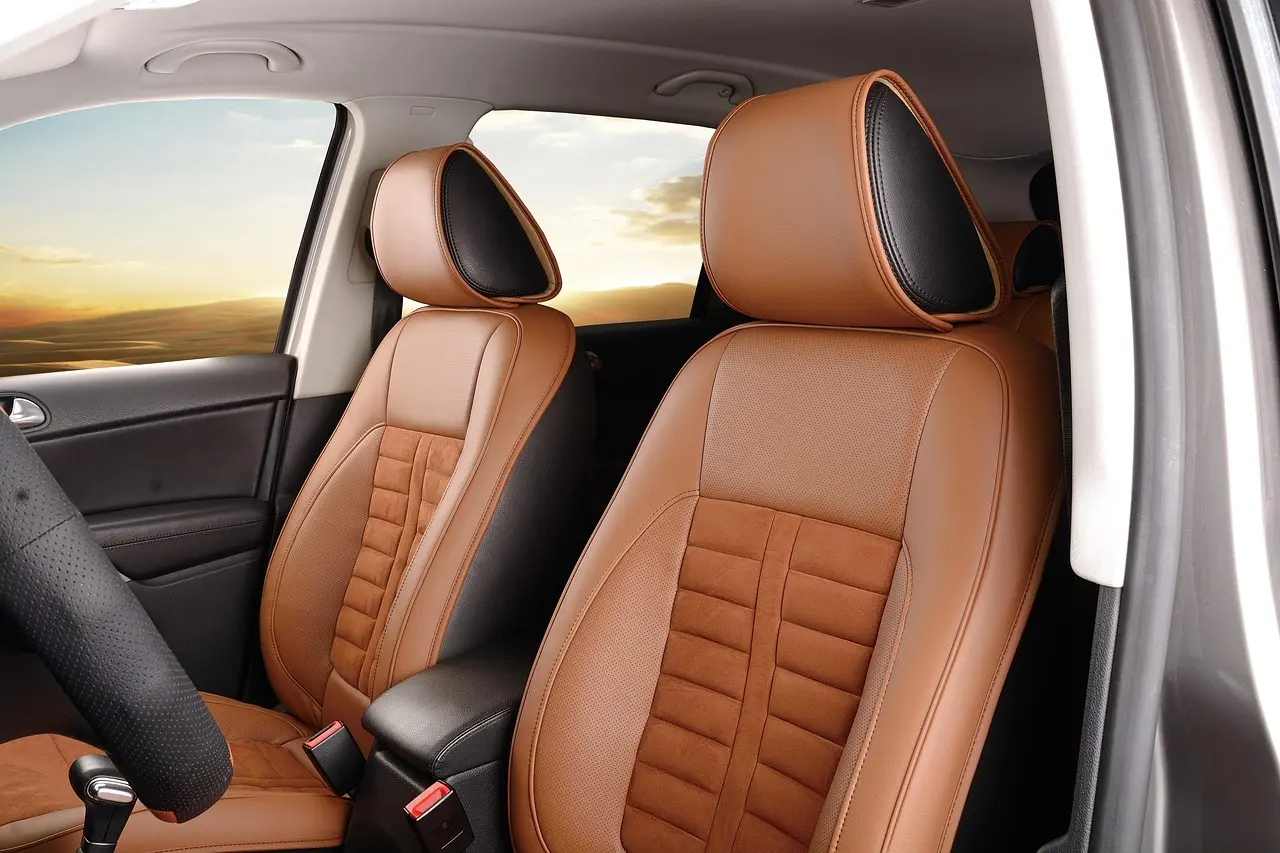
Factory leather seats are OEM-installed upholstery built around the vehicle, not added later. They use automotive-grade, multi-layered hides, are often corrected-grain or semi-aniline, and are cut to work with seat heaters, cooling, switches, sensors, and airbag seam placement.
That fit matters more than most buyers expect. When a seat moves, heats, vents, or deploys an airbag, the leather was made to follow those actions instead of fighting them.
What aftermarket covers are built to do
Aftermarket leather seat covers are usually there to change appearance, protect worn upholstery, or hide damage. They come in universal and custom-fit styles, and the material can be PU-coated polyester, bonded leather, or better leather grades in some premium kits.
Coverage is the problem. A cover can look tight on day one and still interfere with bolsters, switches, heaters, or airbag tear seams later.
Why price alone gives the wrong answer
The wrong comparison is “cheap cover versus expensive leather.” The useful comparison is “what gets lost when the seat no longer works the way the car was designed to work.” Airbag timing, heat transfer, fan output, and seat movement clearance all sit outside the sticker price.
A low-cost cover can cost more after removal, seat damage, or a bad trade-in appraisal. That is where ownership cost shows up.
How do fit and seat features change the answer?
Seat features change the choice fast. Heated, ventilated, power-adjustable, and sensor-equipped seats are less forgiving of covers than plain manual seats, because every added layer changes airflow, heat transfer, or clearance around moving parts and wiring.
Heated seats and heat transfer
Heated seats rely on the cover allowing heat to pass through at a suitable rate. Aftermarket covers rarely support embedded seat functions, and thick foam or dense backing can slow warm-up, create hot spots, or trigger fault codes if the vehicle watches temperature through a sensor or thermistor.
In cold climates, that loss is obvious in daily use. The seat feels slower to warm and less even across the cushion.
Ventilated seats and airflow loss
Ventilated seats are even less cover-friendly. The perforations and channels that move air through the cushion can be partly blocked by a tight outer skin, so the fan may still run but the driver may feel less cooling.
That is a real function loss, not a theory. A cover can make a ventilated seat behave like a plain leather seat in summer traffic.
Sensors, switches, and seat movement clearance
Power seats, occupancy sensors, and switch panels need clearances that universal covers often miss. A cover that shifts on the frame can rub switch trim, stress seams, or interfere with sensor behavior under the cushion.
Custom-fit products usually do better here, especially when they are patterned for the specific seat and trim level. Generic “fits most” products are a weak match.
Will seat covers hurt airbag deployment?
Yes, they can, if the cover is not designed for that seat and that airbag layout. Airbag-compatible seams need tear-seam placement, correct thread behavior, and vehicle-specific patterning so the bag can deploy through the intended path at the right moment.
How airbag-compatible seams work
These seams are not cosmetic stitching. They are engineered weak points placed where the seat’s side airbag is supposed to burst through during deployment. If the seam is in the wrong place, too tight, or stitched with the wrong thread, the cover can change the deployment path.
That is why “airbag compatible” should mean more than a marketing label. It should mean a pattern made for that exact seat shell and side-bolster design.
Why universal covers are a weak fit here
Universal covers are often a less ideal setup around seat airbags because the tear line has to align closely with the bolster and module location. That is a poor setup around seat airbags, because the tear line needs to match the exact bolster and module location.
Even when a universal cover looks tidy, it can still be wrong under stress. A tight wrap over the wrong section is not the same as compliance.
What to check before you buy
- Confirm the cover is made for your exact year, make, model, trim, and seat type.
- Look for stated airbag-compatible seams and a seat-side tear path, not vague “airbag safe” language.
- Verify that seat heaters, fans, occupancy sensors, and power-adjustment controls remain accessible.
- Ask for a Martindale abrasion rating and an ISO 4589-2 oxygen index.
- Check whether removal leaves marks, stretched hooks, or clipped trim tabs.
What material are you actually buying?

Material labels on cover kits are messy. Top-grain, full-grain, bonded leather, and PU-coated polyester are not interchangeable, and some product pages blur them on purpose. If the listing does not say what the surface, backing, and wear layer actually are, assume the claim is incomplete.
Top-grain vs full-grain leather
Top-grain leather is a common automotive category, and it is usually sanded or buffed to smooth the surface. That gives a cleaner look and more uniform grain, which is why it is common in vehicle interiors.
Full-grain leather is not sanded or buffed. It keeps the outer grain intact and can retain minor imperfections, which often gives better natural durability and a less processed look. It is rarer in budget aftermarket kits.
Bonded leather and why it wears out sooner
Bonded leather is made from a blend of ground leather fibers and a polyurethane binder, often with a substantial fiber content. It can sell well because the label sounds premium, but its abrasion resistance is usually weaker than OEM leather.
One common failure mode is surface breakdown at the bolsters and seat base. After enough flexing, bonded material can split, flake, or fail ASTM D4157 abrasion testing after about 12,000 cycles.
PU-coated polyester and budget kit failure points
Budget-tier covers are often PU-coated polyester. They can look leather-like at a glance, but sun exposure, repeated entry and exit, and seam stress can lead to peeling or cracking, especially at the side bolster and seat-edge folds.
The guide says PU-coated polyester degrades after 18–24 months. That timeline is short compared with a well-kept factory seat, and the failure usually starts where the driver slides in every day.
Why Martindale and ISO 4589-2 matter
Ask for a Martindale abrasion rating because it tells you something concrete about wear resistance instead of relying on “premium” wording. Ask for ISO 4589-2 oxygen index because seat materials should be checked for fire performance, not only feel.
These are the numbers that separate a real upholstery product from a decorative skin. If a seller cannot supply them, that tells you something useful.
Decision matrix: which choice fits your vehicle and goal?
The right choice depends on the seat features, the age of the vehicle, and what you want from the next ownership phase. A daily driver with heated and ventilated seats is a different case from a high-mileage work truck or a lease return.
| Vehicle type / seat feature / ownership goal | Better choice | Why |
|---|---|---|
| Heated daily driver | Factory leather | Better heat transfer and lower fault-code risk |
| Ventilated daily driver | Factory leather | Less airflow restriction and better cooling performance |
| Airbag-equipped newer vehicle | Factory leather | Factory seam placement is already engineered for deployment |
| Lease return | Factory leather, or model-specific protective cover only if approved | Cleaner inspection outcome and lower mismatch risk |
| Older high-mileage car | Custom-fit cover or repair/reupholstery | Cheaper than full seat replacement if the original leather is tired |
| Work vehicle with rough use | Custom-fit cover | Protection matters more than a showroom finish |
Choose factory leather if… / Choose leather seat covers if…
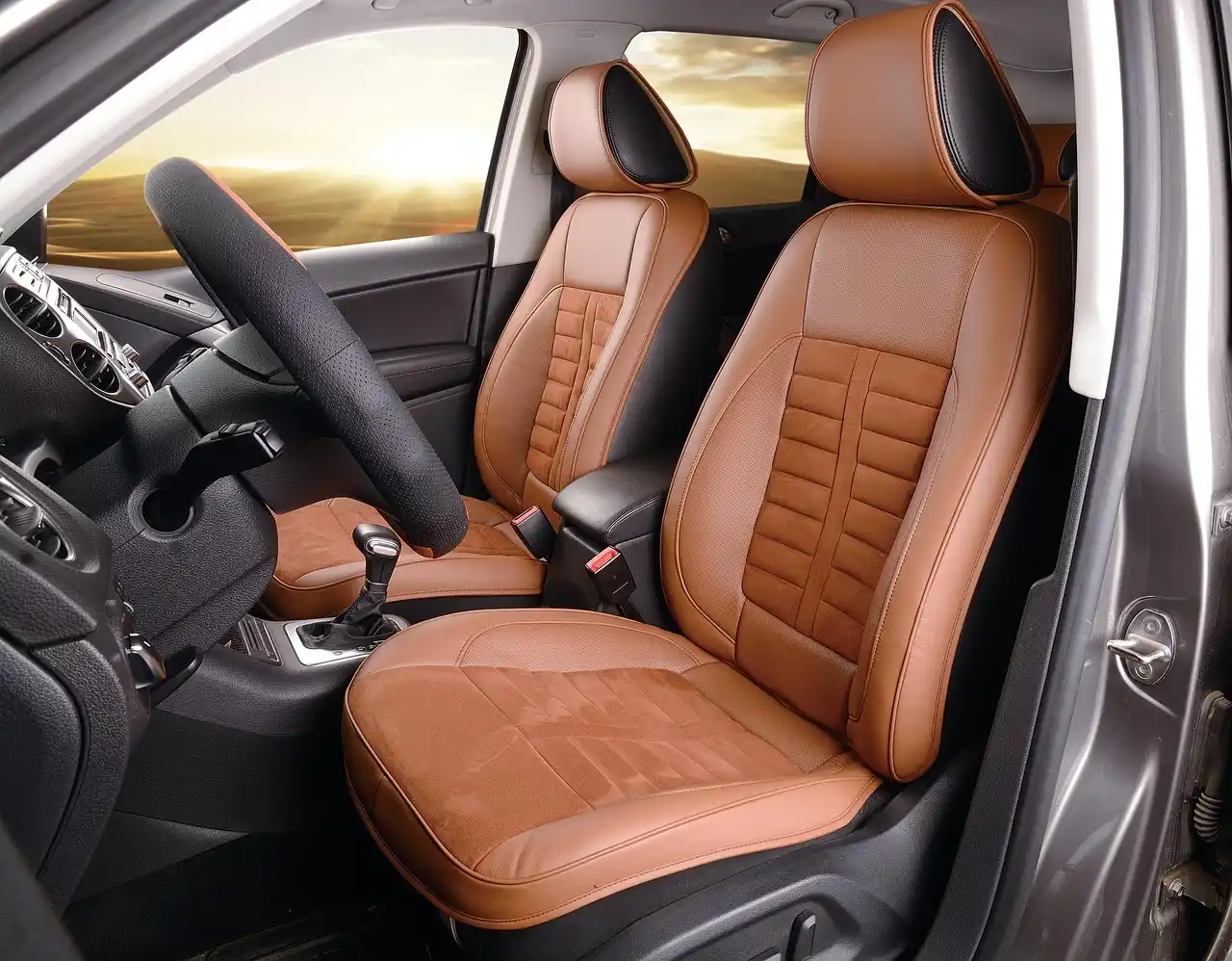
Factory leather is the better call when the vehicle has heated or ventilated seats, side airbags in the bolsters, or a lease and trade-in timeline that rewards OEM appearance. It is also the better answer when the original upholstery is still repairable and the owner wants the seat to behave exactly as the car was engineered to behave.
Leather seat covers make sense when the original leather is worn, the vehicle is older, and a custom-fit cover is cheaper than reupholstery while still leaving the seat usable. They also fit better on work vehicles and high-mileage cars where protecting the existing trim matters more than preserving factory presentation.
When keeping OEM leather makes more sense
If the seat foam is sound, the leather only has wear at the bolsters, and the car still has strong resale potential, repair or reupholstery usually beats hiding the problem. Factory leather is easier to evaluate at trade-in because dealers can see the actual condition, not a cover that may hide damage underneath.
That point matters on newer trims. A clean original seat often reads better than a covered one with unknown condition under it.
When custom-fit covers are the better call
Custom-fit covers are worth the extra money when the vehicle has simple seats, the pattern is exact, and the seller can prove airbag compatibility and feature clearance. They are a stronger choice than universal covers because they reduce shifting, bunching, and seam stress.
They are not equal to factory leather. They are only the better alternative when the goal is protection or a cosmetic reset on a vehicle that will not be judged like a premium trim.
When to repair or reupholster instead
Repair or reupholster if the factory leather is torn, the bolsters are split, or the seat looks tired but the vehicle still deserves OEM-level function. That path is often the cleanest fix for a near-term sale, a high-value trim, or a car with heated and ventilated seats that should stay fully operational.
It avoids the awkward middle ground where a cover hides damage without solving the comfort or safety issues underneath.
Cost and risk table for common use cases
The real cost picture includes install labor, removal labor, and the chance of having to redo the job after fitment problems. A cheap cover that shifts, traps heat, or blocks airflow can cost more once it needs to be removed and replaced.
| Use case | Upfront cost profile | Install and removal burden | Risk profile | Expected ownership impact |
|---|---|---|---|---|
| Heated seats | Lower with covers, higher with factory leather | Covers add install time and possible removal if heat feels uneven | Heat-transfer loss and thermistor or sensor faults | Factory leather usually keeps function and comfort better |
| Ventilated seats | Lower with covers, higher with factory leather | Custom kits take time; universal kits often need rework | Airflow restriction and weaker cooling effect | Factory leather usually wins on summer comfort |
| Airbag-equipped bolsters | Lower with covers only if fit is exact | Inspection of seam placement is mandatory before install | Deployment timing and tear-path risk | Factory leather is safer by design |
| Lease returns | Cover may save wear, but bad fit can hurt return condition | May require removal and cleaning before inspection | Mismatch, residue, and concealment risk | Factory leather usually presents better at turn-in |
| Older high-mileage cars | Cover can be much cheaper than seat replacement | Fit and removal matter, but cosmetics matter less | Peeling, seam stretch, and dirt trapping | Custom cover or repair can extend useful life |
Frequently asked questions
Are leather seat covers better than factory leather seats?
Factory leather is usually better for safety integration, seat-function compatibility, and resale. Seat covers only win when they are exact-fit, airbag-safe, and easier than repairing or reupholstering worn upholstery. For heated or ventilated seats, factory leather usually keeps the original performance intact.
Do seat covers affect heated or ventilated seats?
Yes. Covers can slow heat transfer, trap warmth, reduce airflow through ventilated seats, and sometimes trigger sensor-related complaints if they interfere with thermistors or seat electronics. Thin, well-made custom covers do better than universal kits, but they still add a layer between the occupant and the seat system.
Will seat covers hurt airbag deployment?
They can if the cover is not patterned for the exact seat and airbag location. Airbag-compatible seams need the right tear path, thread behavior, and placement. Universal covers are a weak choice here because the seat-side airbag location and deployment timing vary by vehicle.
Is factory leather more durable than aftermarket covers?
Usually yes, especially when the comparison includes budget materials. Factory leather uses automotive-grade, multi-layered hides, while many covers are PU-coated polyester or bonded leather. Those materials can peel, split, or stretch sooner at the bolsters and seat edges.
Do leather seat covers reduce resale value?
They can, if they look loose, hide seat damage, or interfere with features that buyers expect to work. A clean factory leather interior often helps trade-in appeal. For private-party sales, a well-fitted cover can help only if it protects the original leather and comes off cleanly.
What’s the difference between bonded leather and factory leather?
Bonded leather is made from 30–50% ground leather fibers with a polyurethane binder. Factory leather is automotive-grade hide built into the seat from the start. Bonded leather usually wears faster, especially on contact points, and often gets used as a lower-cost marketing label.
How do I tell if my car seats are top grain or corrected grain leather?
Check the build sheet or trim documentation first. If that is not available, corrected-grain leather usually looks more uniform because the surface was sanded or buffed, while full-grain keeps more natural marks and minor imperfections. Automotive leather is often corrected-grain or semi-aniline, not full-grain.
Products related to this article
Sponsored / affiliate links. As an Amazon Associate I earn from qualifying purchases. I may earn additional commission from eligible campaigns.
 FLORICH Leather Seat Cover, Car Seat Covers Front Set, Waterproof Car Seat Protectors, Front Seat Covers 2 Pack, Breathable Automotive Seat Covers Protector Fit for Most Cars Trucks SUV
 FLORICH Front Car Seat Covers, Leather Seat Covers for Cars, Waterproof Car Seat Protector Breathable, Front Seat Covers for Cars, Automotive Seat Covers Universal Fit for Most SUV Pick-up Truck